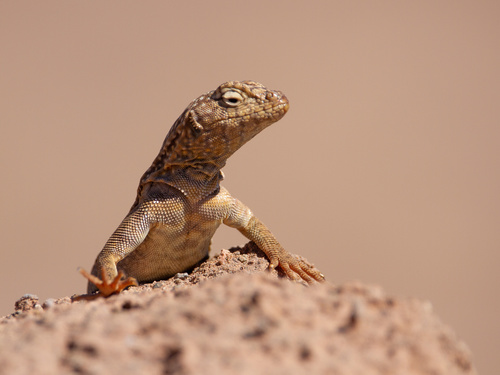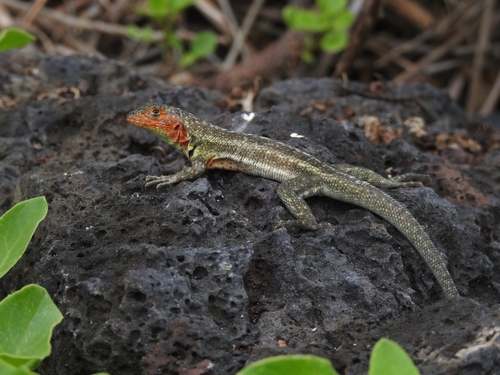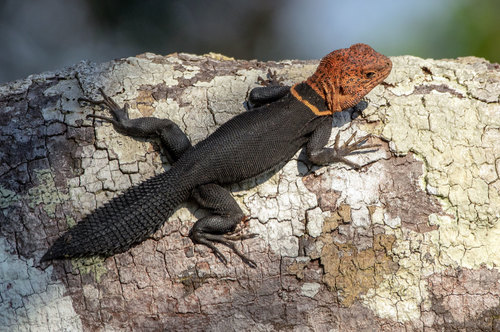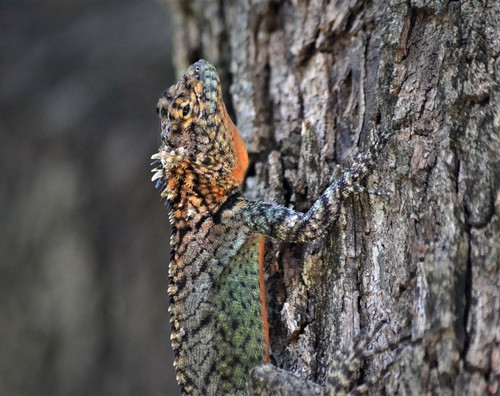
About Microlophus occipitalis (Peters, 1871)
Taxonomic Classification
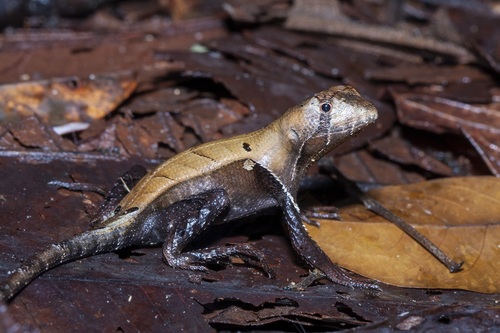
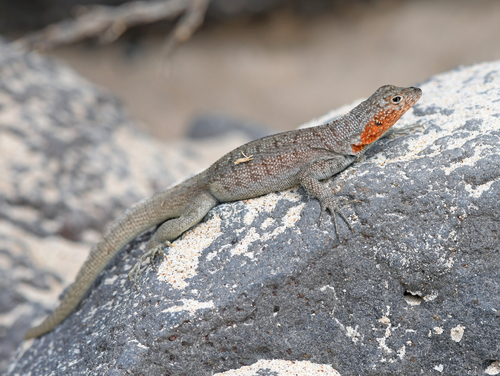
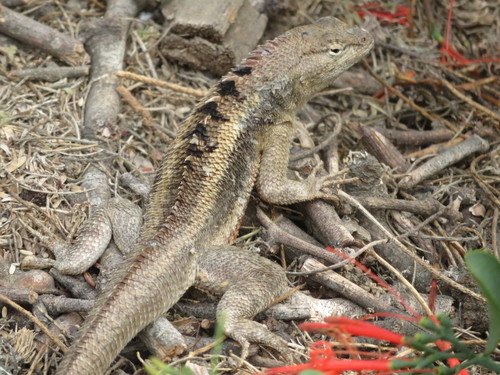
The knobbed Pacific iguana, Microlophus occipitalis, is classified as a small lizard.
Size
Its typical snout-vent length, measured from the tip of the snout to the start of the tail, ranges from 50 to 80 mm (2.0 to 3.1 inches).
Geographic Range
This species primarily lives along the coast of western Peru and Ecuador.
Habitat
It can occupy a wide variety of microhabitats including deserts, lomas, and beaches.
Thermoregulation Behavior
The lizard changes its preferred location throughout the day to regulate its body temperature: in the morning, it favors open areas with access to sunlight; at midday, it shelters in bushes, fallen logs, or abandoned buildings; and at night, it rests between rocks to maintain its ideal body temperature.
Territoriality
Knobbed Pacific iguanas are generally not territorial, and multiple males and females can be found together or clustered in the same area.
Male Aggression Exception
The only exception occurs when two large, aggressive males share the same space.
Aggressive Male Interaction Outcome
This situation is not tolerated, and usually results in one male leaving the area.
Territory Overlap Pattern
Because of this, territory overlap only occurs when smaller, less aggressive males live near a large, aggressive male, and never when two large, aggressive males occupy the same location.