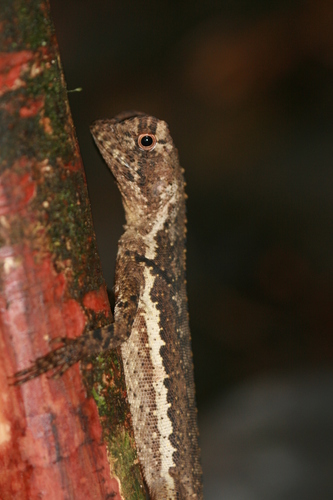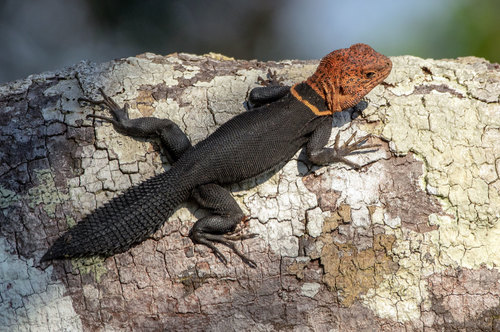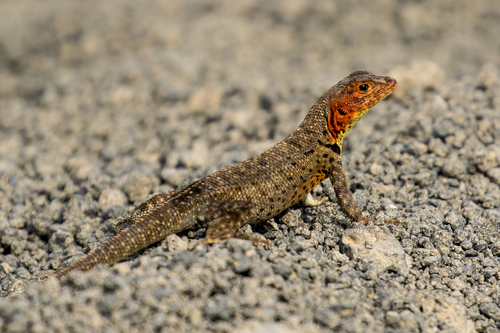
About Microlophus albemarlensis (Baur, 1890)
Common Name & General Size
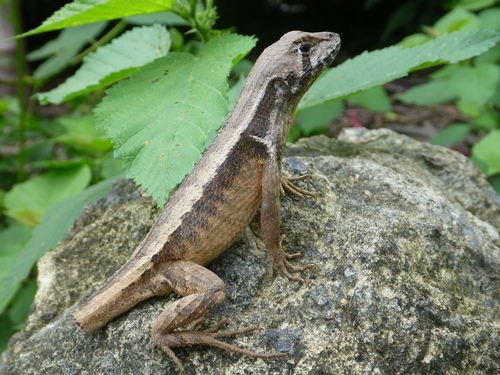
Microlophus albemarlensis, commonly known as the Galapagos lava lizard, is generally a small species, with most individuals measuring 4–7 inches long. Males are typically 6–7 inches long, while females fall in the full 4–7 inch range. Rarely, individuals can grow up to one foot in total length.
Body Structure
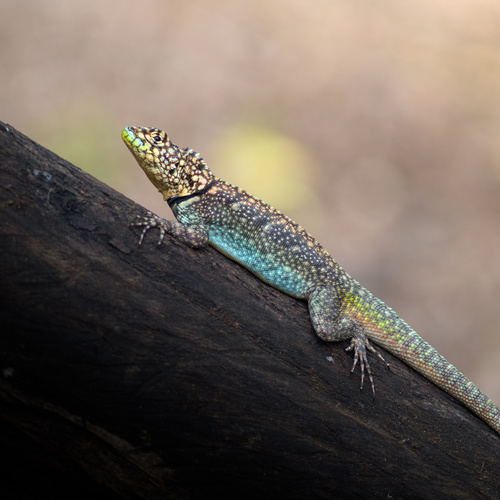
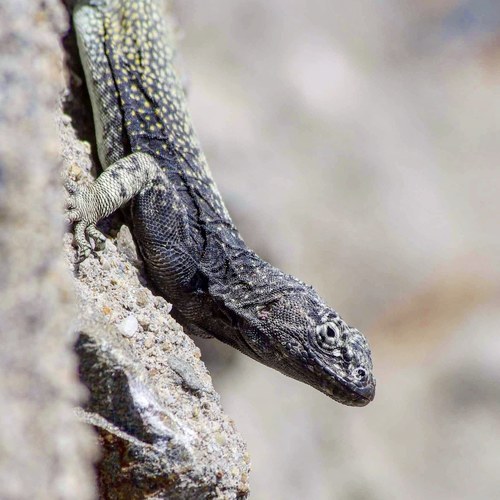
Their tails are often as long as or longer than their bodies, and the species is characterized by slender bodies, pointed heads, and long tails.
Sexual Color Dimorphism
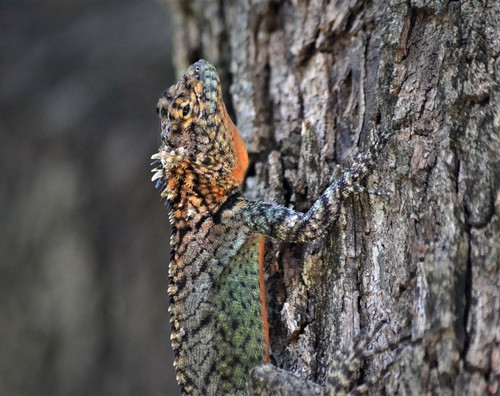
Coloration differs by sex: males are generally more brightly colored, with yellow and gold stripes, while females have a distinct red marking on their throat and head. Habitat has a large effect on the species' overall appearance.
Tail Defense Mechanism
Galapagos lava lizards have regenerative tails, which support a key defense mechanism: they can drop their tails to escape predation. Dropped tails rarely grow back to their original length, but the mechanism still allows lizards to successfully escape predators.
Species Range
This species lives only in the Galapagos Islands, a chain of lava-formed volcanic islands in the Eastern Pacific that straddle the equator, meaning this lizard lives in both hemispheres.
Regional Climate & Island Variants
The Galapagos Islands have a tropical, semi-arid climate that provides ideal conditions for this lizard to thrive, and each island is home to a distinct variant of the species.
Core Habitat Requirements
Their required habitat includes access to sun, shelter, dry leaves, and rocks, which support their two typical behaviors of sunbathing and hiding. These resources are found in dry lowland areas with loose soil and abundant dry leaf litter, which allow lizards to bury themselves to stay cool at night.
Diet
Their habitat also needs to support their diet, which includes plants, seeds, arthropods, and flowers.
Mating & Territory Size
For reproduction, male Galapagos lava lizards typically mate with any female that enters their territory. A male's territory can be as large as 400 square meters.
Territory Display Behavior
To mark their territory and deter competing males, males perform a behavior called 'push ups'. This display intimidates rival males and makes the displaying male appear larger and stronger.
Territory Contests
If another male challenges the territory holder by matching the push up display, the two compete in a push up contest that continues until one male concedes. If the contest drags on, it can escalate to biting and tail slapping. Once a male wins the contest, he gains mating access to females in the territory.
Breeding Season
Breeding season falls during the warm season, from November to March.
Egg Laying & Incubation
Females lay approximately four small eggs in their burrow. The eggs incubate for around three months before hatching.
Hatchling Size
Newly hatched infants are typically three to four centimeters long.
Clutch Characteristics & Predation Risk
Clutch sizes range from 1 to 4 eggs, with an average of two offspring hatching per clutch, leaving the small hatchlings extremely vulnerable to predators such as birds.
Sexual Maturation Timelines
Sexual maturation timelines differ between sexes: females reach sexual maturity as early as nine months old, while males take three years to mature.
Sex Identification
Before maturity, males and females are difficult to distinguish. Once females mature, they develop their distinct identifying markings, making the sexes far easier to tell apart.
Evolutionary Significance
This species is often cited as a key example of Darwin's natural selection.