About Microdes epicryptis Meyrick, 1897
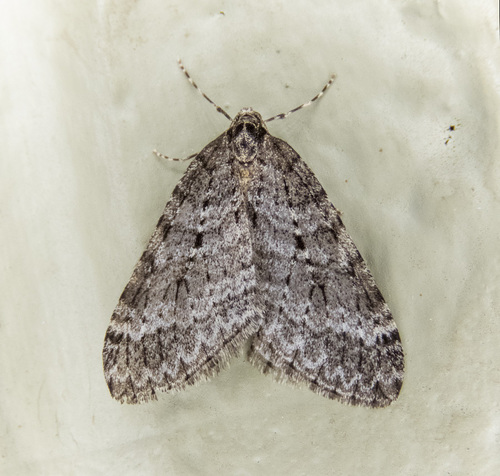
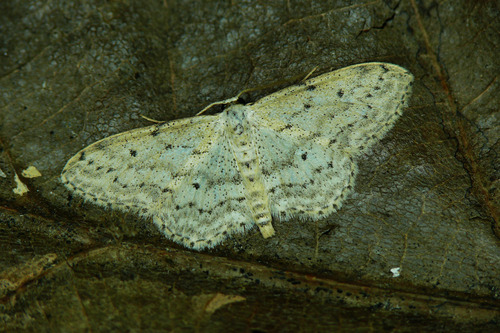
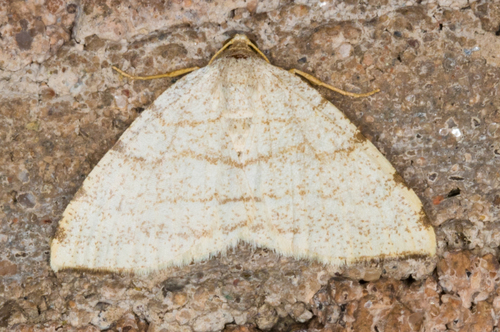
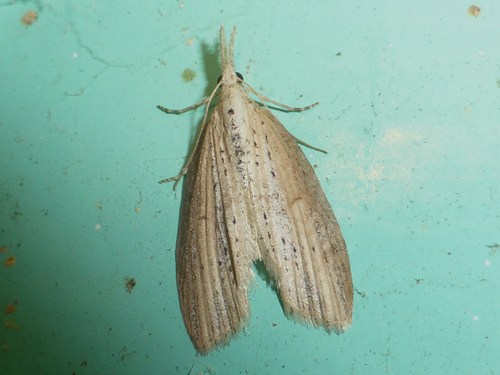
Microdes epicryptis Meyrick, 1897 is a moth species endemic to New Zealand. Fully grown larvae of this species are approximately half an inch long, and are pale ochreous in color, with a series of dark brown V-shaped markings running along their back. Their coloration and markings provide excellent camouflage, making the larvae hard to spot when they rest on the flower spikes of their host plants. Original describer Edward Meyrick characterized adult specimens of the species as follows: both male and female adults have a wingspan of 21-22 mm. The head and thorax are whitish-ochreous. The palpi, which measure 6 units in length, are whitish-ochreous and sprinkled with dark fuscous. On the forewings, the costa is strongly arched, and the termen is unevenly bowed and very oblique. The forewing base color is whitish-ochreous, more whitish on the dorsal half, somewhat deeper and sometimes darkened with infuscation toward the costa, with scattered black scales across the wing. There is a median longitudinal streak of the clear pale base ground color. The second line is marked by a strongly curved series of black dots on the wing veins, and the cilia are ochreous-whitish. The hindwings are considerably narrowed, and colored ochreous-grey-whitish. Male hindwings have a depressed area in the cell, and a costal streak of modified blackish scales that runs from near the base to beyond the middle of the wing. This species has often been confused with Antiscopa elaphra, previously known as Scoparia elaphra. Specimens of this species found in the Antipodes Islands are smaller, with narrower, more pointed forewings than specimens collected from mainland New Zealand. It is distributed across the North Island, South Island, Stewart Island, Chatham Island, and the Antipodes Islands of New Zealand. This species inhabits lowland wetland habitats. Its larvae feed on plant species in the Juncaceae family; one confirmed specific host is Apodasmia similis, as moth specimens have successfully been reared from larvae collected on this plant.