About Micrathena sexspinosa (Hahn, 1822)
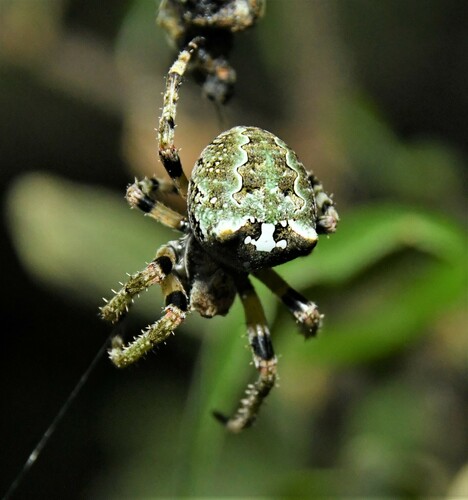
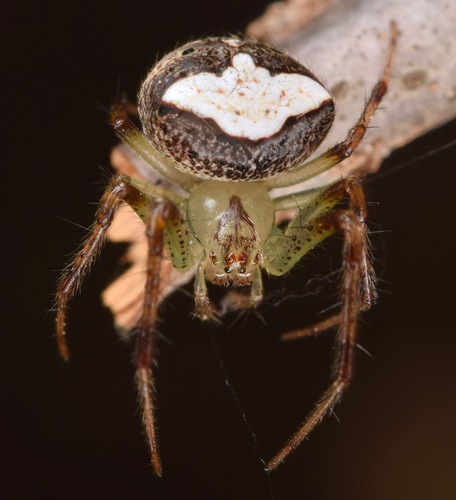
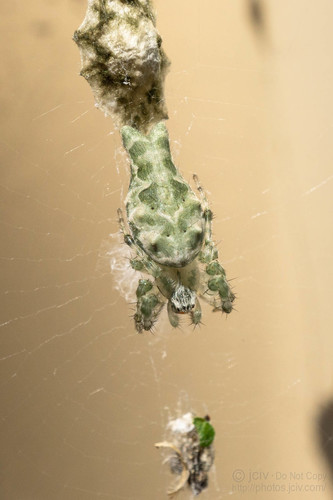
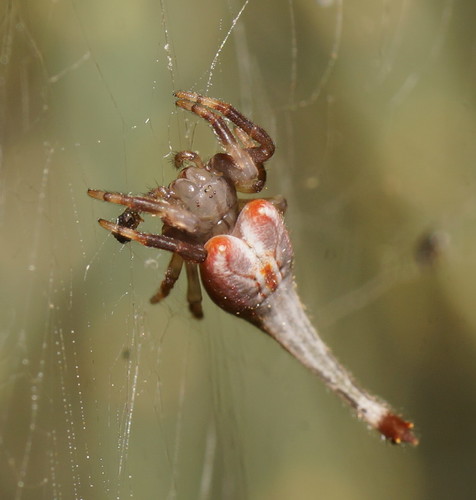
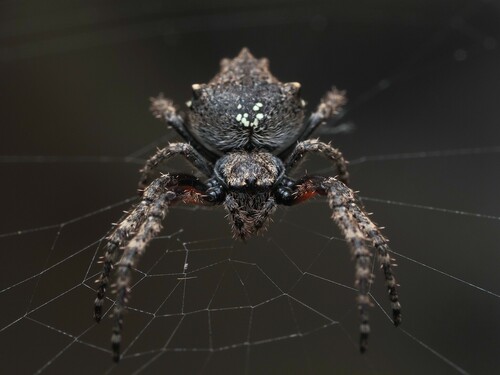
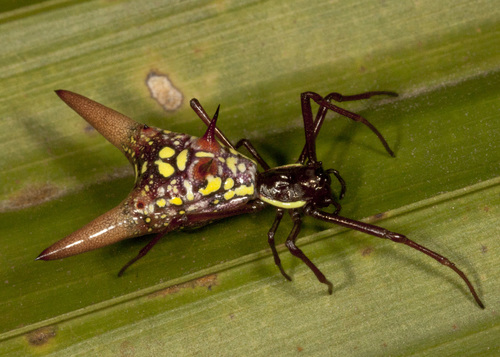
Micrathena sexspinosa (Hahn, 1822) displays notable sexual dimorphism, similar to its related species. Females are far larger than males: females have a total body length ranging from 7.7 to 11.8 mm, while males only measure between 4.5 and 5.2 mm. Female individuals of this species have a distinctive abdomen with two pairs of slender dorsal spines; a smaller additional spine between these pairs occurs rarely. For females, the carapace measures 3.8 mm long and 2.7 mm wide. Males can be distinguished from all other species in the Micrathena genus by their unique long, tubular paracymbium, a spur-like structure. The male abdomen is trapezoidal with two posterolateral lobes. The male has a total approximate length of 5.2 mm, with a carapace that measures 2.1 mm long and 1.9 mm wide. Both sexes show extreme variability in the development of spines and forks, and their spination patterns often resemble those of other endemic species found within their geographic ranges. This species has a broad distribution that stretches from Mexico through Central America to Brazil, with confirmed records from Colombia, Panama, Costa Rica, Nicaragua, Honduras, Guatemala, French Guiana, Suriname, Guyana, and Venezuela. Within Brazil, it has been recorded in the states of Pará and Ceará. M. sexspinosa has been collected from a variety of forest habitats. Recorded habitats include pine forest in Chiapas, forest trails in Colombia, and low vegetation in primary forest areas of Costa Rica. This species produces orange eggs contained within a pale yellow egg-sac.