About Micrathena mitrata (Hentz, 1850)
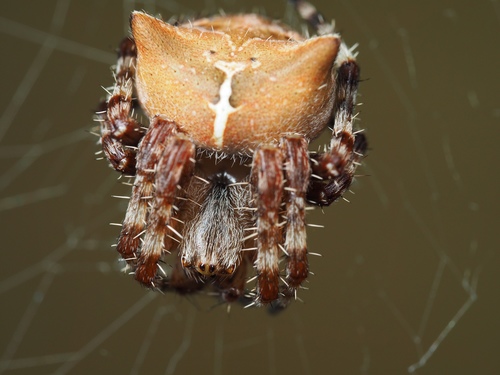
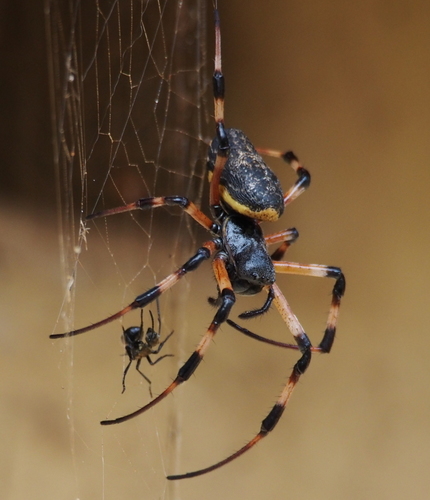
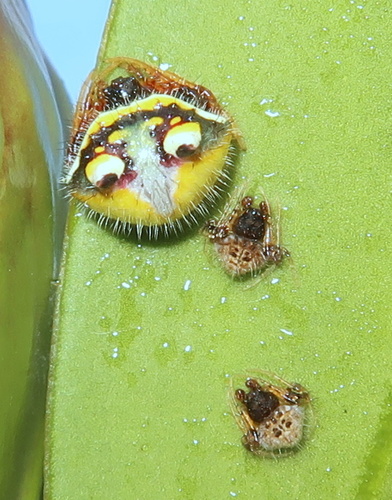
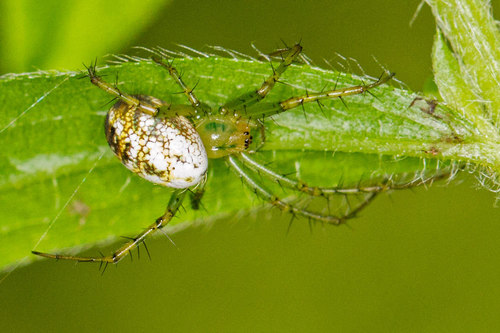
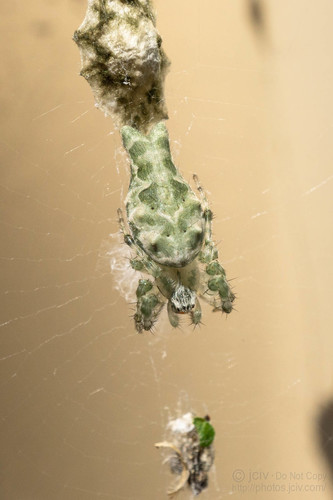
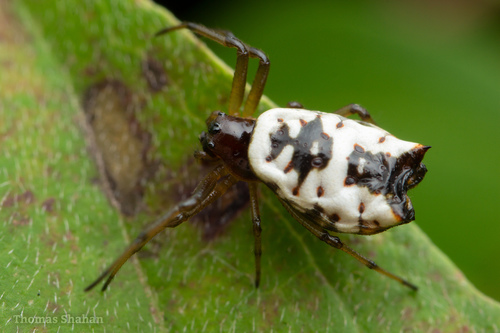
Micrathena mitrata, commonly called the white micrathena, is a species of orb weaver spider belonging to the family Araneidae. Its distribution spans from the United States down to Brazil. This spider has a distinctive appearance: it features a shiny black abdomen and spiky yellowish-brown legs. Females range from 4 to 9 mm in body length, while males range from 3 to 4 mm. The species builds elaborate webs that it uses to capture insect prey. Despite its intimidating appearance, Micrathena mitrata is not dangerous to humans and is considered harmless. Micrathena mitrata is commonly encountered in North America, specifically in the eastern and central United States and in Canada. It prefers wooded areas, especially near streams and other bodies of water, where it builds its web low to the ground close to shrubs or trees. It also lives in grassy fields and meadows. This is a versatile species that can adapt to a range of habitats from rural to urban areas, though it is most often found in natural environments with abundant vegetation and insect prey. Overall, Micrathena mitrata is a habitat generalist that can thrive in many different environments as long as it has access to prey and suitable locations to build its web. Micrathena mitrata follows a reproductive process typical of many spider species. Males initiate courtship by tapping the female’s web to get her attention. After the female accepts the male’s advances, he transfers sperm to her reproductive organs using his pedipalps. The female may become aggressive after mating, and may even kill and eat the male — a behavior called sexual cannibalism. This male sacrifice is thought to increase the chance that his sperm will fertilize the female’s eggs, and provides nutrition for the developing offspring. After mating, the female constructs an egg sac and fills it with fertilized eggs. The egg sac is typically attached to a nearby surface, and the female guards it until the spiderlings hatch. She may also provide food for the hatchlings by regurgitating liquid prey. In summary, the reproductive process of Micrathena mitrata includes courtship, mating, egg-laying, and protection of offspring. Sexual cannibalism is not a behavior unique to this species.