About Micranthes occidentalis (S.Watson) Small
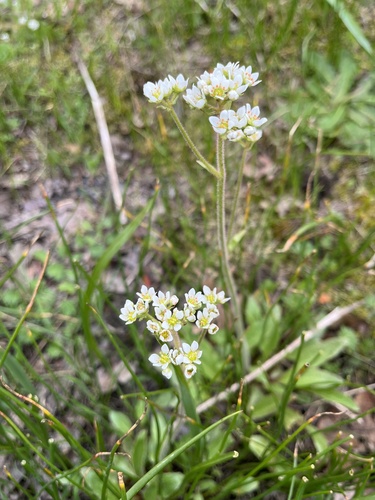
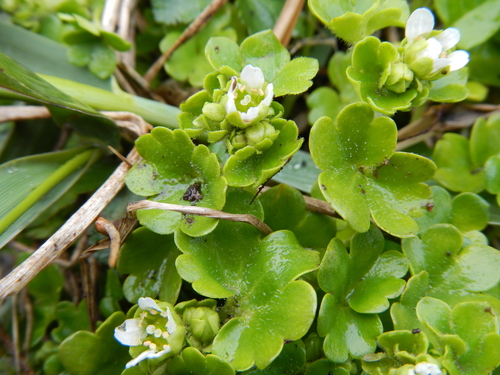
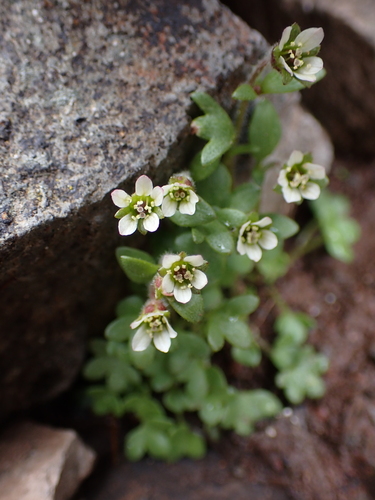
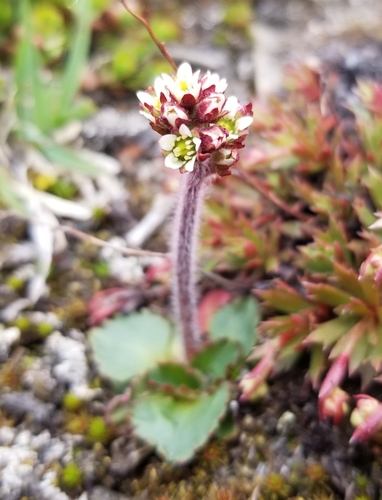
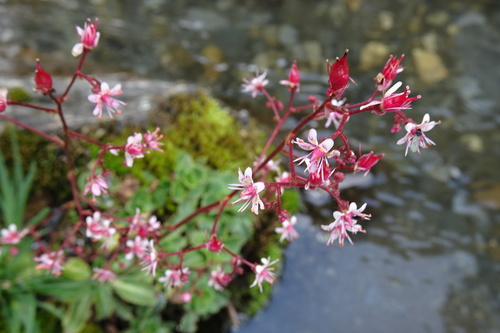
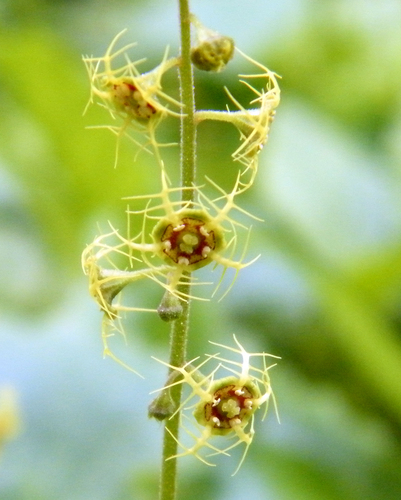
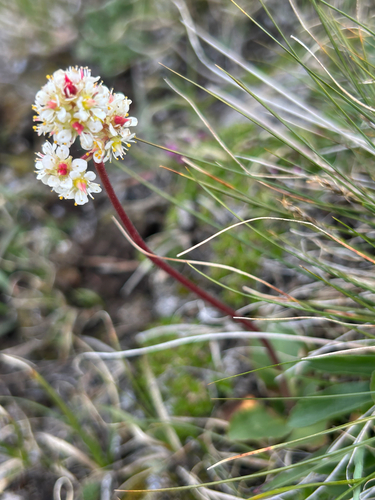
Micranthes occidentalis (S.Watson) Small is a herbaceous perennial plant. It grows a rosette of three to five petiolate leaves at its base. The leaves are elliptic to oval, 3 to 8 centimeters long and 1 to 3 centimeters wide, with 15 to 30 teeth along their edges. Flowering stems are 10 to 25 centimeters tall, leafless, covered in glandular hairs, and reddish in color. From May through August, these stems produce clusters of small white or pinkish flowers. Each flower has a cup-shaped calyx, five lobes, petals approximately 5 millimeters long, and 10 stamens. The inflorescence is glandular and pyramidal in shape. Mature fruits are green to reddish-purple capsules 3 to 6 millimeters long. Like many saxifrages, M. occidentalis produces several short rhizomes, and its roots may form bulblets. It can be told apart from its close relative Micranthes rufidula by its more irregular tooth pattern, hairless leaves, and glandular rather than flat inflorescence. This species occurs from New Mexico in the south, north to Alaska, and east to Montana. It is common across a wide range of ecological conditions, including rocky slopes, meadows, and mossy openings. It can be found at altitudes ranging from low valleys to alpine elevations, and some sources note it prefers higher altitudes. This preference is the origin of its common name "mountain saxifrage".