About Meum athamanticum Jacq.
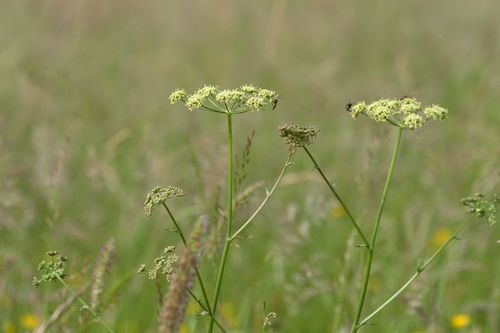
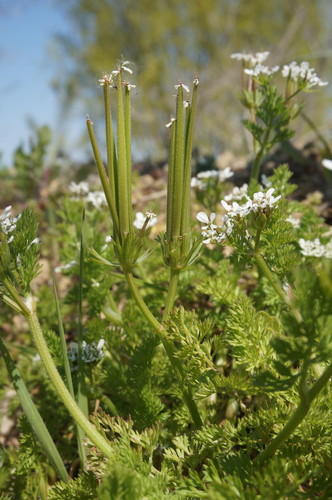
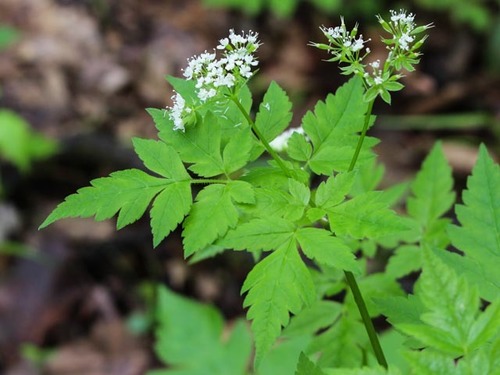
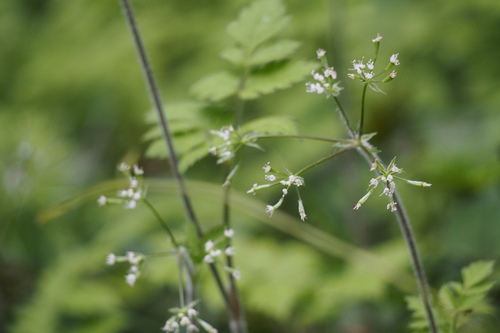
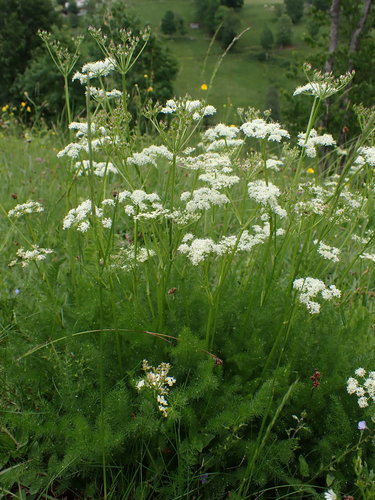
The genus Meum is a monotypic genus in the Apiaceae family, with its only accepted species being Meum athamanticum Jacq. This species is a glabrous, highly aromatic perennial plant. Common names for it used in the United Kingdom include baldmoney, meu, meum, and spignel; it is also sometimes called spikenel or spiknel. This species grows in grassland, often on limestone substrates, in mountain regions of Western and Central Europe. Its native range extends south to the Sierra Nevada of Andalucia, Spain, and to central Bulgaria in the Balkan Peninsula. It is not very common in the UK, occurring only in a small number of localities in northern England and northern Wales. It is slightly more abundant in Scotland, where it grows as far north as Sutherland. Meum athamanticum has been cultivated in Scotland, where its roots were eaten as a root vegetable. Its delicate, feathery foliage has been used as a condiment. The foliage has also been incorporated into a wide range of home remedies: it has been used as a diuretic, to regulate menstruation and treat uterine complaints, and to address catarrh, hysteria and stomach ailments. The scent of M. athamanticum roots is very similar to the scent of the roots of two other edible and medicinal umbellifers: Levisticum officinale and Angelica archangelica. The aromatic flavor of M. athamanticum leaves is somewhat similar to that of Melilot; Melilot gains its new-mown hay aroma from coumarin. When cows feed on this plant’s foliage in spring, its aroma is passed into the milk and butter the cows produce. The unusual common name Baldmoney is said to come from the name of the Scandinavian god Baldr, to whom the plant was dedicated. In German, the plant is called Bärwurz (meaning bear wort). The German noun for the plant is grammatically feminine (die Bärwurz), while the term refers to a Bavarian schnapps variety flavored with the plant’s extract as a masculine noun (der Bärwurz).