About Meterana alcyone Hudson, 1898
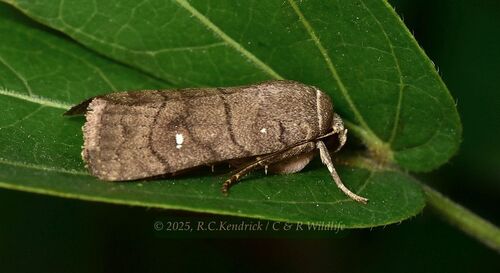
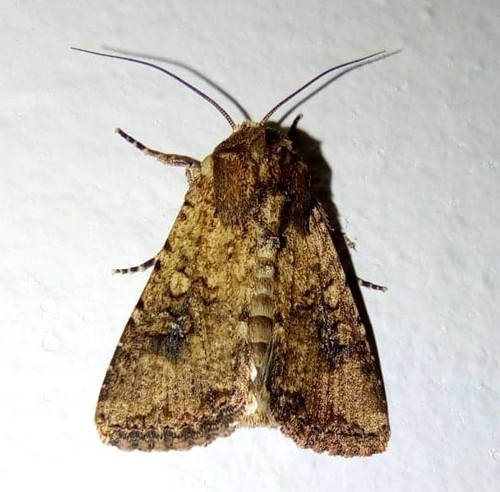
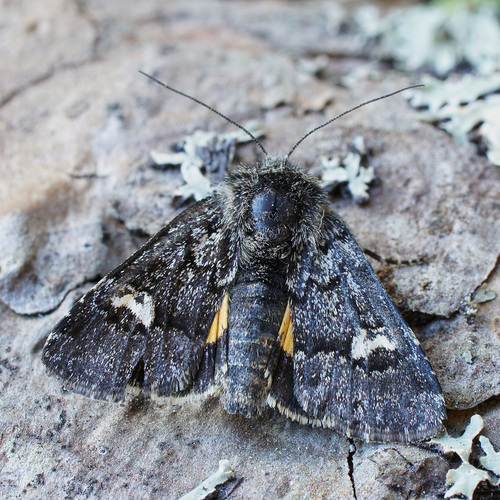
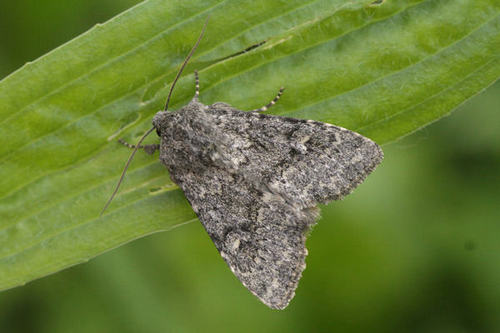
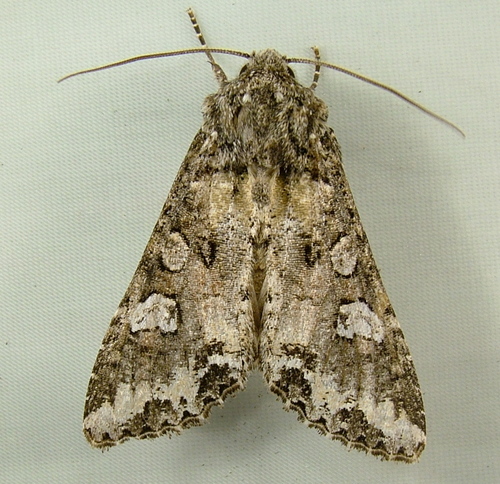
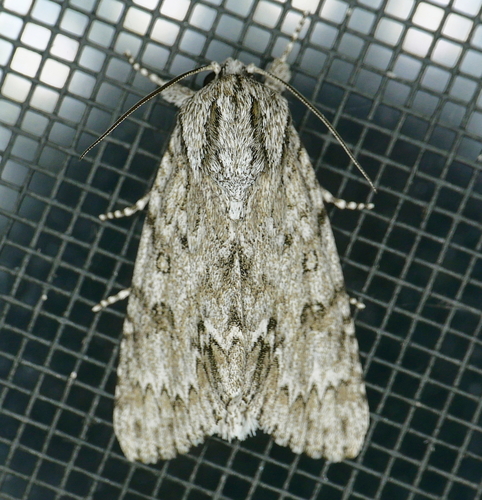
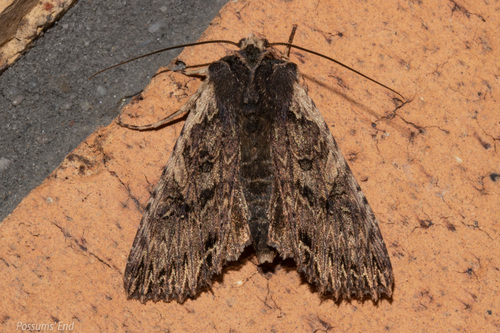
Meterana alcyone was first described by George Hudson in 1898. In Hudson’s original description, the male moth has a wingspan of 1+5⁄8 inches, while the female has a smaller wingspan of 1+1⁄2 inches. The male’s forewings are warm brown, darkening toward the base. At roughly one-fifth of the forewing length, there is a wavy, black transverse line edged with white, followed by a round black spot. The costa is yellowish, marked with four pairs of short oblique black marks. The orbicular spot is large, oval, oblique, pale yellowish-brown, and slightly darker toward its center. The claviform spot is small, obscure, and brownish-black. The reniform spot is black, outlined in dull white. A series of very sharp, dull white, tooth-shaped markings sit along the termen, and the termen itself is slightly scalloped; the male’s forewing cilia are dark brown. The male’s hindwings are grey, with a series of small dark markings along the termen, and the hindwing cilia are reddish-ochreous. The male’s head and front portion of the thorax are reddish-ochreous, while the rest of the thorax is rich brown, with a clear black transverse line separating the pale and dark colored areas. The abdomen is reddish-ochreous, and its crests are reddish-brown. The female is significantly darker and duller than the male, with much less distinct markings, several extra jagged transverse lines, and the white markings that are prominent on the male only appear as faint, indistinct drab markings. This moth species is endemic to New Zealand, occurring on both the North and South Islands. Its preferred habitats are native forest, shrubland, and coastal dunes.