About Meta menardi (Latreille, 1804)
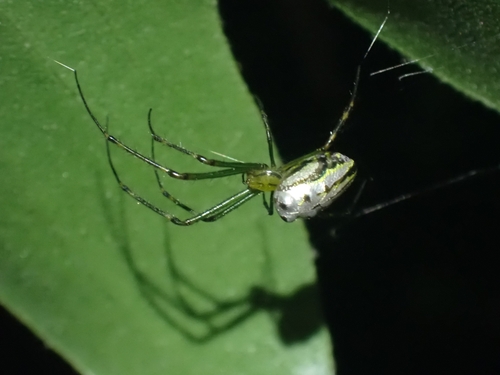
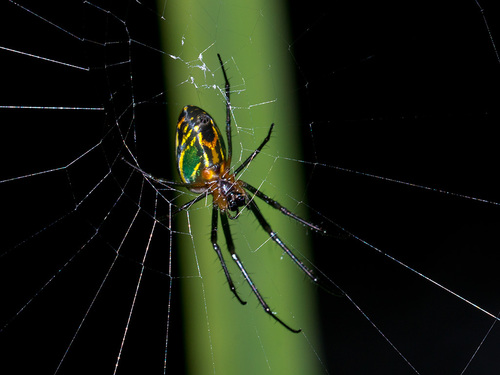
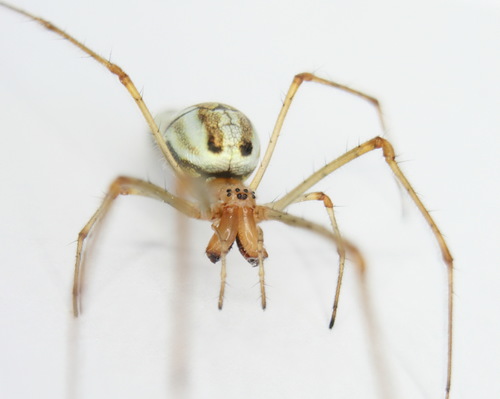
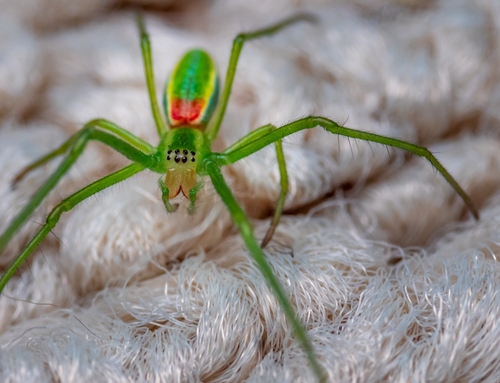
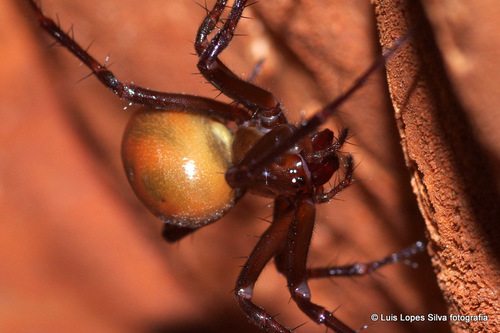
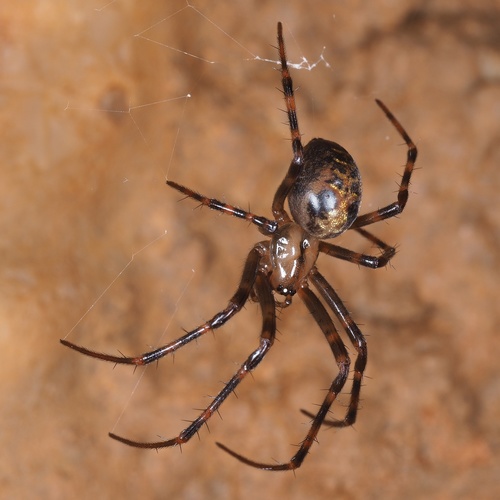
Meta menardi, commonly known as the European cave spider, ranges in colour from shiny satin black to reddish brown, and often has a differently coloured rear body that can be black, brown, or even olive green. It is one of the largest spiders found in the United Kingdom, with adults reaching roughly a 5 cm leg span and 15 mm body length; however, the giant house spider, cardinal spider, and raft spider are larger than this species. It is widespread and locally abundant in the UK, though it is rarely noticed due to its behavioural habits, and it is neither endangered nor protected there. Meta menardi closely resembles the related species Meta bourneti, but M. bourneti has a fainter mark on its abdomen and no rings on its legs. The ecology of the two species is very similar, but they show different levels of tolerance to microclimatic variation within caves, and this difference is the main factor that determines the differentiation of their ecological niches. Cave spiders feed on smaller invertebrates, most frequently myriapods and slugs. The European cave spider is not dangerous to humans. Like nearly all spiders, it has venom, but its effect on large mammals is negligible. The species is unlikely to bite when carefully handled, but if sufficiently provoked, it is capable of inflicting an unpleasant nip. It is non-aggressive, generally slow moving, and is considered a "gentle giant" by arachnophiles. The natural range of Meta menardi extends from Scandinavia to North Africa and from Europe to Korea; there are also introduced transplanted populations in locations as far apart as Japan and Madagascar. Adult European cave spiders are photophobic, and live in completely light-free places, most frequently in caves and tunnels. They can sometimes be seen outside of caves and mines, as they emerge around dusk to hunt. They often hunt using a single silk lasso line, swinging down onto their prey. They are frequently found in areas that are frequented by bats. They are most often observed by humans in railway tunnels and mines, because these sites are more commonly visited by people. In contrast to adults, young Meta menardi are strongly attracted to light after going through several instars; this is likely an evolutionary adaptation that ensures the species spreads to new areas. After mating, female Meta menardi produce a drop-shaped egg sac, also called a cocoon. These egg sacs are tear-shaped white pendants, sometimes with a slightly yellow centre, and usually hang from the roof of the spider's habitat on a silk thread approximately 20 mm long. Egg sacs are usually laid near cave entrances, where air flow velocity ranges between 0.3 and 0.6 m/s. The cocoon, which has a radius of 2 to 3 cm, holds an average of 200 to 300 eggs, and is laid near the cave entrance at the end of summer. After hatching, spiderlings remain in the cocoon until their first molt, feeding on yolk reserves. They leave the cocoon in spring, move toward the cave entrance, and disperse outside the cave via ballooning.