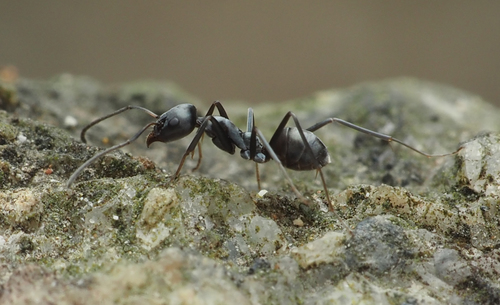
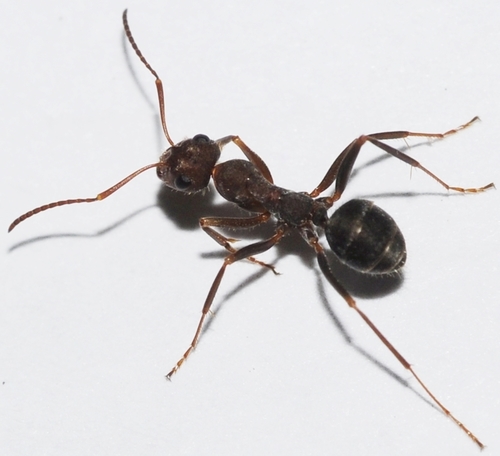
About Messor capitatus (Latreille, 1798)
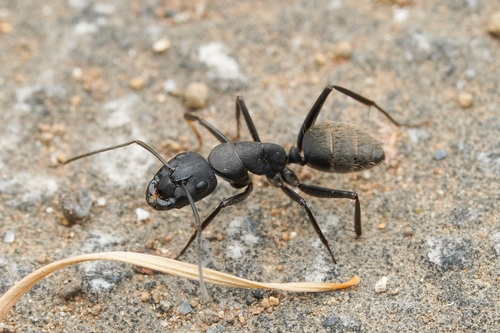
Messor capitatus is an ant species that belongs to the genus Messor. This genus contains around 40 specialized species that inhabit dry areas of Mediterranean regions, including parts of Africa, Southern Europe, and Asia. Messor capitatus is classified as an Old World species because it produces and releases trail pheromones from the Dufour gland, rather than from poison glands. Messor capitatus typically forages individually, with workers collecting food independently of each other, but they may also use group foraging to form irregular, broad columns. The main food source of Messor capitatus is seeds, but they will also consume dead plant and animal remains. In most hymenopteran species, colonies have a fertile queen and sterile workers. Messor capitatus is one of the few species that can rarely have thelytokous workers: through parthenogenesis, unfertilized eggs develop into females. When a Messor capitatus colony loses its queen, workers can develop functional ovaries. These workers begin producing females within one month after the colony becomes queenless, and start producing males after ten months. This shift in the sex of produced offspring is not caused by Wolbachia, a bacterium that acts as a reproductive parasite and infects most insect species.