About Mespilus germanica L.
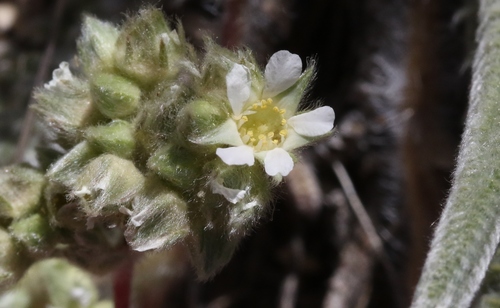
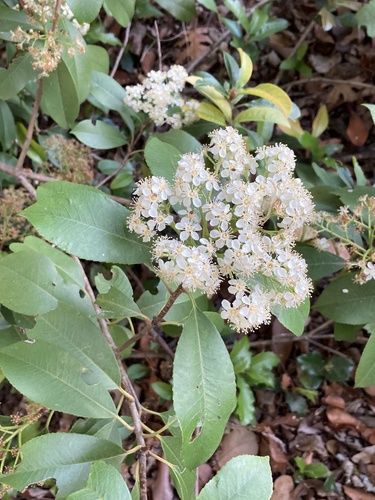
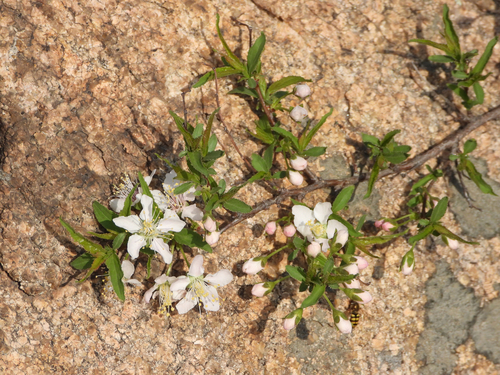
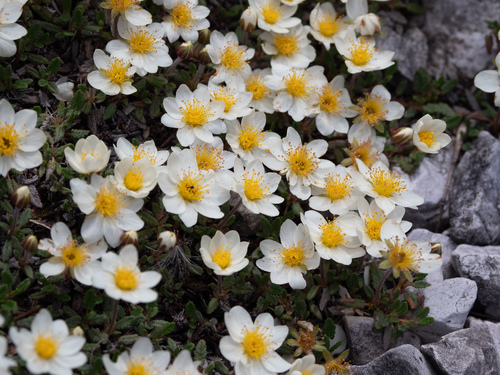
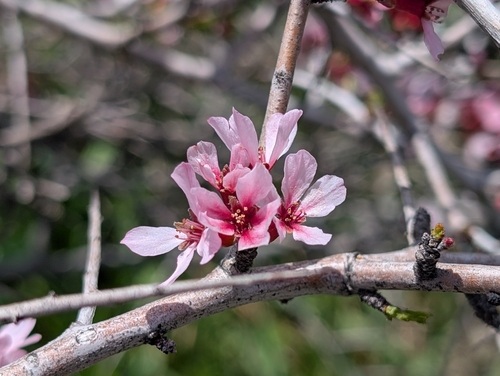
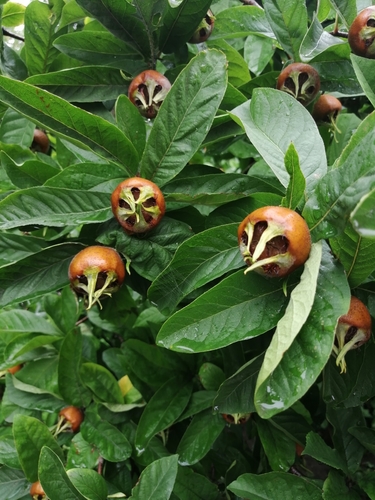
This is a description of the species Mespilus germanica L., commonly known as medlar. This deciduous plant grows up to 8 metres (26 feet) tall under ideal conditions, but it is typically shorter, and more often shrub-like than tree-like. It is relatively short-lived, with a lifespan of 30 to 60 years. Its bark is grayish brown, marked with deep vertical cracks that form rectangular plates that tend to lift away from the trunk. Wild M. germanica is mostly a thorny, more shrub-like than tree-like plant, growing between 1.5 and 4 m (5 and 13 ft) high. Cultivated forms usually have reduced thorns, or lack thorns entirely. In general, medlar is a small deciduous tree with an overhanging, nearly round crown and an irregularly shaped trunk. It typically reaches a height between 1 and 6 m (3+1⁄2 and 19+1⁄2 ft), though cultivated individuals can grow significantly larger. Its diameter at breast height is usually between 20 and 25 cm (8 and 10 in), and can reach up to 50 cm (20 in) in exceptional cases. Its roots are heavily branched and far-ranging, forming a somewhat fibrous root system. Medlar wood has a fine texture, is very hard, and has white, slightly pink-tinted sapwood, brownish heartwood, and clearly visible annual rings. The plant's winter buds are pointed, ovoid, and grow up to 5 millimetres (1⁄4 inch) long. Its leaves are dark green and elliptic, 8–15 centimetres (3–6 in) long and 3–5 cm (1–2 in) wide, densely hairy (pubescent) on the underside, and turn red in autumn before falling. Medlar flowers are 2–5 cm (3⁄4–2 in) in diameter, with a short stalk; they grow singly at the ends of short side shoots. They have five elongated, narrow sepals and five separate, white or pale pink petals. Compared to other fruit trees grown at European latitudes, medlar flowers very late, in May or June. The flowers are hermaphrodite, pollinated by bees, and the species normally undergoes self-pollination. After flowering, the plant develops flattened, reddish-brown, hairy fruits with juicy flesh. The reddish-brown fruit is a pome, 2–3 cm (3⁄4–1+1⁄4 in) in diameter, with wide-spreading persistent sepals surrounding a central pit, which gives the fruit a 'hollow' appearance; cultivated forms typically have fruits between 3 and 8 cm (1+1⁄4 and 3+1⁄4 in) in diameter. Sexual reproduction is standard for wild medlar, and the seeds they produce have a germination capacity that lasts 18 to 20 months. Seeds are dispersed by animals including birds, squirrels and deer. Some varieties are sterile, so they can only be propagated vegetatively. The reported chromosome counts for this species are 2n = 32 or 2n = 34. Based on an extensive review of literature and plant specimens, researcher Kazimierz Browicz concluded that the true native range of M. germanica is limited to the southeastern Balkan peninsula, Asia Minor, the Caucasus, Crimea, northern Iran, and possibly also Turkmenia. It also occurs in southeastern Europe, particularly along the Black Sea coasts of Bulgaria and Turkey. The species requires temperate or sub-mediterranean climate conditions, with warm summers and mild winters. Air temperatures between 18 and 20 °C (64 to 68 °F) are considered favourable for growth; it tolerates cold as low as −20 °C (−4 °F), and late frosts rarely cause damage. Wild medlar has been observed in dry areas with 700 mm (28 in) of annual precipitation, growing at altitudes from 0 to 1,100 m (0 to 3,600 ft). It can grow in a wide range of soil types, and prefers fresh, well-drained loamy soils with a pH between 6 and 8. It occurs across southern Europe, where it is generally rare. It is reported to be naturalized in some woods in southeast England, but is found in very few gardens. Mespilus germanica may have been cultivated for as long as 3,000 years. The ancient Greek geographer Strabo mentions μέσπιλον (méspilon) in his work Geographica, Book 16, Chapter 4. It was introduced to Greece around 700 BC, and to Rome around 200 BC, and was an important fruit plant during Roman and medieval times. By the 17th and 18th centuries, however, it had been replaced by other fruits, and it is rarely cultivated today. Medlar pomes are one of the few fruits that become edible in winter, which makes it a useful tree for gardeners who want fruit available year-round. Cultivated forms are propagated by budding and grafting onto various rootstocks including hawthorn (Crataegus species), mountain ash, pear or quince, to improve performance in different soil types. Grafted cultivated cultivars begin producing full fruit crops 6 to 7 years after grafting, and continue to produce fruit for 20 to 25 years. Annual fruit production ranges between 30 and 70 kilograms (70 and 150 pounds) per tree, depending on variety and tree age. Grafting onto medlar seedlings is not recommended, due to the slow growth of grafted shoots. Irrigation and fertilization can stimulate growth in commercial medlar plantations. Cutting back fruit-bearing shoots after harvest encourages the formation of new fertile short shoots. Ripe medlar fruits are hard and acidic, but become edible after softening, a process called "bletting", which can be triggered by frost or occurs naturally during long-term storage. Bletting reduces tannin and fruit acid content, increases sugar content, and alters mineral content. Once softening begins, the fruit skin rapidly becomes wrinkled and turns dark brown, and the interior develops a consistency and flavour similar to apple sauce. This appearance can confuse people unfamiliar with medlar, as the softened fruit looks as if it has spoiled. In Gilan, northern Iran, medlar leaves, bark, fruit, and wood are traditionally used in herbal medicine. After bletting, the fruit can be eaten raw, sometimes with sugar and cream, and is described as an "acquired taste", or it can be used to make medlar jelly. It is also used to make "medlar cheese", a preparation similar to lemon curd made with fruit pulp, eggs, and butter. Unripe fruits have a relatively high tannin content, around 2.6%, so they are used for tanning leather. The tannin causes protein flocculation, which allows it to be used to reduce the turbidity of wine. In Saarland, Germany, a schnapps is made from medlar fruit, and refined with hawthorn. "Medlar tea" is almost never made from M. germanica; it is typically made from wolfberry (goji), which is sometimes incorrectly translated as "red medlar". Mespilus germanica kernel oil has been used to produce biodiesel; linoleic acid and oleic acid each make up about 40% of the extracted oil, and the physical properties of the resulting biodiesel allow it to be used as an alternative to conventional diesel without modifying standard engines. Medlar leaves have been used to produce activated carbon for removing heavy metals such as Ni²+ from aqueous solutions. Silver nanoparticles can be synthesized from M. germanica extract, and these nanoparticles show antibacterial and antibiofilm activities against multidrug-resistant clinical strains of Klebsiella pneumoniae.