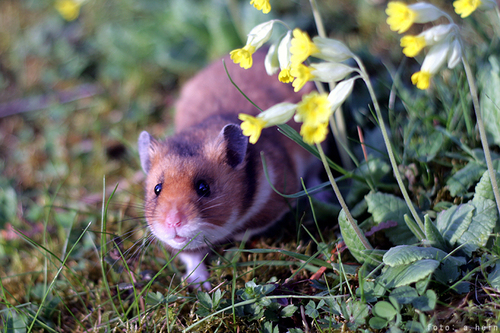
About Mesocricetus auratus (Waterhouse, 1839)
Scientific Name
Scientific name: Mesocricetus auratus (Waterhouse, 1839).
Adult Length
Adult golden hamsters, also called Syrian hamsters, can reach around 7.1 inches (18 centimeters) in length.
Wild Adult Weight and Lifespan
Females are typically larger than males, with a body mass of around 100–150 grams (3.5–5.3 ounces) and a lifespan of 1.5 to 2 years.
Captive Bred Adult Weight
Syrian hamsters from private breeders usually weigh between 175–225 grams (6.2–7.9 ounces).
Cheek Pouch Structure
Like most other members of its subfamily, the golden hamster has expandable cheek pouches that extend from its cheeks to its shoulders.
Cheek Pouch Function
In the wild, golden hamsters are larder hoarders, and they use these cheek pouches to transport food back to their burrows.
Etymology of Common Name
In the local Arabic dialect of the region where the species was originally found, its name translates roughly to "mister saddlebags", a reference to the large storage capacity of its cheek pouches.
Estrus Cycle
Sexually mature female golden hamsters enter estrus (heat) every four days.
Gestation Period Length
Golden hamsters and other species in the genus Mesocricetus have the shortest known gestation period of any placental mammal, at around 16 days.
Gestation Complications
Gestation can rarely last up to 21 days, but this is uncommon and almost always leads to pregnancy complications.
Litter Size
Golden hamsters can produce large litters of 20 or more young, though the average litter size is between eight and 10 pups.
Infanticide Risk
If a mother hamster is inexperienced or feels threatened, she may abandon or eat her pups.
Postpartum Estrus
A female hamster enters estrus almost immediately after giving birth, and can become pregnant even while she is already caring for an existing litter.
Consecutive Pregnancy Risks
This places high stress on the mother's body, and often results in very weak, undernourished young.