About Mesapamea secalis (Linnaeus, 1758)
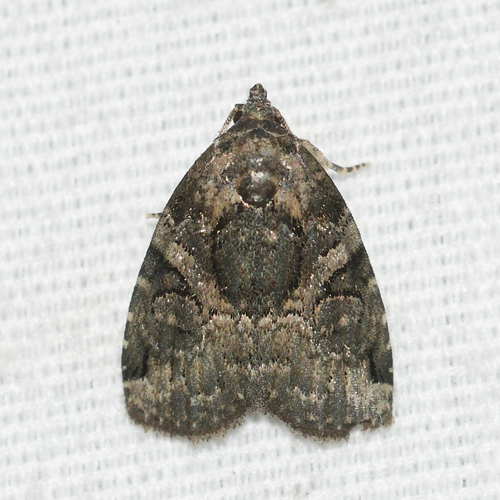
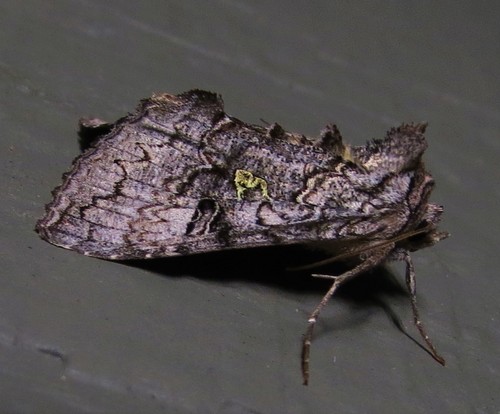
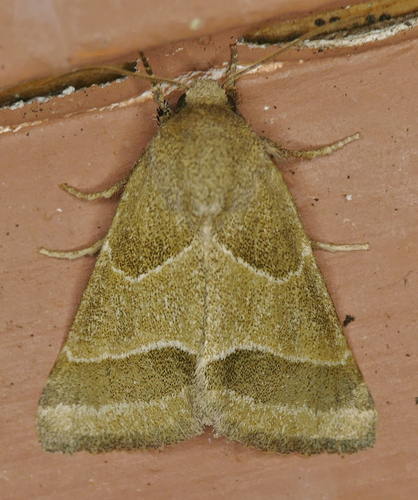
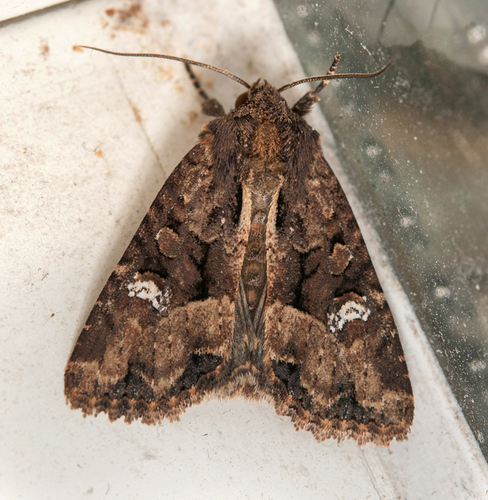
This species is formally known as Mesapamea secalis (Linnaeus, 1758), with previous synonyms including Phalaena secalis L., lambda View., lancea Esp., and vilis Hbn. The forewing ground colour varies widely, ranging from bluish white or cream white through pale and dark grey, sometimes with an ochreous or brownish tinge, to grey brown, redbrown, or purplish brown. The median and terminal areas are darker, appearing fuscous brown or blackish brown, and generally bear a broad black brown streak that runs from below the claviform stigma along the submedian fold to the outer line. There is a black dash from the base below the cell, and a black streak above the inner margin near the base. The inner and outer lines are double, dark, and conversely lunulate-dentate. The submarginal line is pale, with narrow dark shading preceding it. The claviform stigma is small and black-edged. The orbicular stigma is oblique, oval, and matches the ground colour, though it is often tinged with rufous, and has a paler annulus and black outline. The reniform stigma has a brown lunule on its inner side, and is filled sometimes with the ground colour, luteous, or white. Veins are often dark toward the termen. The hindwing is fuscous.
Several named forms and aberrations have been described. The form ab. l-niger Haw. has a pale ground colour, with plainer markings than specimens where the ground colour is almost as dark as the median area. In ab. oculea Guen., the ground colour is pale ochreous or greyish ochreous, with the costal area as far as the submarginal line blackish brown; this colour fills the cell and extends to the submedian fold in the median area, and the terminal area (except at the apex) is also black brown. The reniform stigma varies as before, sometimes matching the ochreous ground colour and more rarely being white. The streak near the base above the inner margin is brown black rather than black, and is sometimes obsolete; the black streak along the submedian fold between the lines is never present in this form. In furca Haw., the ground colour is suffused with rufous, and the contrast between dark and light shades is less striking. Rava Haw. has a rufous ochreous or brown ground colour, with dark brown on the costal area filling the median area all the way to the inner margin, making it intermediate between secalis L. and oculea Guen. Grisea Tutt is an almost unicolorous grey form with hardly any clear markings, which passes into reticulata Tutt, a dull brown grey or fuscous grey form where cross lines and stigmata are more or less distinct; the reniform is sometimes white, but more often matches the ground colour. This is a common form in Britain. Grisea Tutt further passes into the deep brown ab. nictitans Esp. and the black form with more or less obscured markings, ab. leucostigma Esp. In these two forms, the reniform stigma is either yellowish, bright white, or (as often seen in British specimens) dark with only 2 or 3 white dots on the outer edge. In the very darkest forms, the submarginal line appears only as fine pale dashes between the veins.
Two additional new forms, which may be specifically distinct, are also named. Ab. pulverosa ab. nov. is somewhat similar to ab. reticulata Tutt, but is darker, suffused with brown and clouded (especially along the costa) with blackish fuscous, and is thickly irrorated with whitish scales in places. The veins are strongly dusted with both dark and pale scales. The inner and outer lines are distinct and filled with ochreous. The subterminal line is brownish ochreous, preceded by a deep brown cloud and followed by dull blackish terminal blotches on both folds. The claviform and orbicular stigmata are dull brown with black edges. The reniform stigma is large: the inner half is dark with a dark-edged central brown lunule, and the external margin is yellow ochreous, except for the lower end which is white. The hindwing is dark fuscous, and the head and thorax are black brown. This form was described from a male collected at Pescocostanzo, Italy by Neumann. The second new form, ab. lilacina ab. nov., comes from Silvaplana in the Engadine, Switzerland. It has a dull lilac grey ground colour in the basal and postmedian areas, with the median and terminal areas more diffusely dull rufous brown. The inner and outer lines and the reniform stigma are filled with lilac grey. The subterminal line is pale, preceded by brownish shading. The hindwing is olive brownish. The head and thorax are violet-grey; the pectus and legs are paler but strongly tinged with violet, and the anal tufts are fulvous.
The larva is greenish, with a double reddish dorsal line and a yellow spiracular line. The spiracles are black, and the head is pale brown. The wingspan of this species ranges from 27 to 30 mm.