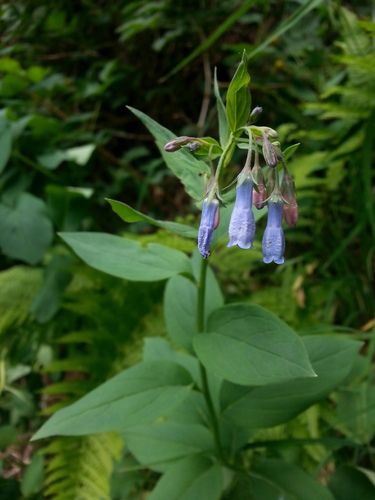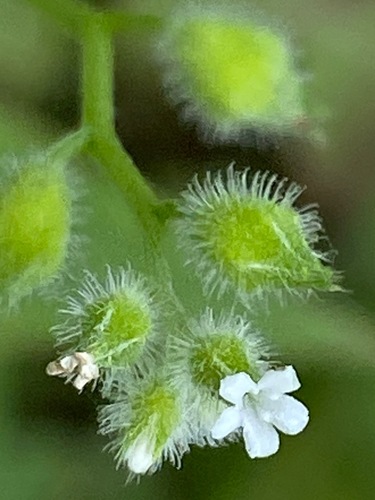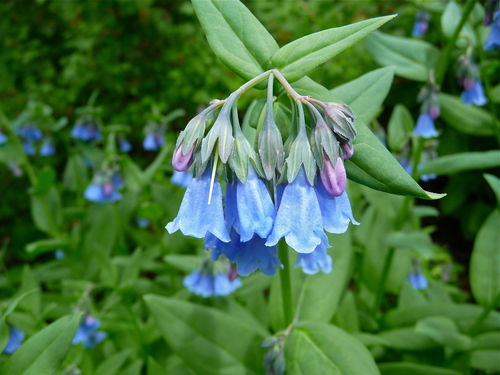
About Mertensia arizonica Greene
The genus Mertensia consists of flowering plants in the borage family Boraginaceae. They are perennial herbaceous plants, with blue or occasionally white flowers that open from pink-tinged buds. This flower color change is common in the Boraginaceae family, and is caused by changes in soil pH. Mertensia is one of multiple plant groups commonly referred to as "bluebell". Despite this common name, its flowers are typically salverform, or trumpet-shaped, instead of campanulate, or bell-shaped. Mertensia is native to most of North America, and to a large portion of Asia ranging from western China to northeastern Russia. The Rocky Mountains are its center of diversity. Mertensia is mostly limited to alpine, subalpine, and montane habitats. Prominent exceptions are Mertensia maritima, a maritime plant found on Arctic and subarctic coastlines, and Mertensia virginica, which occurs from the Appalachian Mountains west to Minnesota, Iowa, and Missouri. Most species in the genus are endemic to very small areas of the Rocky Mountains. Mertensia virginica has the largest flowers in the genus, is commonly cultivated, and is sparingly naturalized in Europe. Around 12 additional species are known to be in cultivation. Inuit people ate the rhizomes of Mertensia maritima. Many Mertensia species are difficult to distinguish from one another, and some may be cryptic. Approximately 150 species names have been published for the genus Mertensia. Most authors have recognized around 45 species, but in 2014, the authors of a molecular phylogenetic study recommended accepting at least 62 species.