About Mentha arvensis L.
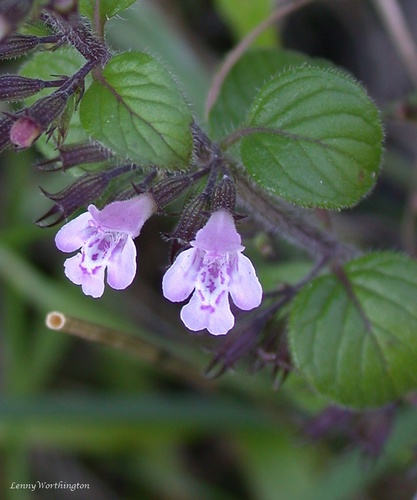
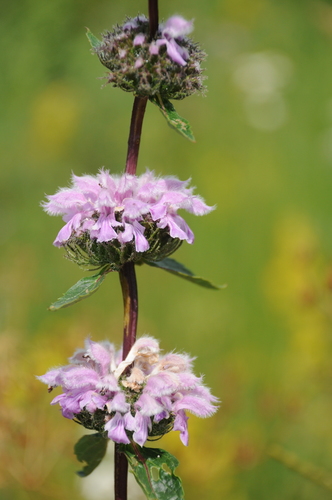
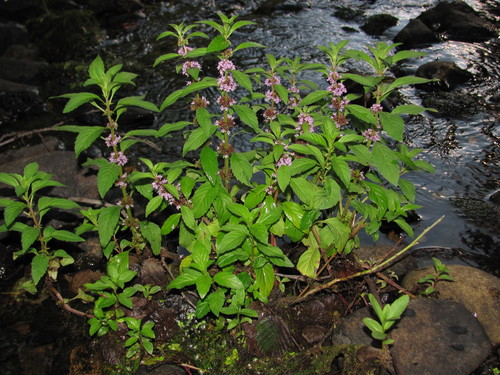
Mentha arvensis L., commonly called wild mint, is a herbaceous perennial plant. It generally grows 10 to 60 cm (4 to 24 in) tall, and rarely reaches up to 100 cm (40 in) tall. It produces a creeping rootstock, from which erect or semi-sprawling squarish stems grow. Its leaves grow in opposite pairs, are simple in shape, 2 to 6.5 cm (3⁄4 to 2+1⁄2 in) long and 1 to 2 cm (1⁄2 to 3⁄4 in) broad. The leaves are hairy, and have a coarsely serrated margin. The flowers are pale purple, and occasionally white or pink. They grow in whorls on the stem at the bases of the leaves. Each individual flower is 3 to 4 mm (1⁄8 to 5⁄32 in) long. It has a five-lobed hairy calyx, a four-lobed corolla with the uppermost lobe larger than the other three, and four stamens. The fruit of wild mint is a two-chambered carpel. The leaves of this plant have been made into tea to treat colds or aid digestion, and can also be eaten raw. Chemical substances that can be extracted from wild mint include menthol, menthone, isomenthone, neomenthol, limonene, methyl acetate, piperitone, beta-caryophyllene, alpha-pinene, beta-pinene, tannins and flavonoids. Mint extracts and menthol-related chemicals from this plant are used in food, drinks, cough medicines, creams and cigarettes. Menthol is widely used in dental care; as a mouthwash ingredient, it may potentially inhibit streptococci and lactobacilli bacteria.