About Melolontha hippocastani Fabricius, 1801
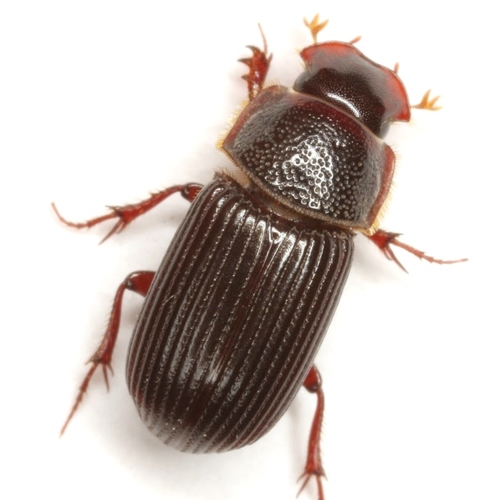
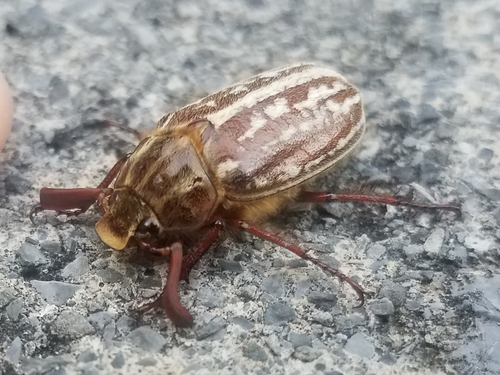
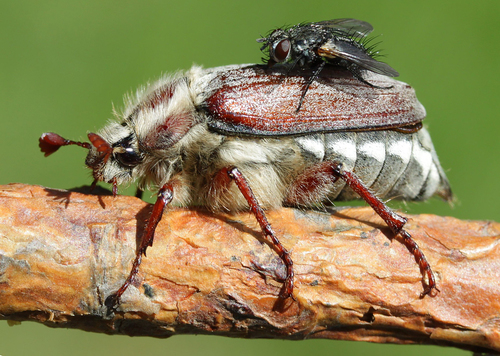
Melolontha hippocastani, commonly called the northern cockchafer or forest cockchafer, is a species of scarab beetle in the genus Melolontha, which contains multiple species collectively known as cockchafers. It is native to Eurasia, with a distribution that ranges from Western Europe to the Pacific coast of China. Its range covers most of Europe, excluding the continent's northernmost and southernmost regions, and extends into Mongolia, parts of Central Asia, Siberia, and taiga forests. Compared to related cockchafer species like the common cockchafer (Melolontha melolontha) and Melolontha pectoralis, it generally occurs at more northern latitudes, or at higher altitudes in upland woods further to the south. Unlike the common cockchafer, which lives in a variety of environments including both forested and open areas, this species is primarily associated with forests, most commonly taiga forest. Adult northern cockchafers are 20–29 mm in length. It can be distinguished from the common cockchafer Melolontha melolontha by the shape of its pygidium, which is primarily black in color.
Plant volatiles and sex pheromones support the mate-finding behavior of Melolontha hippocastani, and most mating activity occurs during evening flight periods. Females lay their eggs in clusters underground in soil, and they strongly prefer sandy soils, which make digging easier, allow larval movement, and let volatile compounds from host plants spread, which helps larvae orient and survive underground. Females lay an average of 24 eggs during their first egg-laying phase, and 15 eggs during their second egg-laying phase.
After hatching, larvae first feed on decaying organic matter, then move to feeding on small plant roots, including the roots of young trees such as pines and firs. Larval development takes between 3 and 5 years, and most larvae spend 36 months underground feeding on plant roots. Larval growth is split into three distinct phases. Larvae pupate in summer during the year before the adult swarming period, and spend their final winter underground in the adult form. Adults emerge from the soil between late April and the end of June, most often between late April and early May. After emerging, adults feed on tree foliage. Oviposition flights take place roughly 2 weeks after emergence. Like other cockchafer species, Melolontha hippocastani has been classified as a serious pest of crops and trees.