About Melogale moschata (Gray, 1831)
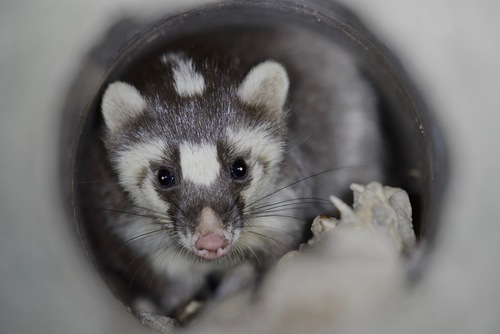
Distinctive mask-like markings on the face set the Chinese ferret-badger (Melogale moschata) apart from most other oriental mustelids, though other species in the genus Melogale share similar facial markings. The Chinese ferret-badger has an average body length of 33 to 43 centimetres (13 to 17 in), with a tail measuring 15 to 23 centimetres (5.9 to 9.1 in).
This species occupies grassland, open forests, and tropical rainforests across a range that extends from northeast India to southern China (including Hainan Island), and south to Hong Kong and northern Indochina. It tolerates human disturbance very well, and will temporarily live in agricultural areas including rice paddies, soybean fields, cotton fields, and grass fields. It acclimates well to human habitation, using human-made features like firewood stacks and rock piles as resting spots, and feeding in farmland and vegetable gardens. It creates very limited conflict with human communities, as it rarely preys on chickens or other livestock and generally does not damage property.
The Chinese ferret-badger is active during dusk and at night, and is a skilled climber. When alarmed, it releases foul-smelling anal secretions. During the day, it rests in burrows such as abandoned small rodent dens, or natural formations like rock crevices. It also builds simple makeshift shelters in shallow ground depressions. A study conducted between 1994 and 1996 found that the Chinese ferret-badger has small home ranges, which average around 10.6 hectares (26 acres) in size. The home ranges of male and female Chinese ferret-badgers overlap, indicating the species is not territorial between members. Even with small home ranges, Chinese ferret-badgers are relatively nomadic, moving between resting spots without establishing permanent residence. They may use a resting spot only once, or occupy a single site for several days at a time.
Chinese ferret-badgers mate in March. Females give birth to litters of up to three young in May or June. Newborns are blind, well-furred, and have the same colour pattern as adult Chinese ferret-badgers. Their eyes open when they are around two weeks old.