About Meloe violaceus Marsham, 1802
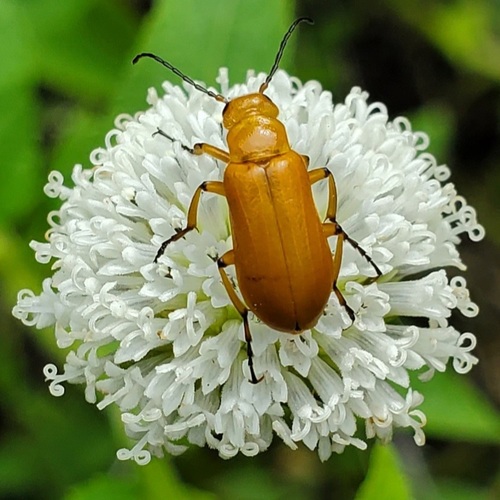
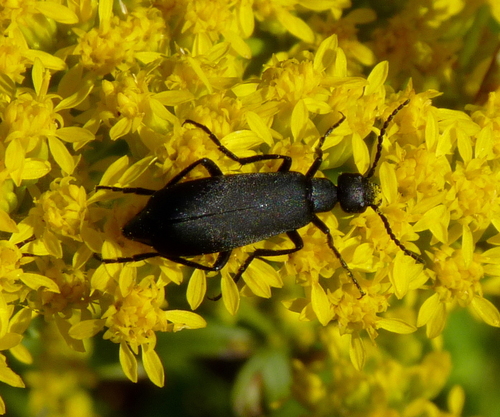
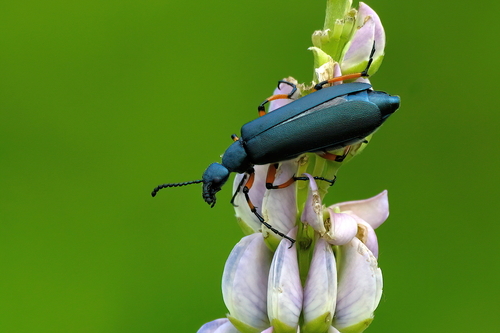
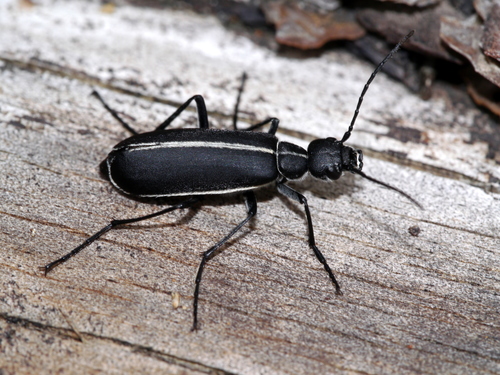
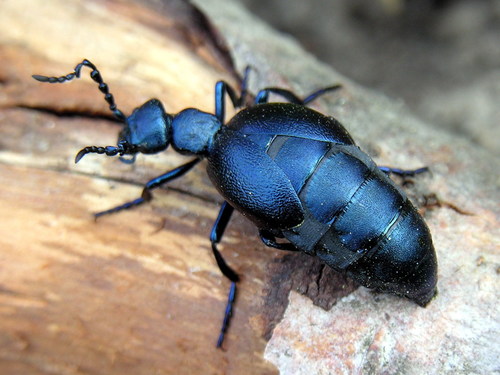
Meloe violaceus, commonly called the violet oil beetle, is a species of oil beetle that belongs to the subfamily Meloinae of the family Meloidae. This species can be found across most of Europe, the eastern Palearctic realm, the Near East, and North Africa. A key trait of Meloe violaceus is hypermetamorphosis, a form of complete insect metamorphosis that includes several extra life stages beyond the typical larva, nymph, and imago; these extra stages differ greatly in appearance and lifestyle. Adult violet oil beetles measure 10–30 millimetres (0.4–1.2 in) in body length, with females being slightly larger than males. Their bodies are black-blue or violet-blue; the head and pronotum have very fine punctation, and their elytra are noticeably shorter than the abdomen, as is the case for other species in the Meloinae subfamily. Adults live in sunny, dry habitats with flowering plants, and feed on pollen. Between May and June, females dig cylindrical holes 20–30 millimetres deep in soil, where they lay a very large number of eggs, ranging from around 2,000 to 10,000. Larvae hatch from the eggs after roughly one month, then climb onto grass or flowers to wait for potential host insects that come seeking pollen or nectar, and cling to the host's thorax. Violet oil beetle larvae are obligately parasitic, and develop primarily in the nests of solitary bees, or occasionally in the egg pods of locusts. If a larva accidentally attaches to a honey bee, it will die inside the hive and can cause significant damage to the hive. When a host female bee lays eggs in its nest cell, the first-stage larva of the violet oil beetle eats the bee's egg, grows in size, and molts into the second-stage larva. The second-stage larva continues its development by feeding on the host nest's stored honey and pollen. After passing through two more developmental stages, the larva forms a nymph, and eventually develops into a mature adult imago.