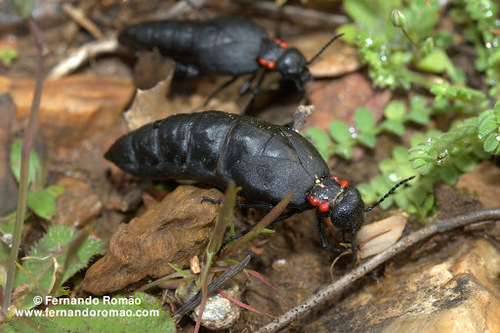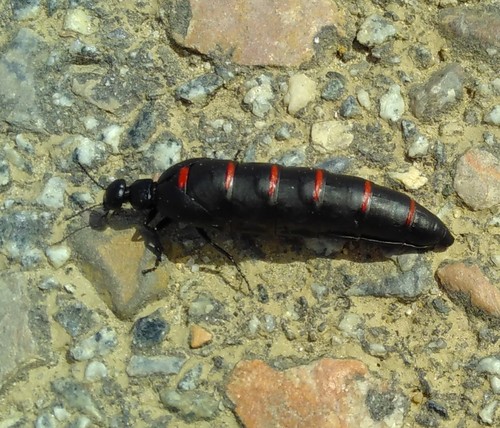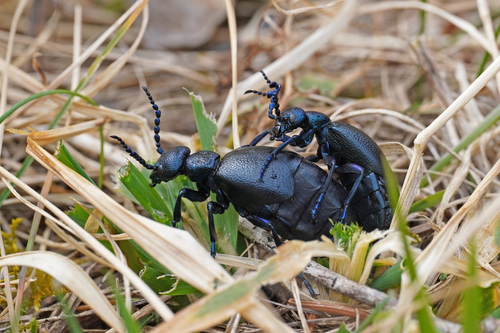
About Meloe proscarabaeus Linnaeus, 1758
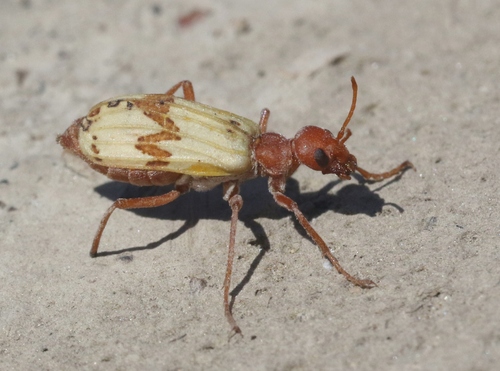
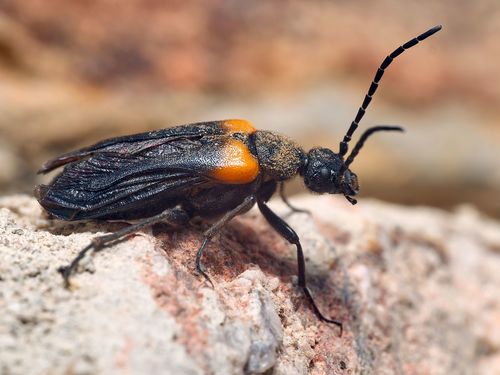
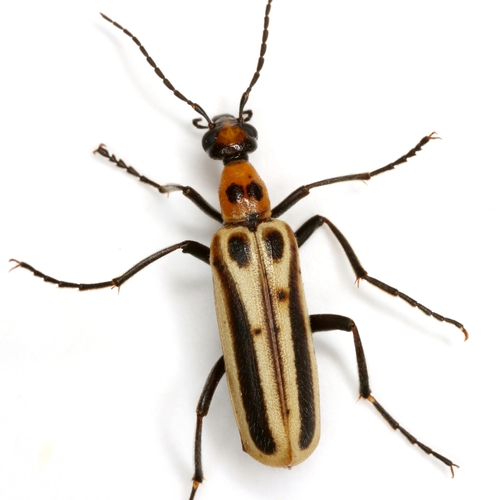
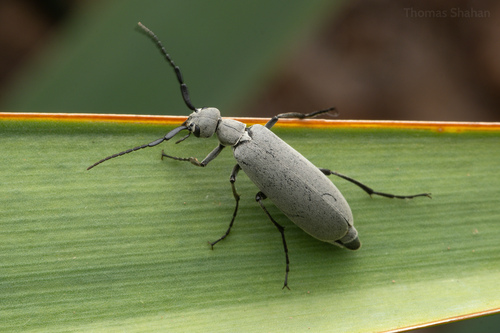
Meloe proscarabaeus is a European oil beetle. It can be found in meadows, field margins, and other warm habitats across most of Europe, except for the continent’s far northern region. This species lacks hind wings, and its elytra are reduced in size as a result. For its life cycle, female Meloe proscarabaeus lay their eggs in soil. Once the larvae hatch, they climb into flowers and wait for visiting solitary bees. Using their well-developed claws, the larvae attach themselves to the bees and travel back to the bees’ nests with their hosts. Inside the nests, the larvae feed on the bees’ eggs, along with the pollen and nectar the bees have collected. After feeding, the larvae pupate inside the bee nest, and leave the nest immediately after pupation to find a mate. Both the beetle and its full life cycle are described in detail by Gerald Durrell in his autobiographical work My Family and Other Animals.