About Meloe angusticollis Say, 1824
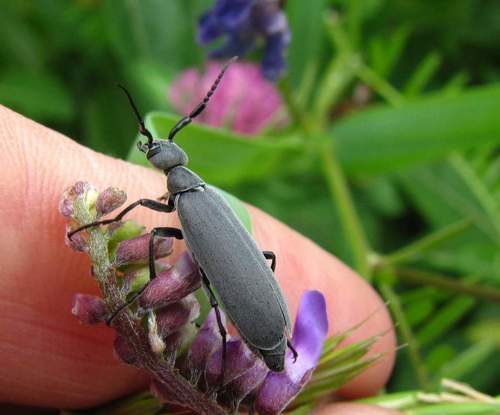
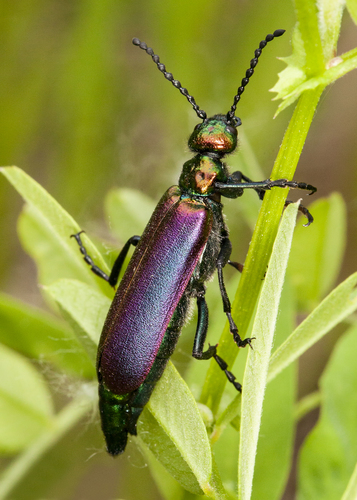
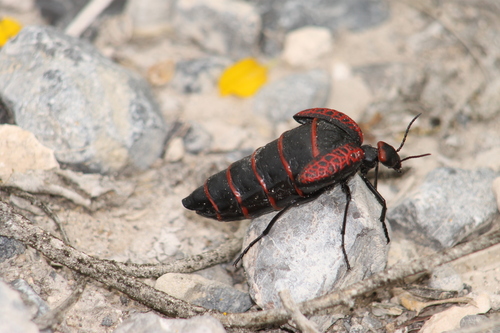
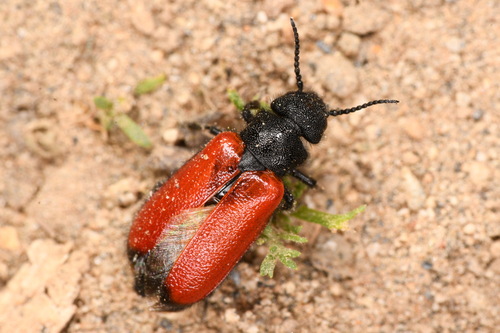
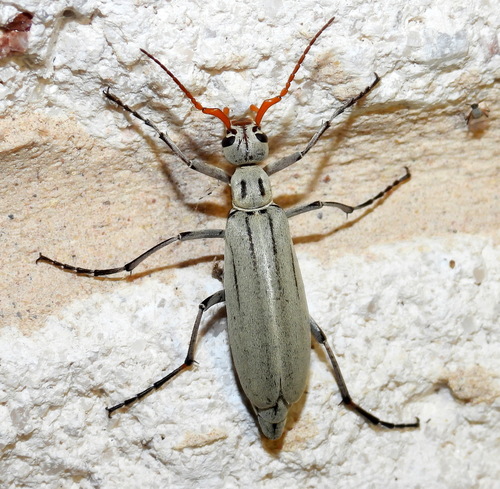
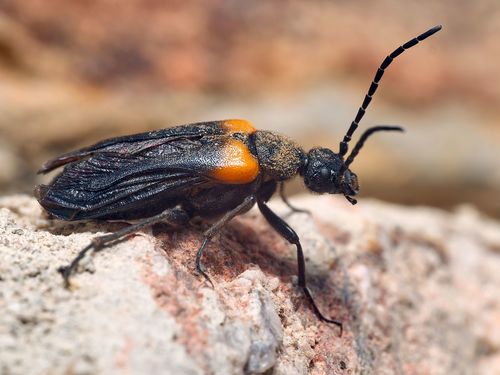
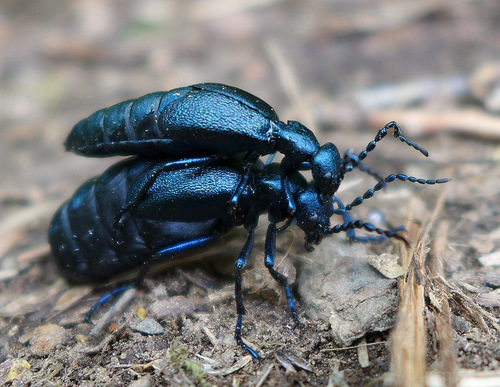
Meloe angusticollis Say, 1824 is a species of blister beetle. Individuals are black or metallic blue in color. They have extremely short, sparse setae that match the color of their body integument. The head shows moderate to dense punctation, and the pronotum also has moderate to dense punctation. The scutellum is conically produced. The elytra are short and do not reach the end of the abdomen. On each leg, the outer metathoracic tibial spur has its apical portion produced anteriorly. The moderate to dense punctation of the head and pronotum, plus the presence of a conically produced scutellum, readily distinguishes M. angusticollis from other species in the genus Meloe. Like other blister beetles, this species releases a toxic secretion called cantharidin. Cantharidin causes skin blisters and acts to deter predators; it is highly toxic to humans, and ingestion of just 100 milligrams can be potentially fatal. Historically, cantharidin from blister beetles was used in medicine as the aphrodisiac called Spanish fly, but this use has declined because of the compound's dangerous toxicity. Birds of the genus Sitta (nuthatches) have been observed rubbing blister beetles around the entrances of tree cavities to repel other animals, a behavior that likely relies on the beetles' toxic cantharidin secretion. This species is active primarily in spring and early summer, and is distributed across the northern half of the United States and southern Canada. Blister beetles, including M. angusticollis, undergo complete metamorphosis with four life stages: egg, larva, pupa, and adult. This species displays hypermetamorphosis: the first mobile larval stage, which has well-developed legs, differs greatly in form from later larval stages. M. angusticollis first-instar larvae hitchhike on bees to reach food sources located in bee nests. As larvae develop, they become engorged and less mobile, focusing their energy on feeding and growth. Late-stage larvae overwinter, then molt into the pupal stage before emerging as mature adults. This species typically produces one generation per year.