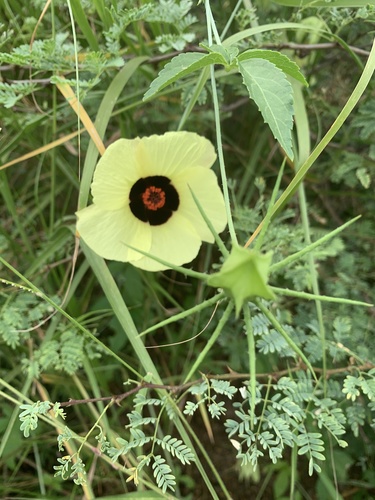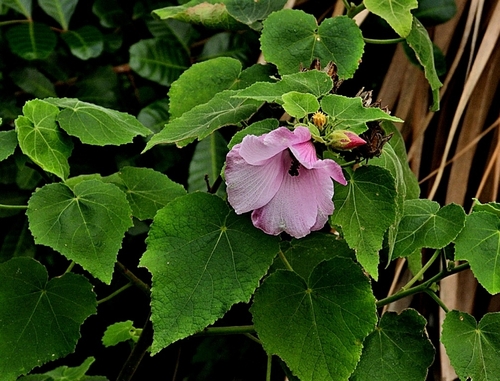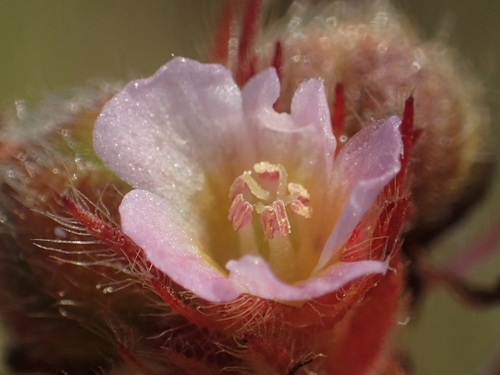
About Melochia corchorifolia L.
Growth and Stem Features
Melochia corchorifolia L. is an annual or perennial herb that typically grows 1.3 to 2.0 meters tall. Its stems have lines of stellate hairs.
Leaf Structure
Its leaves are simple, ovate, and arranged spirally, with densely serrated margins.
Leaf Measurements
Leaf blades vary from narrow to broad toward the tip, and measure up to 7.5 cm × 5.5 cm; leaf petioles are generally 5 cm long, with 6 mm long linear stipules. Leaf veins range between 5 cm and 7 cm in length.
United States Distribution
This species is common in the southeastern United States, where it has been recorded growing from North Carolina south to Mississippi.
Global Distribution
It is also widespread in tropical regions of Africa, Asia, and Australia.
Habitat
It typically grows in sunny or lightly shaded humid areas along rivers and lakeshores, and frequently occurs as a weed in cotton, soybean, and rice crops.
Reproduction Method
Melochia corchorifolia reproduces via seed.
Germination Requirements
Scarification is widely believed to significantly improve germination rates, and scarified seeds germinate successfully at temperatures between 35 °C and 40 °C.
Disease Host Role
This species has been observed to act as a host for fungal diseases including Rhizoctonia solani.
Leaf Edible Uses
The leaves of Melochia corchorifolia are eaten as a potherb in West Africa, southern Africa, Indo-China, and India. In Malawi, cooked leaves of this plant are a popular, slimy side dish.
Stem Uses
Its stems are used for tying bundles and in the construction of house roofs.