About Melipona quadrifasciata Lepeletier, 1836
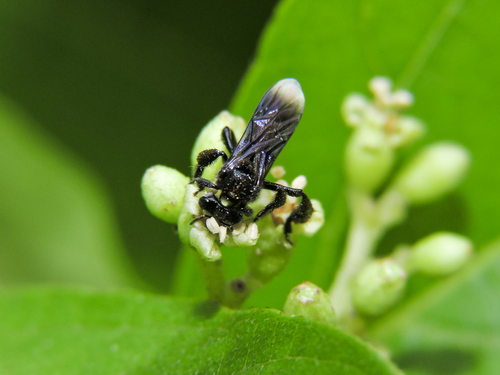
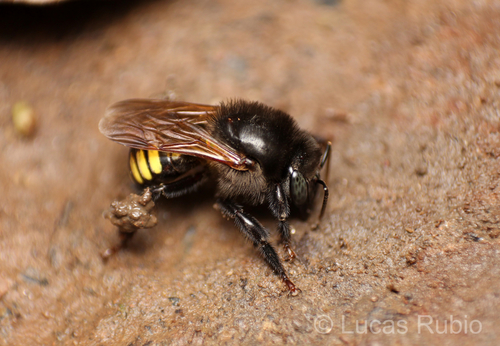
Identification and differentiation: Melipona quadrifasciata individuals have dark black, rounded bodies, slightly curved antennae, and translucent wings. They measure 10 to 11 mm in size, and have a heavier body build than common honeybees. This species can be identified by the bright yellow stripe pattern present on the third to sixth abdominal tergites. In Melipona quadrifasciata, larvae that will develop into workers, males, and potential queens are indistinguishable and intermixed, so caste differentiation in this species is determined by both environmental and genetic factors. Distribution and habitat: Melipona quadrifasciata is one of the most common Melipona species in southeastern coastal Brazil, with a range extending from the state of Pernambuco to the state of Rio Grande do Sul. This species has considerable variation in preferred nesting sites, and has been recorded nesting in tree trunks 1 to 3 meters above the soil surface, underground in Atta ant nests, and in abandoned mud bird nests built on telephone poles. Nests are most commonly found in tree holes, and their construction incorporates clay. The nest opening is sized to allow only one bee to pass through at a time. Reproduction: This section covers cell construction, oviposition, and caste differentiation of M. quadrifasciata.