About Melicoccus bijugatus Jacq.
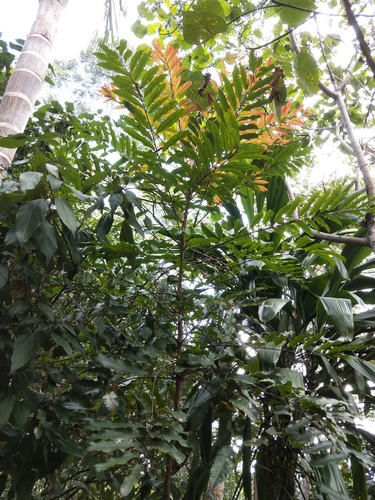
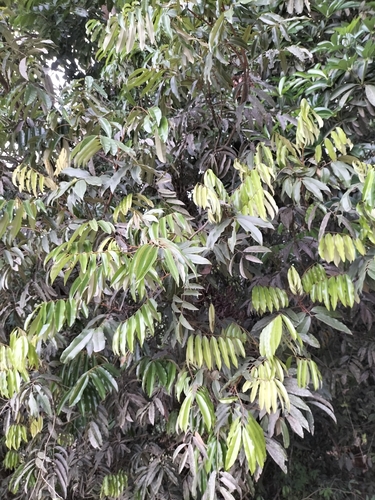
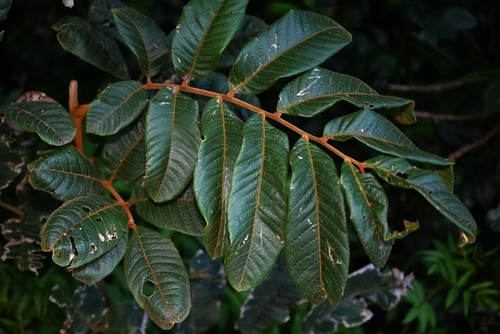
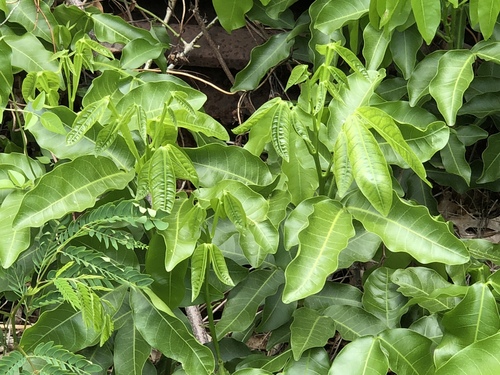
Melicoccus bijugatus Jacq. is a tree species that can grow up to 25 meters (82 feet) tall. It bears alternate compound leaves, each with four elliptic leaflets that measure 5–12.5 cm (2.0–4.9 in) long and 2.5–5 cm (0.98–1.97 in) wide. This species is typically dioecious, though autogamous individual trees occasionally occur. Its flowers have four petals and eight stamens, and develop into ovoid green drupes that are 2.5–4 cm (0.98–1.57 in) long and 2 cm (0.79 in) wide. The fruit pulp is orange, salmon, or yellowish, with a juicy, somewhat pasty texture. Melicoccus bijugatus is native to northern South America. It has become naturalized in coastal and dry forest of Central America, the Caribbean, and parts of the Old World tropics. It is thought to have been introduced to the Caribbean in pre-Columbian times, and also grows in India. Known as quenepa in Puerto Rico, the tree grows especially abundantly in the municipality of Ponce, which hosts an annual celebration called the Festival Nacional de la Quenepa (National Genip Fruit Festival). The fruits ripen during the warm summer months. The primary use of mamoncillo, the common name of this species, is for its sweet fruits, which are eaten fresh or canned, and can be used to make soft drinks and alcoholic beverages. The tree can produce a strong yellow dye, though this dye is rarely used. The fruit pit is edible; when roasted, it tastes similar to cashew nuts. Indigenous peoples of the Orinoco River region consume the roasted pits as a substitute for cassava, while in Nicaragua the pits are ground and used to make horchata. The tree's wood is pale, dense, moderately heavy with fine grain, and is used for construction, carpentry, and fine cabinetmaking. However, the wood is not particularly durable, so its use is restricted to indoor applications. This species is also commonly planted along roadsides as an ornamental tree.