About Melica nitens (Scribn.) Nutt. ex Piper
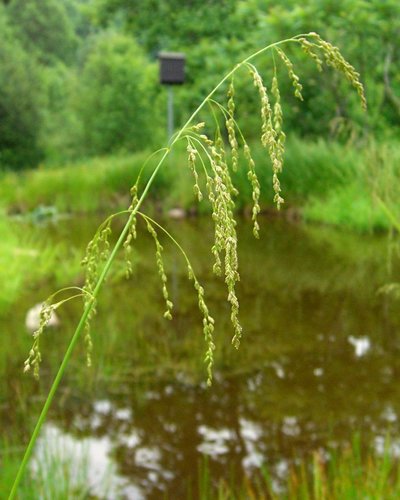
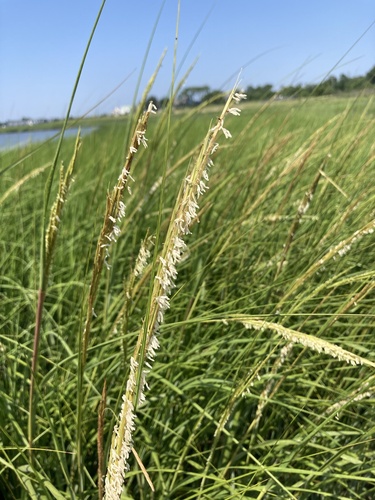
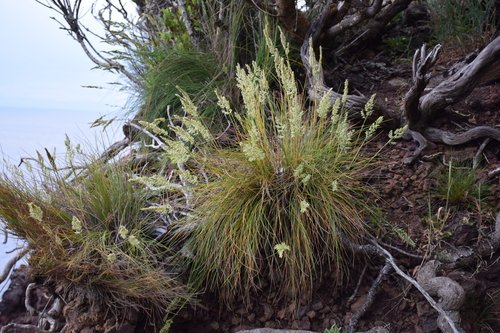
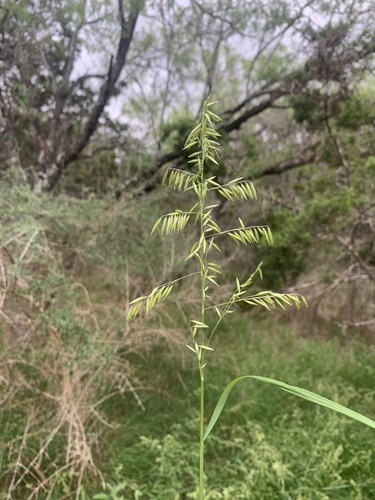
This perennial grass species Melica nitens has short rhizomes and sometimes forms bunches. Its stems can grow up to 1.3 meters tall. Its inflorescence is a branching panicle that holds spikelets, and the panicle is one-sided. Most spikelets contain three perfect flowers, but individual spikelets may also hold two or four flowers each, with two-flowered spikelets being common. The rachilla is longer than the fertile florets, and ends in a club shape. The sterile florets consist of two empty lemmas. In the wild, this plant grows in wooded areas, grasslands, streambanks, and roadsides. In some regions, it is considered highly threatened by land-use conversion and habitat fragmentation, and to a lesser degree by forest management practices. In other areas, it is cultivated and sown for use as a forage grass. It reaches its most northerly range in the extreme southeastern part of the U.S. state of Minnesota, where it is listed as a threatened species; historically, it occurred in sandy-soiled woodlands and prairie there. In Wisconsin, it is listed as a Special Concern plant, and grows on steep slopes or rocky embankments around the state's southern floodplains, mesic forests, and dry prairies.