About Melica ciliata L.
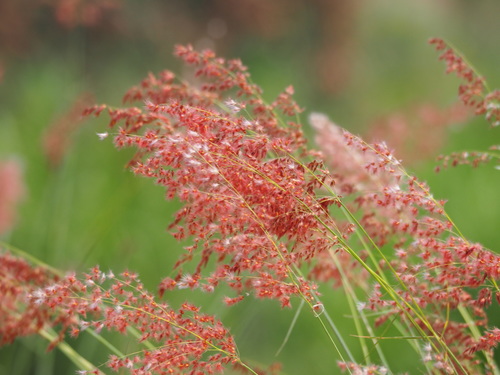
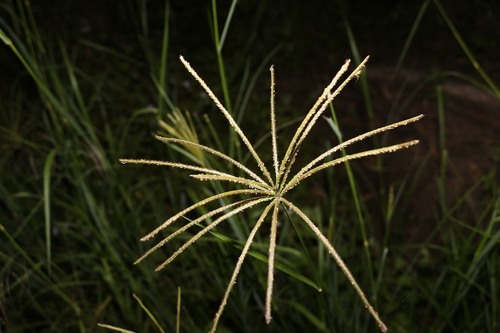
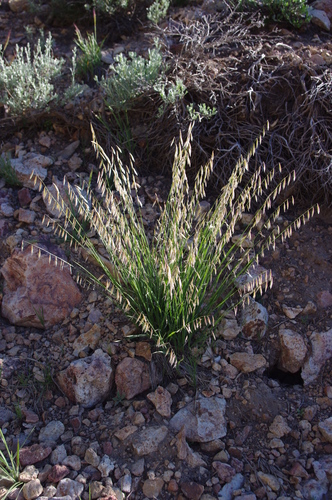
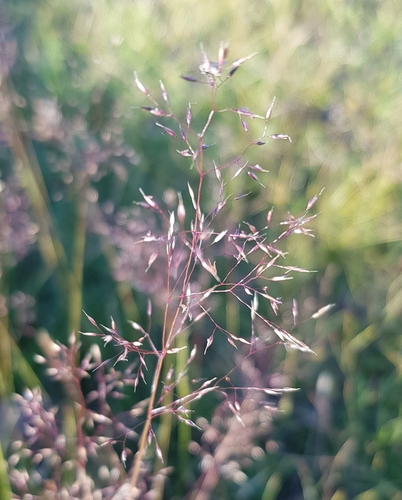
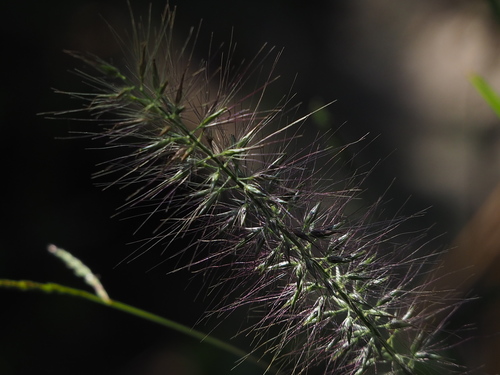
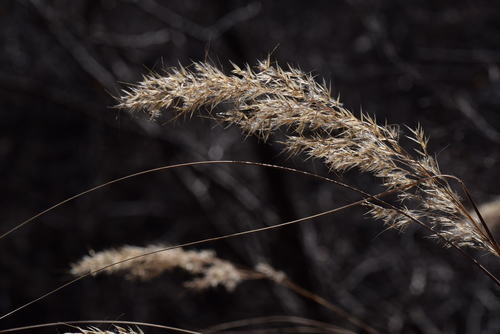
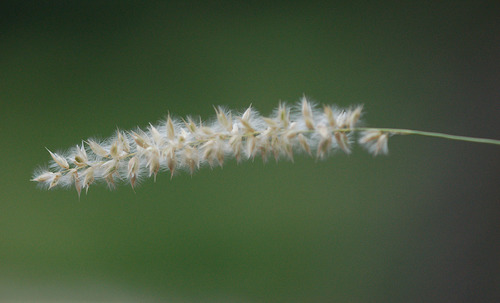
Melica ciliata L. is a tufted deciduous perennial grass that grows from elongated rhizomes. It produces erect culms that measure 50 to 100 cm (20 to 39 inches) in length. Its leaf sheaths are tubular and closed, and the ligule is an eciliate membrane. The leaf blades are flat and stiff, ranging from 5 to 15 cm (2.0 to 5.9 inches) long and 1 to 3 mm (0.039 to 0.118 inches) wide. The surface of the blades is scabrous and glabrous, and the blade tip is attenuate. This species has a contracted panicle that can reach up to 20 cm (7.9 inches) long. Its spikelets are cuneate and bear a single fertile floret, which grows on a pedicel. Both the lower and upper glumes are keelless; they are membranous and ovate, 4 to 5 mm (0.16 to 0.20 inches) long, and carry 5 veins each. The palea has 2 veins and ciliated keels. The fertile lemma is keelless and lanceolate, with an acute apex and ciliated margins. It measures 4.5 to 5 mm (0.18 to 0.20 inches) long and has 7 to 9 veins. The flowers are fleshy, oblong, and truncate, with two lodicules and three anthers. The fruit produced by Melica ciliata L. is a caryopsis.