About Melia azedarach L.
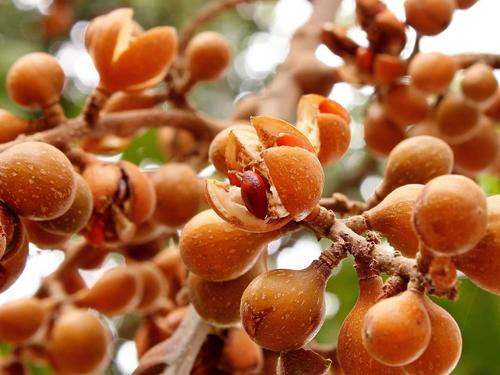
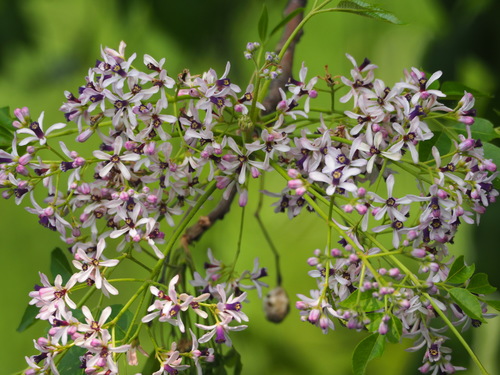
A fully grown Melia azedarach L. tree has a rounded crown, and typically grows 7–12 metres (20–40 feet) tall, with exceptional specimens reaching 45 m (150 ft). Its leaves are up to 50 centimetres (20 inches) long, alternate, long-petioled, and two or three times odd-pinnately compound; leaflets are dark green on the upper surface and lighter green below, with serrate margins. The small, fragrant flowers have five pale purple or lilac petals, and grow in clusters. The fruit is a marble-sized drupe that is light yellow when mature, hangs on the tree throughout winter, and gradually becomes wrinkled and almost white. This species has a short average lifespan of around 20 years. In terms of ecology, some hummingbirds including the sapphire-spangled emerald (Amazilia lactea), glittering-bellied emerald (Chlorostilbon lucidus) and planalto hermit (Phaethornis pretrei) have been recorded feeding on and pollinating its flowers, though only opportunistically. Bees and butterflies do not use the flowers or their nectar, so the tree provides no pollinator benefit in introduced regions such as the United States. Pests including cape lilac tree caterpillars (Leptocneria reducta) are known to severely defoliate this tree and cause large-scale damage to tree stands in Australia. The fungal plant pathogen Pseudocercospora subsessilis grows on the tree's leaves, causing leaf spots. Mature Chinaberry trees can survive in diverse environments, and withstand temperatures between -5˚C and 39˚C. According to the USDA, the tree grows as far north as New York. For toxicity, the fruits have evolved to be eaten by animals, which either eat the flesh surrounding the hard endocarp or ingest the whole fruit and later excrete the endocarp. If the endocarp is crushed or damaged during ingestion or digestion, the animal is exposed to toxins within the seed. Variation in mastication, digestion, and species-specific immunity to these toxins leads to wide variation in clinical symptoms after ingestion. The fruits are poisonous or narcotic to humans when eaten in large quantities. Chinese medical literature records that human poisoning can occur after eating 6–9 fruits, 30–40 seeds, or 400 grams of the tree's bark. Toxins include neurotoxins and unidentified resins, found mostly in the fruits. First symptoms of poisoning appear a few hours after ingestion, and may include loss of appetite, vomiting, constipation or diarrhea, bloody faeces, stomach pain, pulmonary congestion, cardiac arrest, rigidity, lack of coordination and general weakness. Death may occur around 24 hours after ingestion. Like related species, tetranortriterpenoids are an important toxic principle. These compounds are chemically related to azadirachtin, the primary insecticidal compound in commercially important neem oil. They are probably linked to the wood and seed's resistance to pest infestation, and may explain why the flowers are unattractive to many animals. The plant is toxic to cats. However, these toxins are not harmful to many bird species, which eat large amounts of the fruit and eventually enter a "drunken" state. Birds that can eat the fruit spread intact seeds through their droppings. The plant was introduced to the United States (South Carolina and Georgia) around 1830 as an ornamental, and was widely planted in southern states, where its leaves were used to repel insects and its berries were used to make homemade whiskey and soap. It was introduced to Hawaii in 1840. It is considered an invasive species in Texas, Oklahoma, and as far north as Virginia. Despite this, U.S. nurseries still sell the trees, and their seeds are widely available. It has become naturalized in tropical and warm temperate regions of the Americas, and is intentionally planted in similar climates across the world. It is grown as an ornamental tree in southern Korea. In Australia, white cedar (Melia azedarach) is commonly planted in parks, public gardens, stream banks, and along footpaths or roadsides. Local councils use it for nature strip plantings in Melbourne suburbs specifically to provide amenity, as well as environmental, social, and economic benefits. Its fragrant lilac flowers and yellow fruits make it a popular ornamental tree. The plant's hard seeds are also used in arts and crafts, such as making beads for rosaries. This species is a prolific seed producer; in Australia it has naturalized outside its native range, and is especially invasive in the Northern Territory and Western Australia. It is classified as a weed in Western Australia and in New Zealand, because it can colonize areas via bird-dropped seeds if left unmanaged. In Kenya, farmers grow the trees and use them to provide fodder for livestock. Feeding the leaves to cattle can improve milk yields and farm incomes, and the leaves are less bitter than the leaves of neem (Azadirachta indica). The main use of chinaberry is its timber, which is medium density and ranges in colour from light brown to dark red. It can be easily confused in appearance with the unrelated Burmese teak (Tectona grandis). Like other members of the family Meliaceae, Melia azedarach produces high quality timber, but it is under-utilized compared to many nearly extinct mahogany species. Seasoning the timber is relatively simple: planks dry without cracking or warping and are resistant to fungal infection. The tough, five-grooved seeds were once widely used to make rosaries and other beaded products, but modern use has largely replaced these seeds with plastic. Cut branches bearing mature fruit are sold commercially for florist and landscaping use, especially as a component of outdoor holiday decorations. The fruits can persist for some time before falling off the stem or discoloring, which happens quickly after a short period in subfreezing weather. M. azedarach leaves and fruits have been used as a natural insecticide to protect stored food, but they must not be eaten as they are highly poisonous. For example, placing whole, undamaged chinaberry berries alongside drying apples that are kept turned in the sun prevents insect larvae from growing in the dried apples. A mature tree can produce approximately 15 kilograms of fruit each year. The species has also been used as a traditional herbal medicine. A diluted infusion of the leaves was historically used to induce uterine relaxation. Limonoid compounds from the tree have useful anticancer and antimalarial effects.