About Melanospiza bicolor (Linnaeus, 1766)
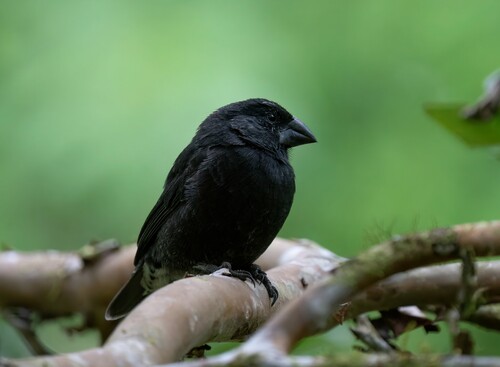
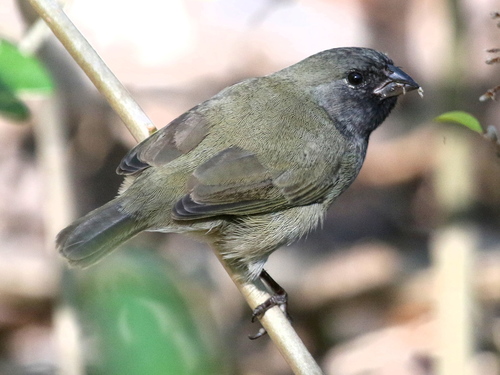
The black-faced grassquit, scientifically known as Melanospiza bicolor (Linnaeus, 1766), has distinct plumage and physical traits across sexes, ages, and ranges. Adult males measure approximately 10 cm (3.9 in) long and weigh around 10 g (0.35 oz). They have a short, conical black bill, a black head and breast, and an olive green back. Females and immature black-faced grassquits have dull olive-grey upperparts and heads, with paler grey underparts that fade to white on the belly. Males living on the South American mainland have more extensive black coloration across their underparts, which shades to grey on the belly. Adult males perform a distinctive display flight: they fly short distances while vibrating their wings and producing a buzzing dik-zeezeezee call. For feeding, the black-faced grassquit eats primarily seeds, especially those from grasses and weeds. It will occasionally consume fruits and berries, and also feeds on small insects, mostly during the breeding season. This species is most often encountered in small groups.