About Melanoplus bispinosus Scudder, 1897
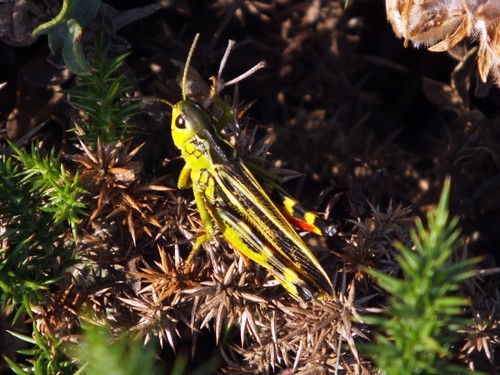
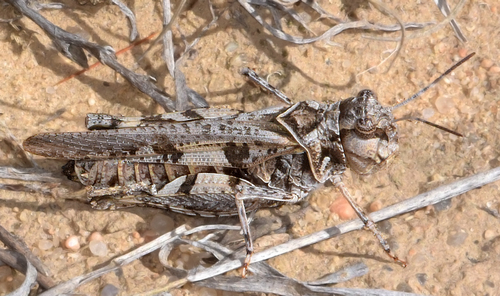
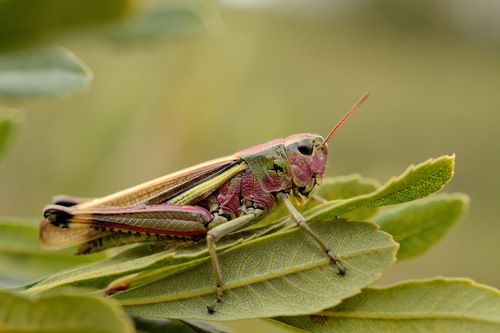
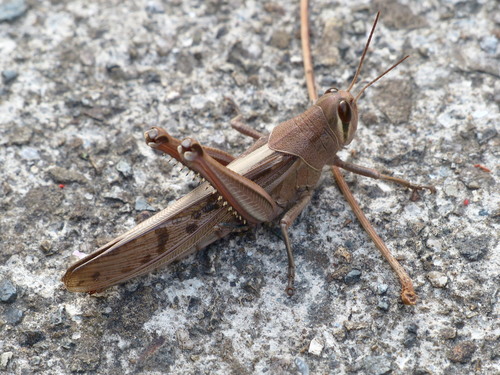
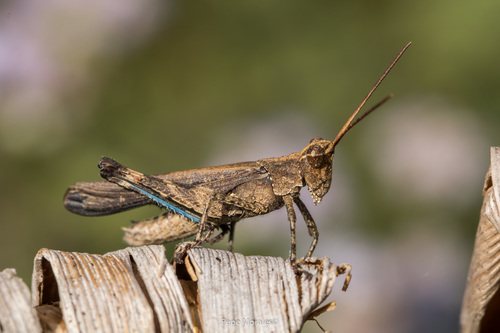
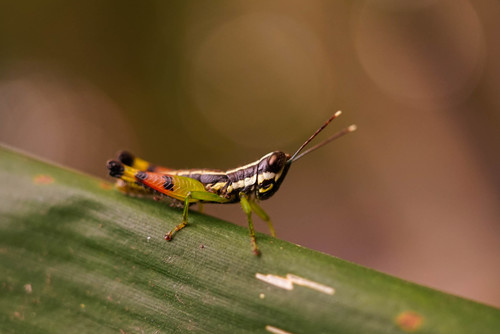
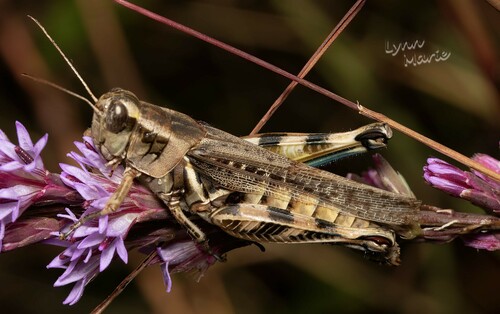
This medium-sized grasshopper species ranges in color from grayish-brown to reddish-brown. A dark stripe runs from its eye to the lateral lobe of the pronotum. A row of dark spots on its forewing extends all the way to the top of its abdomen. Its hind femora (the third leg segment) bear large dark spots or bands, and its hind tibiae (the fourth leg segment) are blue or blue-green. Males have an average body length of approximately 24.5 mm, while females average approximately 31.5 mm. The species gets its scientific name from a large, spine-shaped furcula. In males, the furcula extensions reach half the length of the supra-anal plate and are slightly divergent. The male cerci are elongated, narrow at the middle, and rounded at the tip. Melanoplus bispinosus is commonly found in the southeastern United States, including the states of Florida, Alabama, and Georgia. It occurs in woody habitats, but is more strongly associated with open, disturbed areas. These disturbed areas are most often roadside areas or fields in the first stage of ecological succession, which are typically dominated by grasses and forbs. Adult grasshoppers of this species can be found from summer through early fall.