About Melanitta nigra (Linnaeus, 1758)
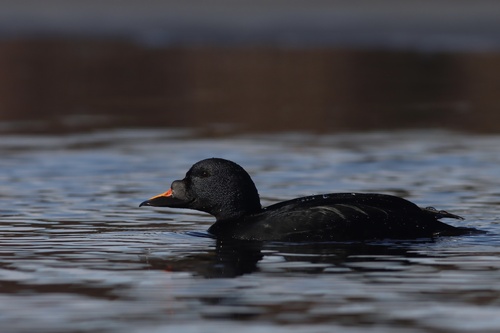
The common scoter (Melanitta nigra) is characterized by its bulky body shape and large bill. Adult males are entirely black, with a bulbous bill that has yellow colouring around the nostrils. Adult females are brown with pale cheeks, and look very similar to female black scoters. This species can be told apart from all other scoters except the black scoter by the complete lack of any white markings on adult males, and the more extensive pale-coloured areas on females. Black scoters and common scoters have clearly distinguishable vocalisations. Common scoters winter further south in temperate zones, along European coasts as far south as Morocco. They form large, tightly packed flocks on appropriate coastal waters, and flock members tend to take off and dive together. Their lined nests are built on the ground close to the sea, lakes, or rivers, in areas of woodland or tundra. Females lay between 6 and 8 eggs per clutch. This species dives to feed on crustaceans and molluscs; when in fresh water, it also eats aquatic insects and small fish. The common scoter is one of the species covered by the Agreement on the Conservation of African-Eurasian Migratory Waterbirds (AEWA).