About Melaleuca nodosa (Gaertn.) Sm.
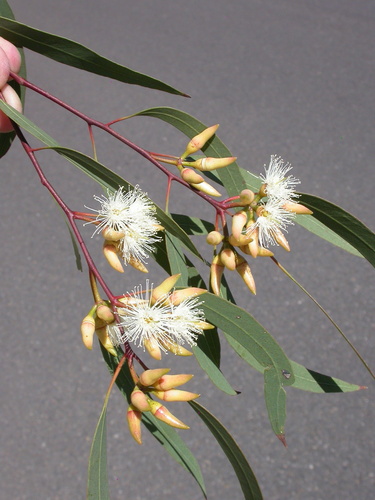
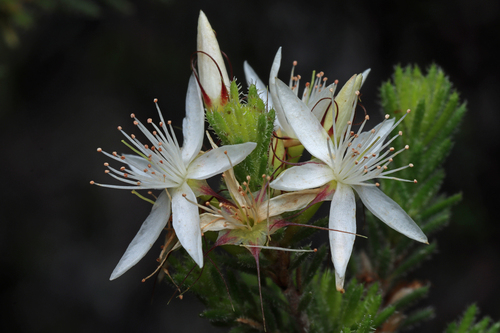
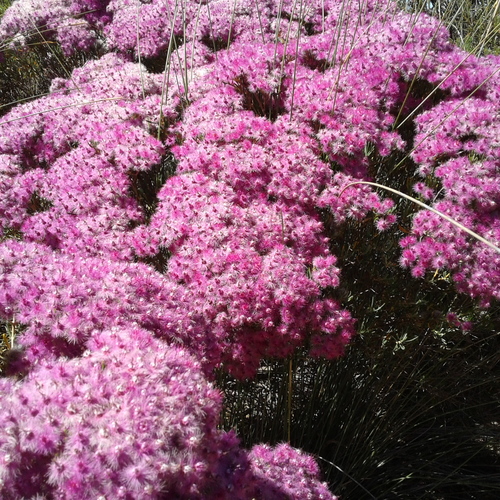
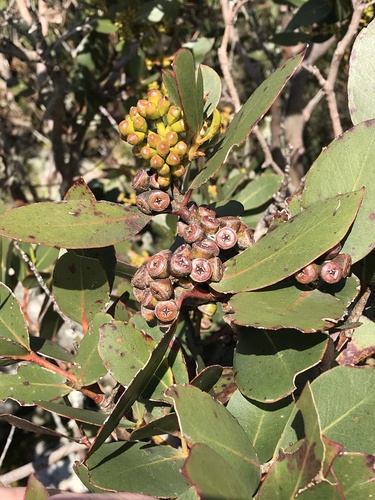
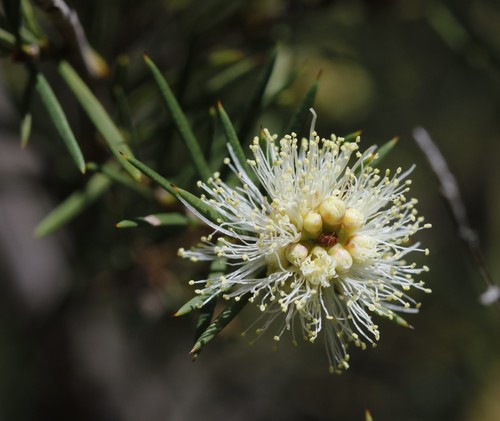
Melaleuca nodosa (Gaertn.) Sm. is a shrub or small tree that sometimes reaches 10 m (30 ft) in height, with thick, papery bark. Its leaves are stiff and linear, with variable size and shape, but are usually linear to almost terete. They measure 10–40 mm (0.4–2 in) long and 0.5–1.5 mm (0.02–0.06 in) wide, tapering to a sharp point. Flowers of this species range from white to yellow, and are arranged in dense heads or short spikes on the ends of branches that continue growing after flowering. They sometimes also appear in upper leaf axils. Each flower head grows up to 30 mm (1 in) in diameter, and holds up to 20 groups of three flowers each. The petals are 1.8–2.3 mm (0.07–0.09 in) long, and fall off as the flower matures. Five bundles of stamens surround the flower, with 7 to 10 stamens in each bundle. Flowering occurs from September to November, and is most common in October, though it often happens at other times of year. The resulting fruit are woody, cup-shaped capsules, 3–5 mm (0.1–0.2 in) long and 2–3 mm (0.08–0.1 in) wide, that usually grow in tight, globular clusters along the stems. This species is distributed across the coast and tablelands of Queensland and New South Wales, ranging from Blackdown Tableland National Park south to Campbelltown in the Sydney Basin. It grows on alluvial soils, including sandy, shale-based and clay-based types, as well as in heathlands, and can form dense thickets. The areas where it grows often have poor drainage. Associated heathland species include bracelet honey myrtle (Melaleuca armillaris), heath banksia (Banksia ericifolia), smooth-barked apple (Angophora costata) and red bloodwood (Corymbia gummifera). Associated woodland species include scribbly gum (Eucalyptus sclerophylla), Parramatta red gum (Eucalyptus parramattensis), narrow-leaved apple (Angophora bakeri), and white feather honeymyrtle (Melaleuca decora). The presence of Melaleuca nodosa in wallum heathland can indicate an area of saltier soil. In terms of ecology, native bees, honeybees, and possibly beetles and flies pollinate the flowers of this species. Melaleuca nodosa has been recorded as a host for the mistletoe species Amyema congener, Amyema gaudichaudii, Dendrophthoe curvata and Dendrophthoe vitellina. In cultivation, Melaleuca nodosa adapts easily to cultivation, and grows best in full sun with extra moisture. Though it is not widely cultivated, it has potential as a hedging plant, including for areas exposed to salt spray.