About Melaleuca nervosa (Lindl.) Cheel
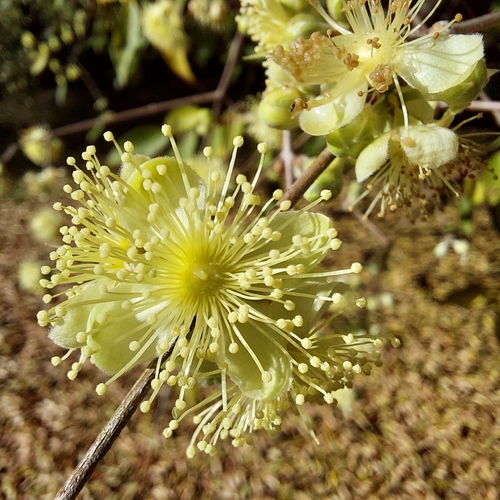
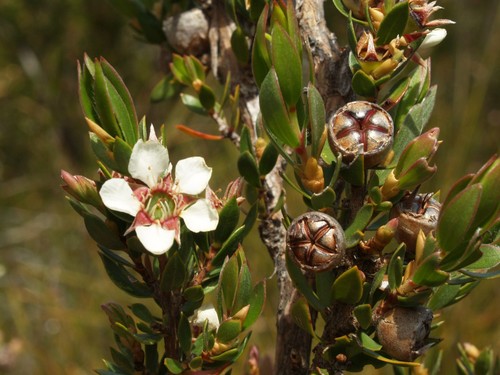
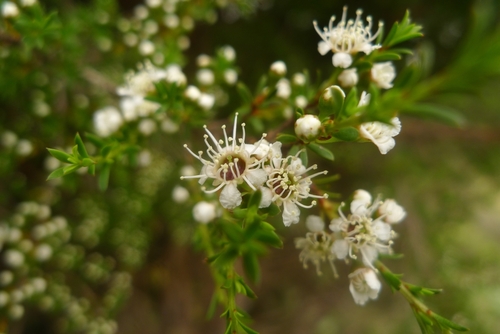
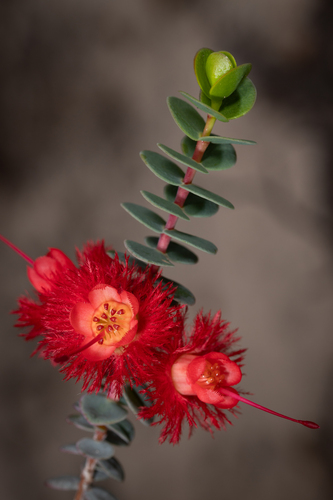
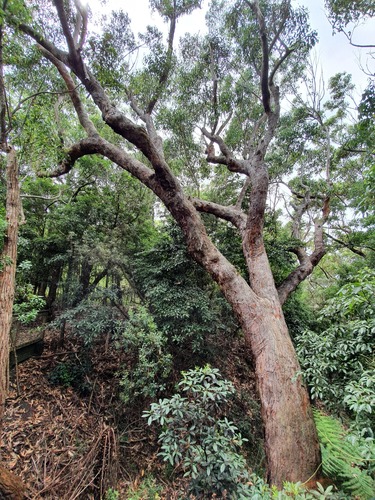
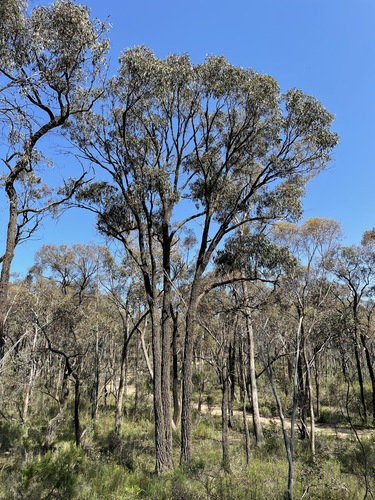
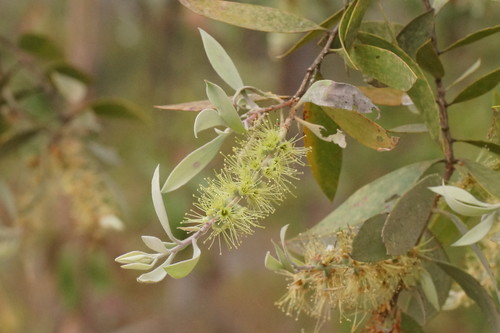
Melaleuca nervosa (Lindl.) Cheel is a tree that grows between 2 and 15 metres (7 to 50 feet) tall. It has erect branches and papery-fibrous bark that can be grey, cream, brown or white. Leaf size and shape vary between subspecies, but leaves generally measure 30 to 115 millimetres (1 to 5 inches) long and 5 to 40 millimetres (0.2 to 2 inches) wide. Leaves are leathery, covered with fine or curly, silky hairs when young, and have 3 to 7 longitudinal veins. Flowers are arranged in groups of three, with 6 to 20 such groups forming long spikes around 100 millimetres (4 inches) long and 50 millimetres (2 inches) in diameter. Stamens are arranged in five bundles around each flower, with 3 to 7 stamens per bundle. Flower colours include white, creamy-green, cream, yellow-green, and occasionally red. Flowering occurs from April to September. After flowering, the plant produces woody, cup-shaped capsule fruits that measure around 2 to 3 millimetres (0.08 to 0.1 inches) in both length and width. This melaleuca species is widespread in Queensland north of approximately Bundaberg, in the Northern Territory, and in the northern Kimberley region of Western Australia. It grows in a wide variety of habitats, including alluvium, sandy soils, alongside watercourses, in damp depressions, and on red sand dunes. Traditional uses of this species include using its bark to make coolamons for carrying food and other items. Cutting into the trunk provides access to fresh water. Its leaves have been used as a decongestant, and oils extracted from its leaves have uses similar to those of tea tree oil.