About Melaleuca irbyana R.T.Baker
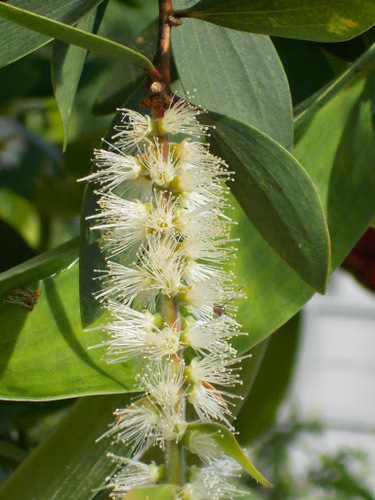
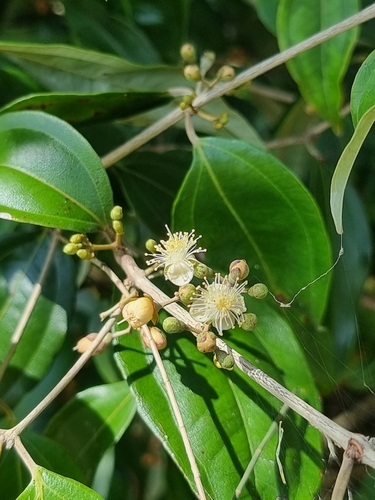
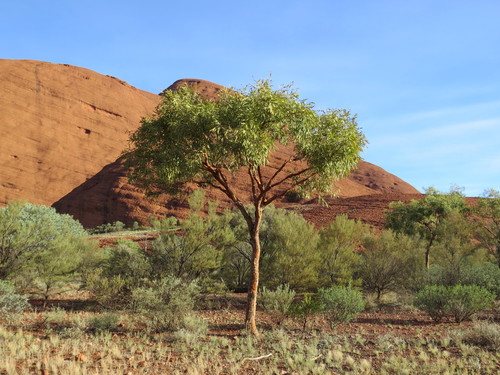
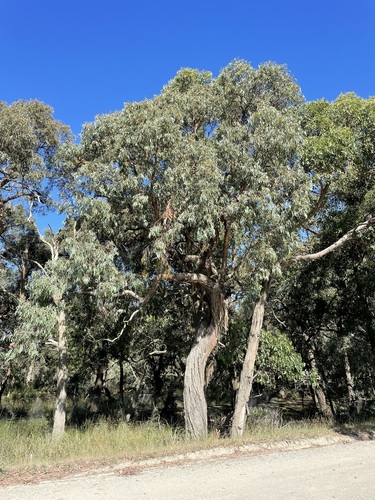
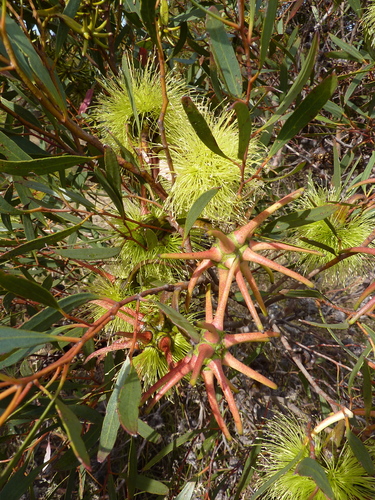
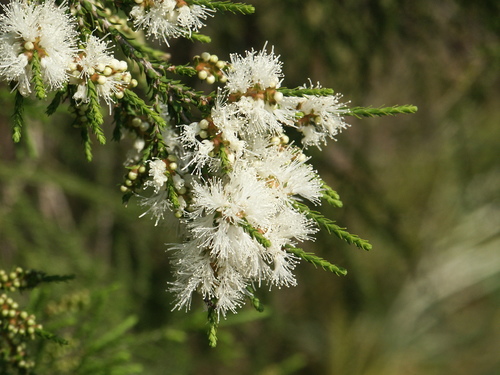
Melaleuca irbyana R.T.Baker is a large shrub or small tree that reaches a height of 10 m (30 ft), with thick, spongy, papery bark. It has a dense, rounded canopy and fine, weeping foliage. Its leaves are stalkless, 2–7 mm (0.08–0.3 in) long, usually shorter than 4 mm (0.2 in), and 1–2 mm (0.04–0.08 in) wide. They are oval or narrowly oval, taper to a point, and are pressed against the branchlets. The flowers are white, scented, and arranged in spikes at or near the ends of branches; the branches continue growing after flowering. The flower spikes are up to 14 mm (0.6 in) in diameter and hold 3 to 12 individual flowers. The petals are 1.5–1.9 mm (0.06–0.07 in) long and fall off as the flower ages. Stamens are arranged in five bundles around the flower, with 6 to 11 stamens per bundle. Flowering occurs between September and January. The fruit are woody capsules 3.5–4 mm (0.1–0.2 in) long, shaped like flattened spheres, and arranged in loose clusters along the branches. Unlike many other melaleucas, the seeds of Melaleuca irbyana are not retained in the capsules for longer than one year. Melaleuca irbyana is found in only a few locations in New South Wales and Queensland, Australia. In New South Wales, it occurs in Coraki, Casino, and Coutts Crossing, with only two recorded populations in conservation areas: Warragai Creek Nature Reserve and Bungawalbin National Park. In Queensland, populations occur near Ipswich, Jimboomba, and Waterford West. This species grows in pure stands or open eucalypt forest, in clay, sandstone, or alluvial soils. Melaleuca irbyana often grows in association with eucalypt species including Eucalyptus crebra, Eucalyptus melanophloia, Eucalyptus moluccana, and Eucalyptus tereticornis. Its understorey is sparse, made up of grasses, sedges, and herbs, with very few shrubs and vines. Swamp paperbark forest dominated by this species provides habitat for a range of plants and animals, including the nationally threatened slender milkvine (Marsdenia coronata). It offers shelter and nesting sites for many bird species. On the ground, fallen logs provide shelter for reptiles, and temporary ponds provide breeding habitat for frogs and other pond-dwelling life. Koalas, echidnas, and wallabies also occur in this forest association.