About Megadolomedes australianus (L.Koch, 1865)
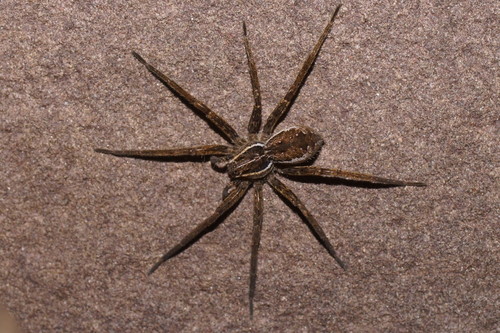
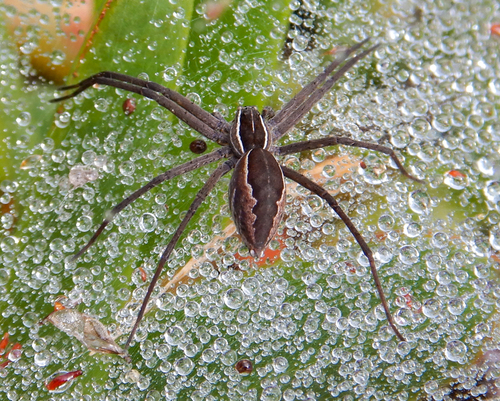
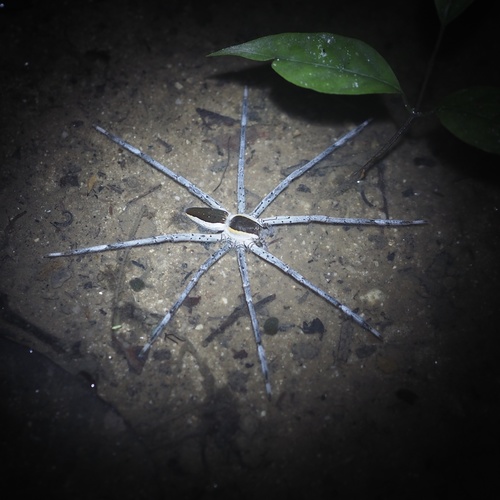
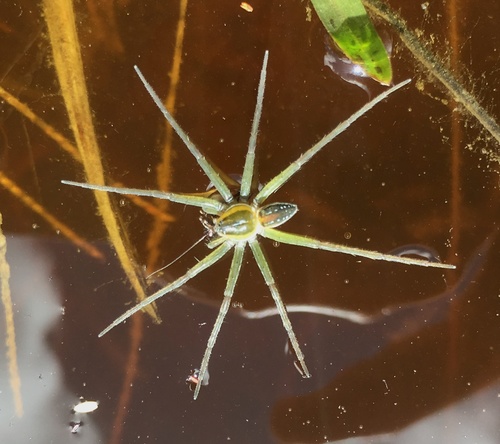
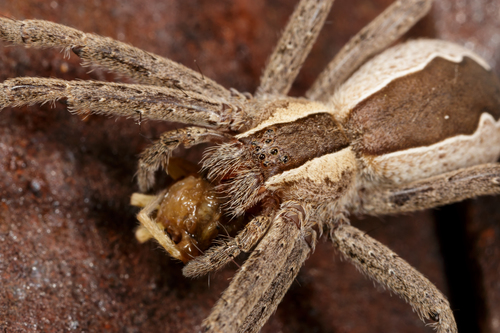
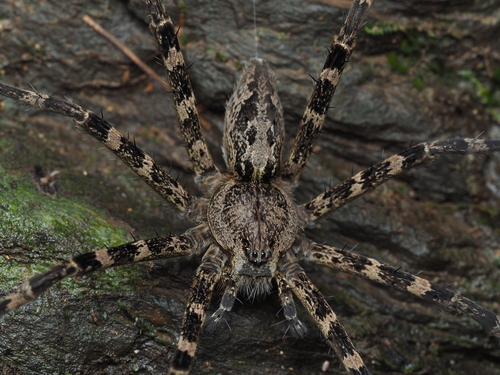
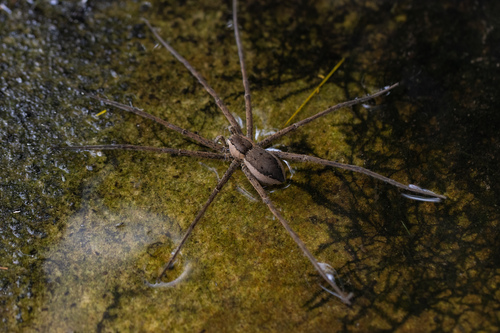
Megadolomedes australianus is a large water spider. Females have a total body length of around 31.9 mm (1.26 in); the carapace measures up to 13.68 mm long and 12.87 mm wide, while the opisthosoma reaches 18.22 mm long and 12.15 mm wide. Males are considerably smaller, with a carapace length around 6.00 mm and width of 4.96 mm. Its eye arrangement follows the typical pattern for its family: the width of the eye group measured through the posterior lateral eyes is about 0.64 times the total head width in males, and 0.54 times the head width in females. In both sexes, the chelicerae have two teeth on the promargin and four separate teeth on the retromargin. Males can be told apart from males of the closely related species Megadolomedes trux and M. johndouglasi by their short, barrel-shaped palpal tibia and broad, thumb-like dorsal tibial process. The palpal bulb has a large, racket-shaped conductor that is distally sinuous next to the embolus, and the base of the embolus is roughly conical with no processes or spines. Females differ from female M. johndouglasi by their distinctive abdominal pattern, relatively broader epigyne, and thread-like overlying spermathecal coils. They can be distinguished from female M. trux by their transversely aligned spermathecae, which take up relatively less space within the epigyne. The epigyne has broad, smoothly curving lateral lobes and a median field in its distal third, while the vulva has a large posterior lobe and progressively smaller anterior lobes covered by three loops of filamentous ducts. This species is endemic to New South Wales, Australia. Its known range stretches from the Nepean River area north of Sydney south to at least Wollongong. Specimens have been collected from multiple locations including Budderoo National Park, Enfield State Forest, and the Colo River region. The species has been found in rainforest environments, including near waterfalls and in gorges, which aligns with its ecology as a water spider.