About Megachile rotundata (Fabricius, 1787)
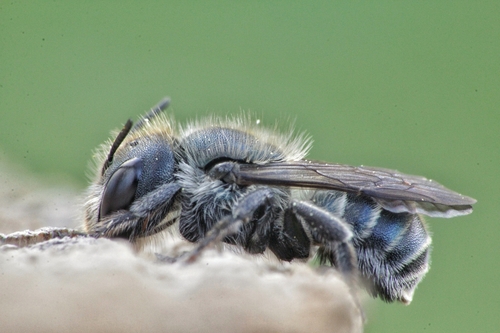
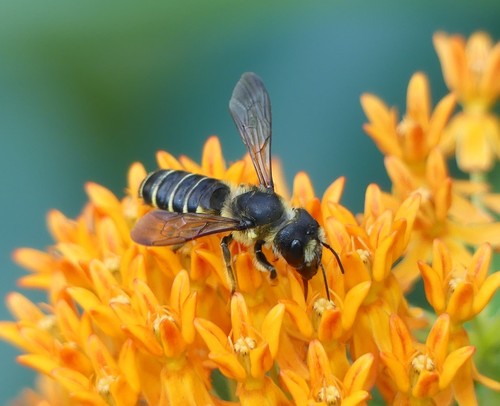
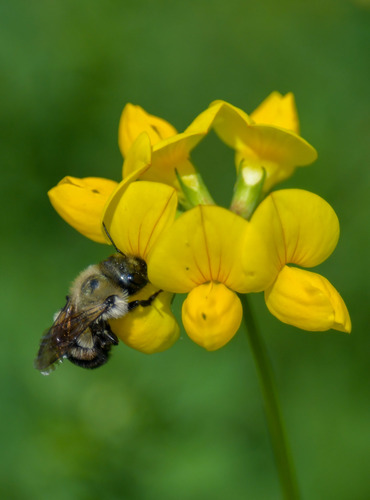
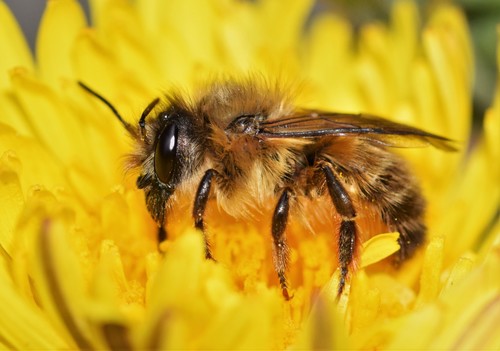
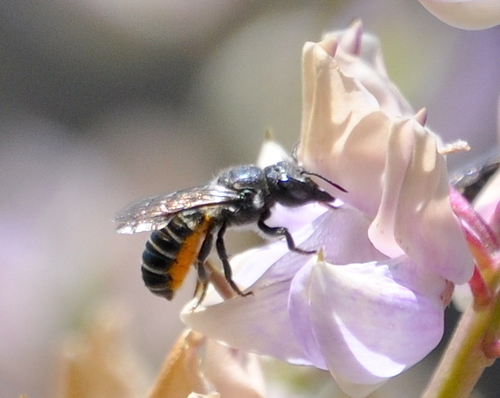
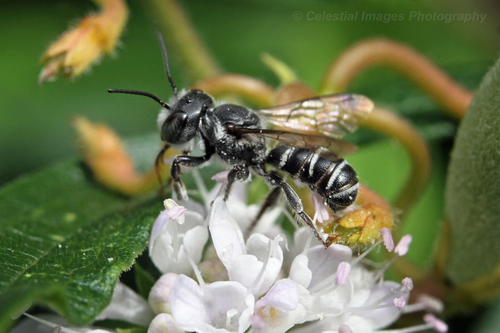
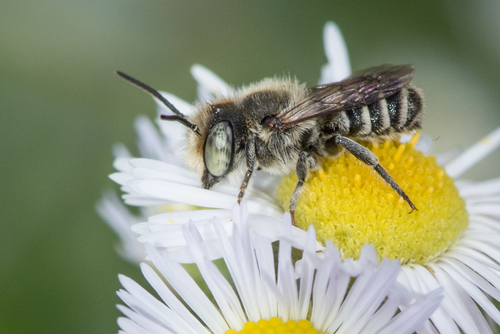
Megachile rotundata, the alfalfa leafcutter bee, is a European leaf-cutting bee placed in the subgenus Eutricharaea, the group of small leaf-cutting bees. Adult individuals range from 6–9 mm (0.24–0.35 in) in length. This species is partially bivoltine, meaning it can produce two generations per year under suitable conditions. The species displays clear sexual dimorphism: males are smaller than females and have different body markings. The bees are generally dark grey in overall color. Females have white hairs covering their entire bodies, including on their scopae, while males have white and yellow spots on their abdomens. Currently, Megachile rotundata is found on all continents except Antarctica. It was deliberately imported to North America to help pollinate food crops, and has since become feral and widespread across the continent. It was also introduced to New Zealand in 1971 and Australia in 1987, specifically to support pollination of alfalfa, which is called lucerne in these regions. As a member of the order Hymenoptera, the alfalfa leafcutter bee is haplodiploid. Adults emerge by the end of summer through one of two developmental pathways. In the first pathway, larvae complete development by the end of one summer, then enter a prepupal diapause phase that lasts until the next summer. In the second pathway, called second-generation bees, larvae skip the diapause phase and emerge as adults in the same summer they developed. Larvae go through four instar stages before becoming mature adults. During rapid development, the larva consumes its pollen ball, and enters diapause once the pollen is fully eaten. As it prepares for diapause, the larva defecates pellets in a ring shape, then spins a cocoon from silk threads. The next spring, the mature larva pupates; this pupation process lasts 3–4 weeks before development is complete. Once fully developed, the bee cuts its way out of the nest by chewing through its cocoon to exit. After emerging, females mate immediately, and begin constructing their nests one week later. Progeny from the two different emergence pathways have different sex ratios and adult sizes. Among adults that emerge in the same summer they developed, the sex ratio is biased toward males, while second-generation bees overall have a female-biased sex ratio. Spring-emergent adults that went through diapause also weigh more than summer-emergent second-generation adults. Two main explanations have been proposed for these differences. The first ties differences to survival chances for mating and the metabolic costs of development: bees that undergo diapause and emerge in spring must survive through the long winter, so they require larger food stores, which results in a larger mature size. The second explanation suggests smaller bees develop more quickly, so they can mate faster after emerging in summer before the onset of cold, harsh winter conditions. Offspring sex ratio also depends on how far nesting sites are from foraging sites: observations show females produce a male-biased offspring sex ratio when nesting sites are at longer flight distances from the nest. Megachile rotundata was accidentally introduced into the United States during the 1940s. Managing this species as a crop pollinator has led to increased seed production for multiple crops in the U.S. It is known to pollinate the following plant species: Medicago sativa, other legumes, Brassica napus, Trifolium spp., and Vaccinium angustifolium. Multiple traits make this bee beneficial for agricultural use: gregarious nesting behavior, ability to use human mass-produced leaves and other nesting materials, efficient pollination of Medicago sativa, and synchronous emergence of adult bees that aligns with the alfalfa blooming period. When supplied to farmers for crop pollination, the bees are typically provided in the dormant prepupal stage, and kept in this state at a constant temperature of around 7 °C (45 °F). When timing aligns with the crop’s flowering period, farmers move the prepupae to an incubating environment held at a constant temperature around 27 °C (81 °F). Adult bees emerge from the pupal stage after approximately 25 days at this temperature, after which farmers bring the mature bees to the crop field.