About Megachile fidelis Cresson, 1878
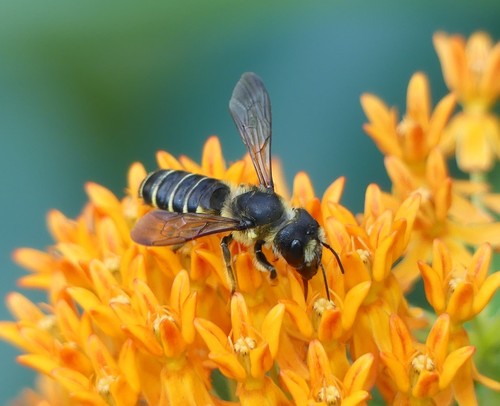
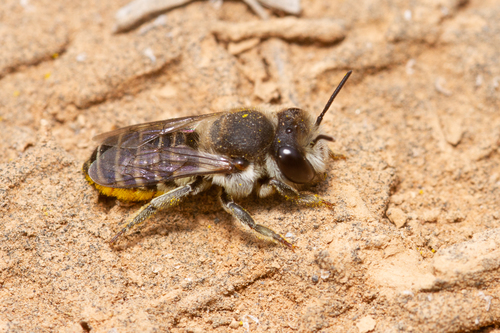
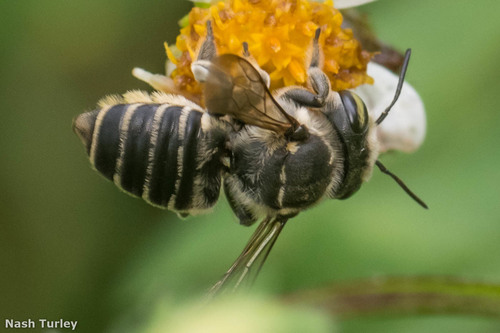
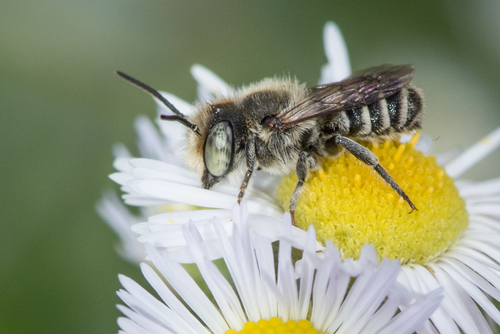
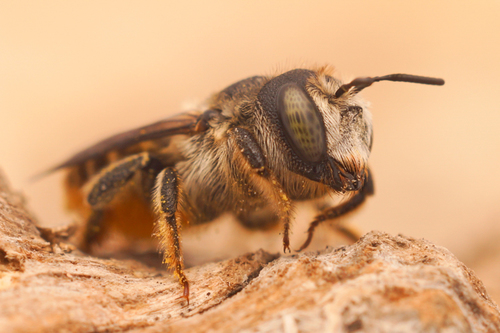
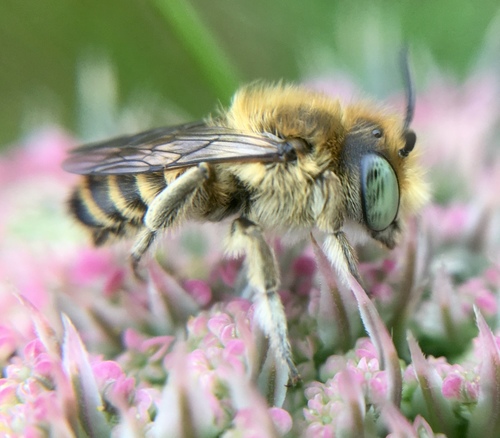
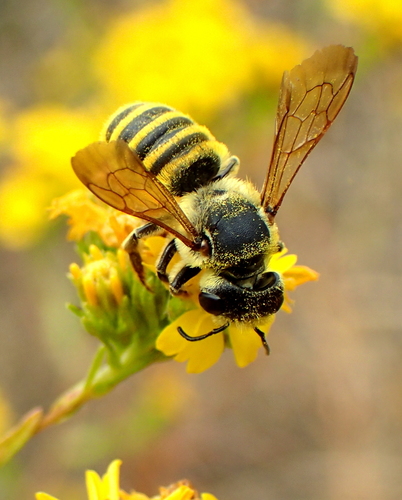
Megachile fidelis, commonly known as the faithful leafcutting bee, is a species of bee in the family Megachilidae. It was first described by Ezra Townsend Cresson in 1878. This species is native to the western United States, with a range that extends from Montana and South Dakota south to New Mexico, west to California, and north to Oregon. It commonly inhabits meadows and gardens. The bee has a black body, covered in golden to yellow hair on its face, the area behind its eyes, its thorax, the region below its blackish wings, and its legs. This species carries pollen in a pollen basket located on the underside of its abdomen. Like most bees, Megachile fidelis feeds on flower nectar, and it particularly prefers the nectar of composite flowers. M. fidelis constructs its nests in almost exactly the same manner as the Western Leafcutting Bee, Megachile perihirta. However, adult M. fidelis do not leave their brood cells until all cells between their own cell and the end of the nesting tunnel have been vacated. Like the larvae of many bee species, M. fidelis larvae grow extremely quickly while inside their brood cells. Adults of this species typically leave their nests around spring.