About Mecaphesa celer (Hentz, 1847)
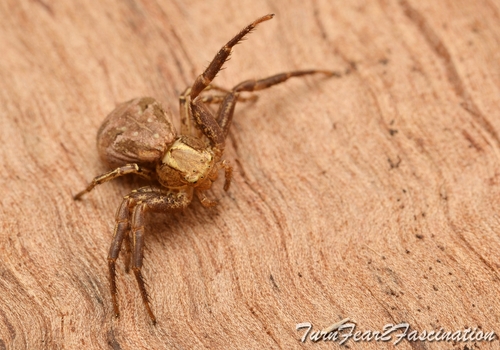
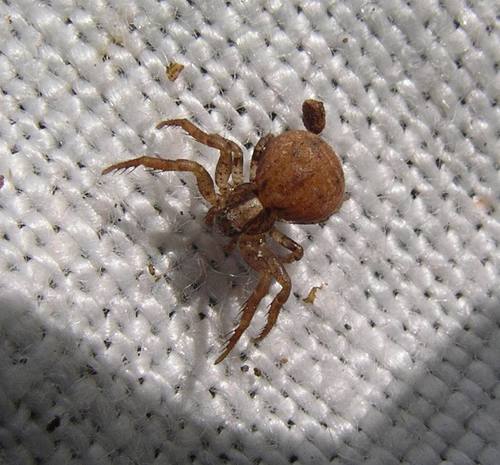
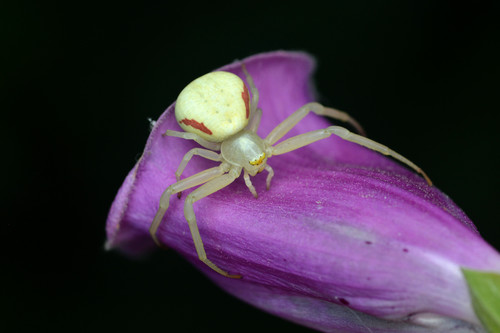
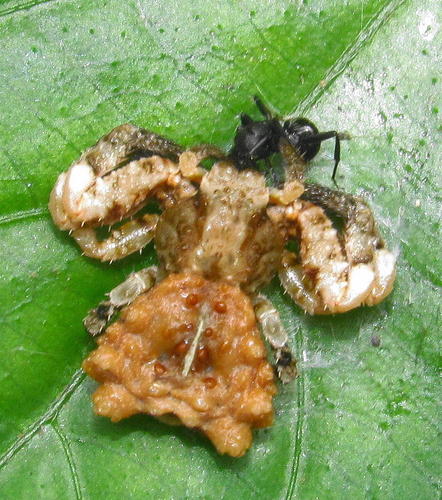
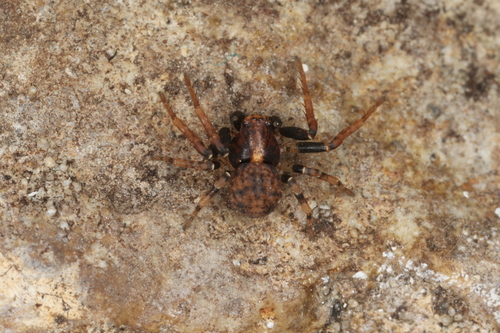
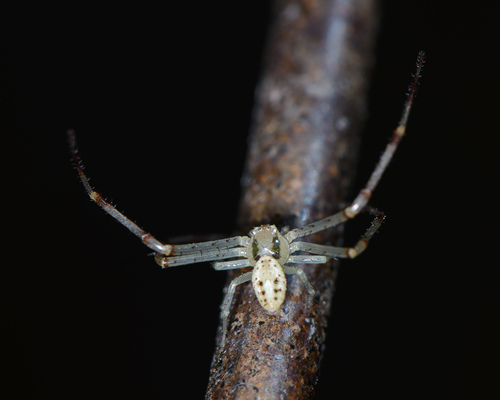
Mecaphesa celer is a member of the Thomisidae family, and shares the family's characteristic leg structure: the front two pairs of legs are long, while the back two pairs are short. Adult Mecaphesa celer display clear sexual dimorphism in both size and coloration. Mature males are generally darker than females, and have distinctive red bands on their legs. Males typically have whiter abdomens marked with four or more pairs of brown spots that form a V-shape, which runs from the mid-abdomen to the tip of the abdomen. The entire male body is also covered in prominent dark setae (hairs). Identifying Mecaphesa celer from male specimens alone can be difficult. Males of this species look very similar to males of both Mecaphesa dubia and Mecaphesa rothi, and natural variation in physical traits within each species makes distinguishing between these three species quite challenging. By contrast, female Mecaphesa celer are more distinct from other related species. Females are typically yellow in color, with large, round abdomens that are much larger than their heads, while males have abdomens and heads of roughly equal size. Female coloration can vary between three common morphs: one is a bright solid yellow with almost no brown spotting, the second is yellow with reddish-brown streaking on the abdomen, and the third is completely white with dull brown streaking on the abdomen. Mecaphesa celer is an ambushing spider that most often preys on pollinating insects, so it typically lives in close association with flowers and upper plant structures. It is commonly found on shrubs, bushes, small trees, and crop plants including sorghum, cotton, and alfalfa. One study of an Eastern Texas cotton field found that M. celer made up 5.3% of all spiders collected at the site, demonstrating that this species can be abundant in agricultural fields. Mecaphesa celer is a Nearctic spider species that is widely distributed across the North American continent.