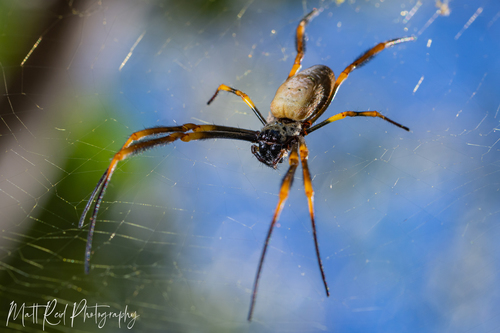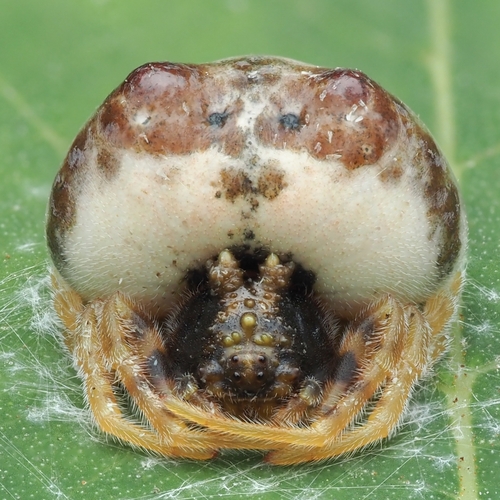
About Mastophora hutchinsoni Gertsch, 1955
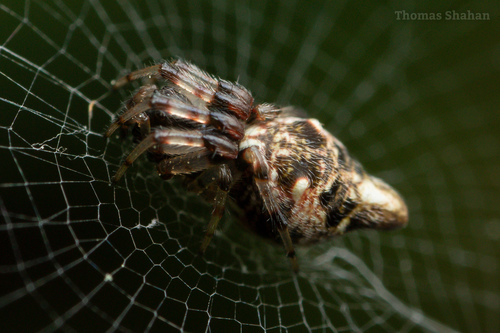
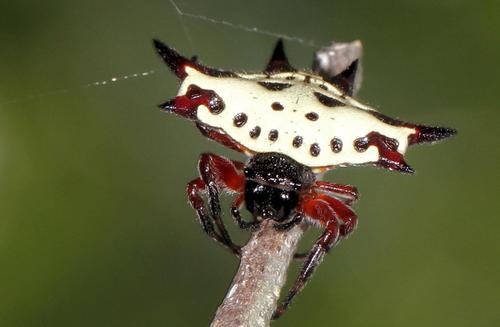
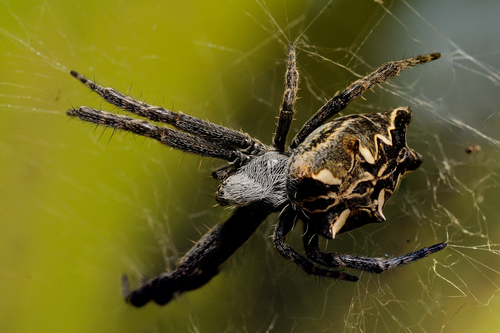
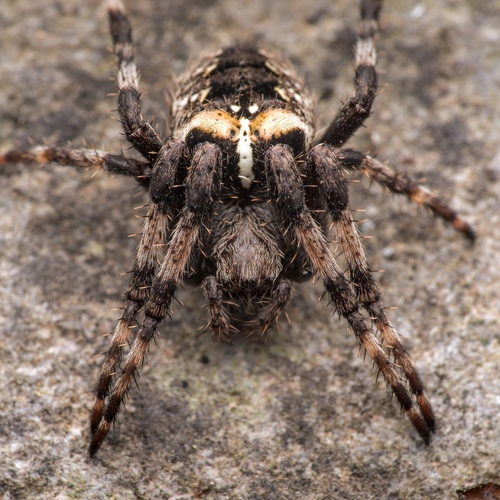
Description: Female Mastophora hutchinsoni spiders have a large spherical abdomen with a milky white base, that is often covered in darker brown patterns, and a smaller brown carapace. This species shows extreme sexual dimorphism, with much larger females that are clearly distinct from males. While both sexes hatch with a cephalothorax around 0.5 mm in size, females grow to be significantly larger than males. This size difference aligns with differences in their hunting behaviors. Females, which are bolas spiders, hang from a horizontal thread and wait to swing their sticky bolas (sticky orb) toward nearby prey, which are typically moths. Males do not use a bolas, and instead use hunting tactics similar to those of early-instar spiders. Distribution: The genus Mastophora is widely distributed across the world in temperate climates, with the exception of Eurasia and South Africa. Mastophora hutchinsoni primarily lives in the northeastern regions of North America, in temperate climates. Its range in North America extends from Minnesota to New Hampshire. Habitat: Mastophora hutchinsoni primarily nests and feeds in shrubs or short trees, where it hunts and builds its webs. These spiders often use nearby leaves and twigs as a place to attach their egg sacs. Because the aggressive mimicry technique used by females only attracts a limited range of prey, these spiders frequently move to new locations based on prey availability. They move by riding a silken thread that is carried by the wind. Life cycle: Spiderlings hatch during the spring. The rate of development differs between sexes: males develop much more quickly than females. Males reach full maturity during the summer months, while females mature around the fall. During this gap between male and female maturation, mature males often leave their own webs and stay in the webs of developing females to wait for mating.