About Mastigodryas boddaerti (Sentzen, 1796)
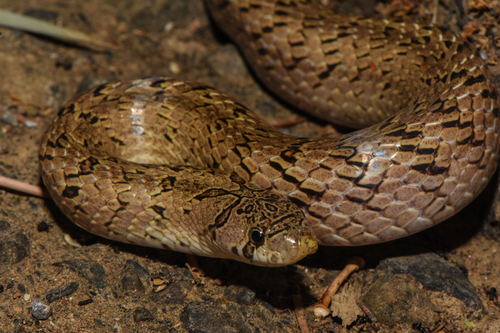
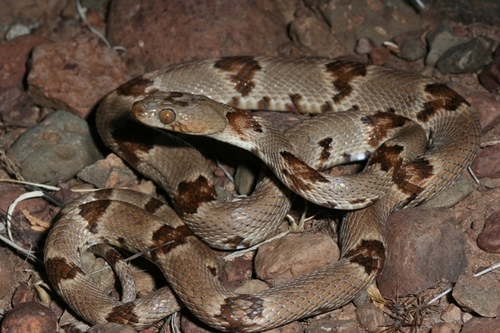
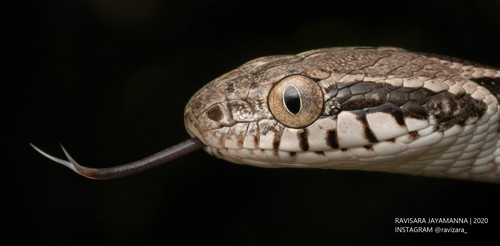
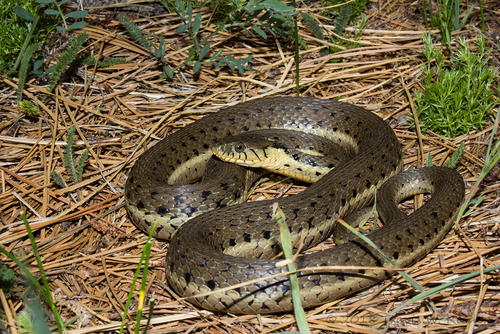
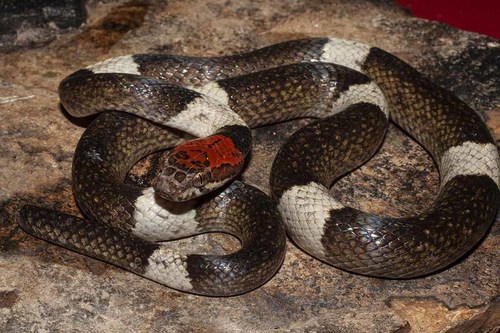
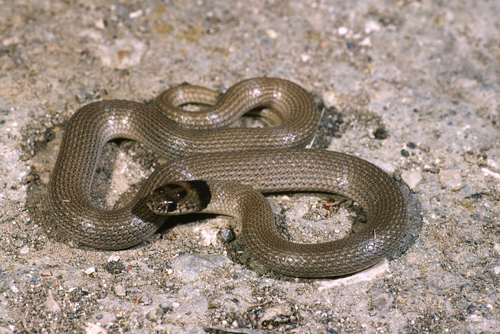
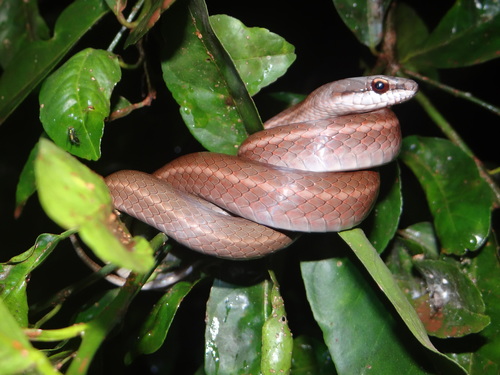
Mastigodryas boddaerti changes its coloration as it develops through different life stages. Juvenile individuals from Guyana have a brown dorsal body surface, marked with grayish tan bands. White spots appear on the ventrolateral sides at the anterior ends of these tan bands. Their chin and throat are white, scattered with irregular dark brown spots. Their belly is tan in color. Adult individuals have an almost uniformly brown dorsal body, with only faint traces of the juvenile bands remaining on the anterior part of the body. A light tan lateral stripe runs along the anterior half of their body. Their belly is light gray, with darker gray smudges located on the throat. Specimens collected from Brazilian Amazonas reached up to 109 centimeters (3 ft 7 in) in snout–vent length. Mastigodryas boddaerti is distributed across Bolivia, Brazil, Colombia, Ecuador, French Guiana, Guyana, Peru, Trinidad and Tobago, and Venezuela. Its preferred natural habitat is forest, at altitudes ranging from 24 meters (79 feet) to 2,600 meters (8,530 feet). Mastigodryas boddaerti reproduces by laying eggs, that is, it is oviparous.