About Masticophis lateralis (Hallowell, 1853)
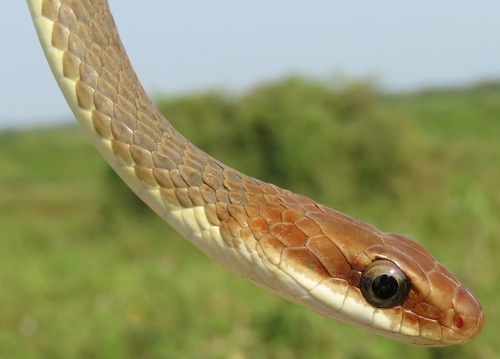
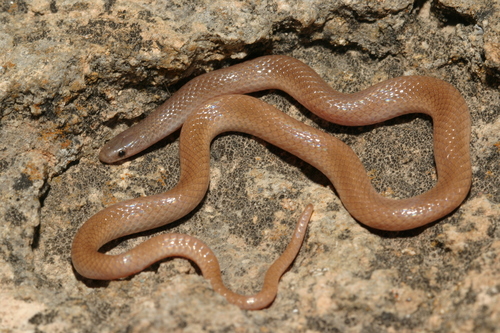
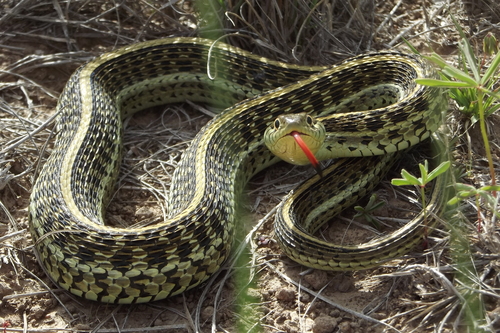
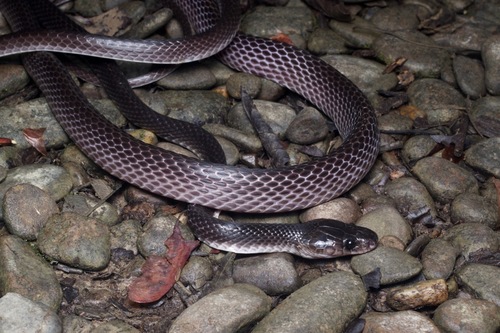
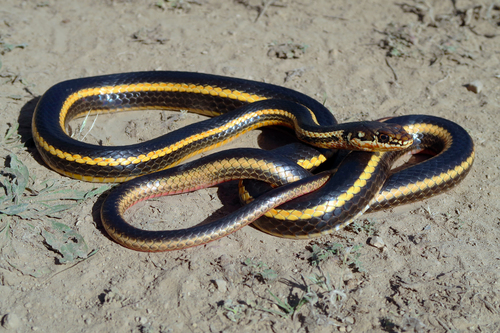
Masticophis lateralis, described by Hallowell in 1853, reaches a total length of 90 to 120 centimetres (3.0 to 3.9 feet) including the tail. This species has a slender build, with a dark brown or black dorsal surface marked by a yellowish stripe running along each side of its body. Masticophis lateralis is commonly known as the California whipsnake. Its overall range extends from Trinity County, California, west of the Sierra Nevada Mountains, south to northwestern Baja California. It occurs at altitudes between 0 and 2,250 metres (0 to 7,382 feet), and occupies a wide variety of habitat types. These habitats include the California coast, California foothills, the chaparral of northern Baja, mixed deciduous and pine forests of the Sierra de Juárez, and the deserts and canyons of Sierra San Pedro. Two subspecies have distinct documented ranges and habitat associations. The Alameda whipsnake subspecies has a contiguous geographic range in the southeastern Bay Area of Northern California, covering southern Alameda County, northern Santa Clara County, and western San Joaquin County. This subspecies is most commonly found in chaparral and scrub plant communities, showing a more specific association with these habitat types. The chaparral whipsnake subspecies is reported to occur in woodlands, grasslands, chaparral scrublands, and riparian habitats.