About Marpesia berania (Hewitson, 1852)
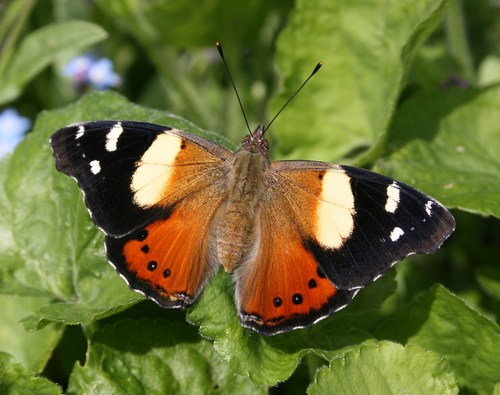
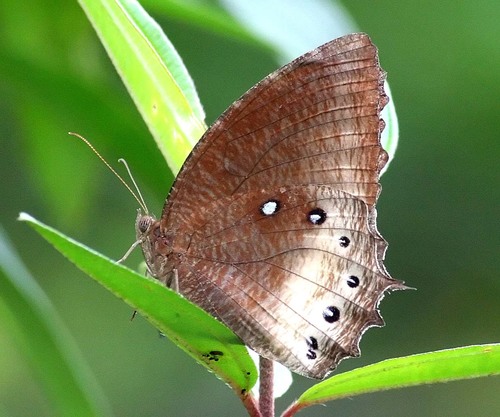
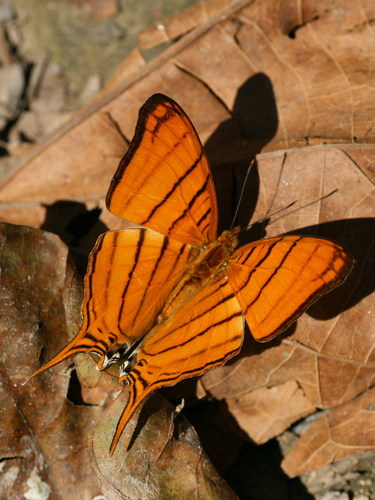
Marpesia berania, commonly called the amber daggerwing, is a butterfly species first described by Hewitson in 1852. This species shows clear sexual dimorphism, meaning males and females have different appearances, with the most noticeable differences visible on wing surfaces. Both sexes share a pearly pale color on the underside of their wings, and both have a distinct sharp point at the bottom tip of each wing – this feature gives the group the common name daggerwing, and it is also seen in other species in the genus Marpesia. Male M. berania have bright orange wings marked with vertical dark brown stripes, while females are duller, with a brownish-orange hue. The overall wing shape of M. berania resembles that of swallowtail butterflies, mimicking their sharp wing structure. Unlike swallowtails, however, M. berania has only four functional legs instead of six. Like other members of the family Nymphalidae, this species has its front two legs curved inward toward the body. A further distinguishing feature of the Marpesia genus is that its antennae are straight, rather than hooked at the tip like most other butterflies in the superfamily Papilionoidea. This species is distributed across the Neotropical realm, spanning Central America and northern South America. It has been recorded in Mexico, Honduras, Costa Rica, Brazil, Peru, Colombia, and Bolivia, and is considered common in Honduras and Peru. It inhabits tropical rainforests and lowlands in this range, and is most often found at elevations below 1000 meters, though individuals have been recorded as high as 1800 meters above sea level. Within its lowland habitat, it occurs along waterways and roads, and roosts in clumps of leaves on small trees. These roosting trees are typically found on riverbanks, in clearings, and other semi-open areas. Adults are typically active during the wet season of Central and South America, from early March to mid-August. M. berania is closely related to Cyrestis (mapwing butterflies) and Chersonesia (maplet butterflies). Currently, this butterfly is heavily threatened by anthropogenic habitat loss, fragmentation, and degradation, particularly from deforestation of its native rainforest habitat. In terms of adult behavior, male M. berania engage in mud-puddling, and can be found alone or in small groups of up to six individuals at riverbanks or puddles, where they consume moisture. Females rarely leave the forest interior. When temperatures are high, both sexes hold their wings vertically upright while feeding or resting on foliage; at other times, they typically bask in the sun or open spaces with their wings spread flat. Both sexes have equal life expectancy, which leads to a 1:1 adult sex ratio for the species. Equal sex ratio and equal life expectancy are thought to help buffer new generations from impacts of abiotic factors through consistent recruitment. Biologist J. Merritt Emlen hypothesizes that natural selection will reduce the reproductive ability of these butterflies as they age, and that successful reproduction combined with low mortality at young ages can lead to greater adult longevity, while also allowing more energy to be directed toward increased immediate reproductive output.