About Mareca penelope (Linnaeus, 1758)
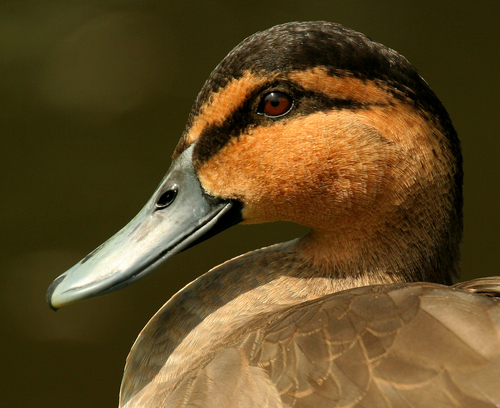
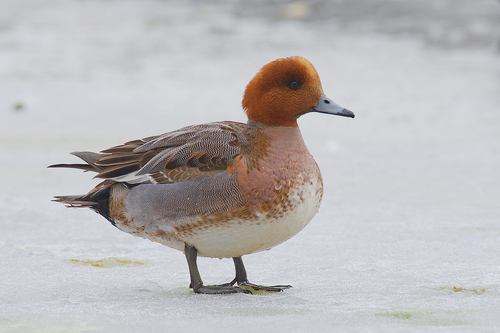
This dabbling duck species, Mareca penelope, measures 42–52 cm (17–20 in) in length, has a 71–80 cm (28–31 in) wingspan, and weighs 500–1,073 g (1–2 lb). Breeding males have grey flanks and back, a black rear end, a dark green speculum, and a prominent brilliant white patch on the upper wings that is visible both in flight and at rest. They also have a pink breast, white belly, chestnut head, and a creamy crown. In non-breeding (eclipse) plumage, breeding males (drakes) look much more similar to females. Females are light brown, with plumage matching that of female American wigeon (Mareca americana). They can be separated from most other duck species by their body shape, with the only exception being American wigeon. American wigeon can be told apart from Eurasian wigeon by having a paler head and white axillaries on the underwings. Female Eurasian wigeon also occur in two plumage morphs: a rufous morph with a redder head, and a gray morph with a grayer head. An identification reference for this and the related American wigeon is: Cox, Cameron; Barry, Jessie. "Aging of American and Eurasian Wigeons in female-type plumages" (PDF). Birding. 37 (2): 156–164. Archived from the original (PDF) on 2012-10-19. Retrieved 2011-10-09. Mareca penelope breeds in the northernmost regions of Europe and the Palearctic, and is the Old World counterpart to the North American American wigeon. It is a strongly migratory species, and winters further south than its breeding range, migrating to southern Asia and Africa. In Great Britain and Ireland, Eurasian wigeon is a common winter visitor, but is a scarce breeding bird in Scotland, the Lake District, and the Pennines; it is occasionally recorded breeding further south, with only a small number of breeding pairs present in Ireland. It occurs as an uncommon winter visitor to the mid-Atlantic and Pacific coasts of the United States. It is a rare visitor to most of the rest of the United States, outside of the Four Corners region and the southern Appalachians. Eurasian wigeon inhabits open wetlands, including wet grasslands and marshes that have some taller vegetation. It typically feeds by dabbling for plant food or by grazing, and grazes very readily. It nests on the ground, located near water and under cover. Outside of the breeding season, it is highly gregarious and forms large flocks. In the United States, Eurasian wigeon will join flocks of American wigeon, and the two species also hybridize. This is a vocal duck species: males produce a distinctive whistle that resembles the sound "pjiew pjiew", while females make a low growling sound transcribed as "rawr". Eurasian wigeon is one of the species covered by the Agreement on the Conservation of African-Eurasian Migratory Waterbirds (AEWA), and its current conservation status is least concern.