About Marah fabacea (Naudin) Greene
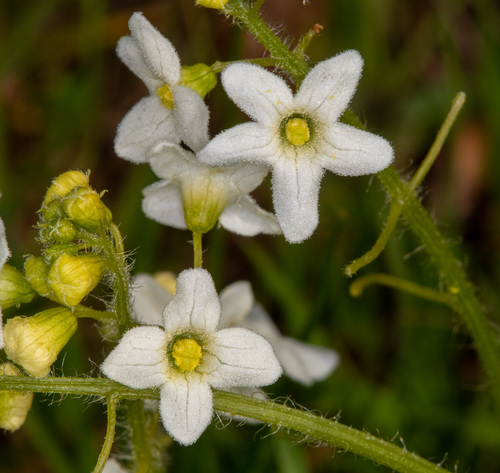
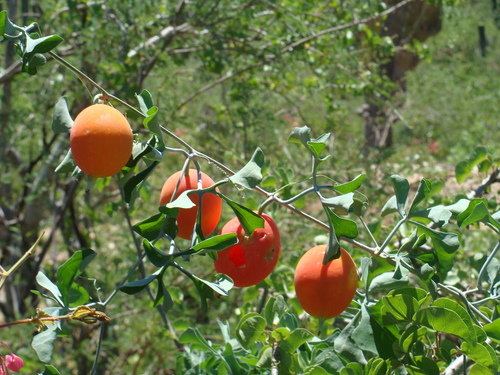
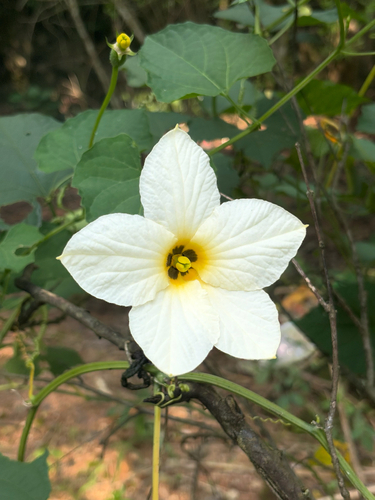
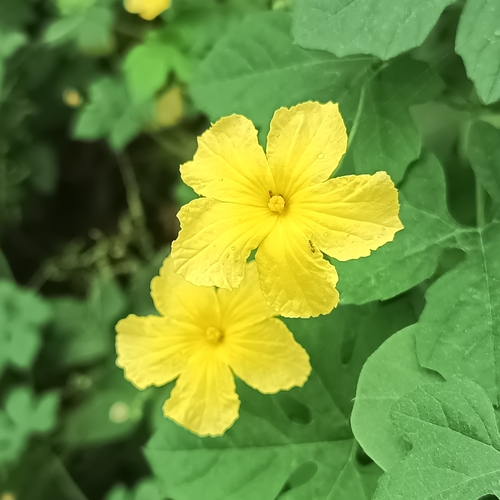
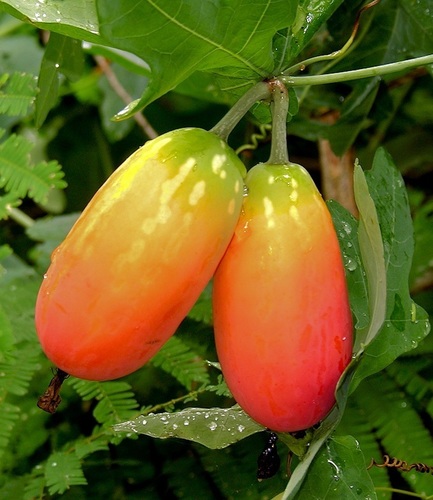
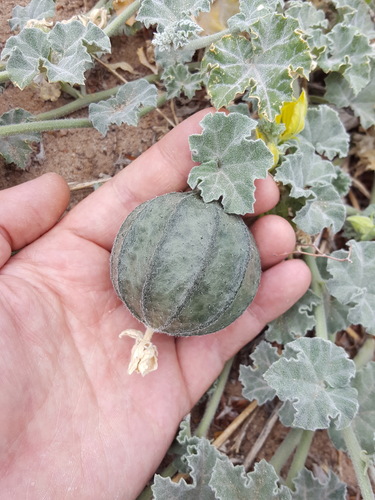
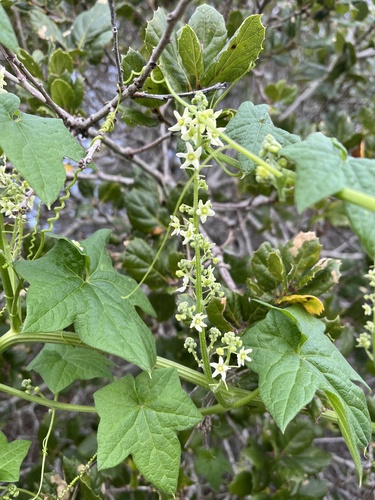
Marah fabacea (Naudin) Greene, sometimes spelled Marah fabaceus, is commonly called California manroot or bigroot. It is the most common manroot species native to California. Its range across the state covers nearly the entire ranges of all other native California manroot species, and it intergrades with these species. Hybrids between California manroot and other Marah species are common. California manroot grows most vigorously along streams or in washes, but also grows successfully in dry chaparral, at elevations up to 1600 metres. It can be found across most of California, excluding the far northwest and the Mojave Desert. It tolerates a wide variety of soil types and acidity levels, but it requires seasonally moist soil. Its vines can grow in conditions from full sun to partial shade. In mild areas with year-round available moisture, the vines are perennial. In California's Mediterranean climate regions, manroot emerges shortly after winter rains begin, grows until late spring, and dies back completely during the hot, dry summer. Some Native American tribes, including the Kumeyaay and the Coast Miwok, crushed the tubers of Marah fabacea and threw them into surface waters to immobilize fish. The tubers contain megharrhin, a saponin-like glucoside. Saponins lower the surface tension of water to allow bubble formation. This substance likely enters a fish's circulation through the gill arches, where only a single-cell epithelium separates water from the fish's red blood cells. Affected fish float to the surface. All parts of this plant have a bitter taste, which matches the meaning of the genus name Marah, derived from Hebrew. Despite the bitter taste, the leaves have been used as a vegetable. Thanks to its saponin content, the large manroot tuber can be processed to make a soap-like extract. The liquid inside the fruit is an eye irritant, and the fruit's spines are irritating to the skin.