About Manduca sexta Linnaeus, 1763
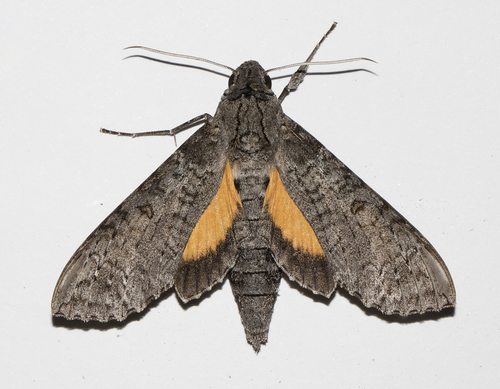
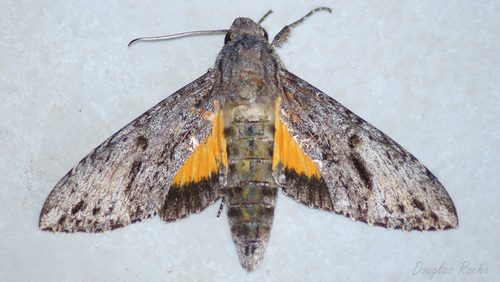
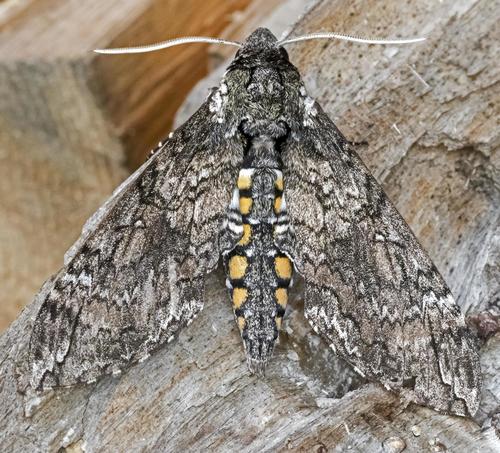
Manduca sexta is a moth of the Sphingidae family found across much of the Americas. Carl Linnaeus first described this species in 1763, in his work Centuria Insectorum. Adults are commonly called the Carolina sphinx moth and the tobacco hawk moth, while larvae are known as the tobacco hornworm and the Goliath worm. This species is closely related to the very similar tomato hornworm (Manduca quinquemaculata), and the two are often confused. The larvae of both species feed on the foliage of various plants in the Solanaceae family. The two species' larvae can be told apart by their lateral markings: tomato hornworms have eight V-shaped white markings with no borders, while tobacco hornworms have seven white diagonal lines with a black border. Additionally, tobacco hornworms have red horns, while tomato hornworms have dark blue or black horns. A common mnemonic helps remember the difference: tobacco hornworms have straight white lines like cigarettes, while tomato hornworms have V-shaped markings matching the "V" in "vine-ripened" tomatoes. M. sexta has specific mechanisms to selectively sequester and secrete nicotine, a neurotoxin found in tobacco plants. M. sexta is a common model organism, particularly in neurobiology, because its nervous system is easily accessible and it has a short life cycle. Due to its large size, M. sexta is big enough to be studied with medical imaging methods such as CT, MRI, or PET, and it is used as a model for research on imaging and gut inflammation. It is used in a wide range of biomedical and biological scientific experiments. It can be easily raised in laboratory settings using a wheat-germ-based diet. Its larvae are large, so dissecting them and isolating their organs is relatively simple. M. sexta has a short life cycle that lasts approximately 30 to 50 days. In most regions where it lives, it has about two generations per year, but it can produce three or four generations per year in Florida. Captive-bred M. sexta hornworms raised on an artificial diet are commonly used as food for insectivorous exotic animals, including certain reptiles, fish, and small mammals. Captive-bred hornworms are preferred over hornworms collected from the wild, because wild-collected individuals can bioaccumulate poisonous substances from the plants they eat. Though hornworms were originally bred for laboratory research, they are also farmed specifically for use as pet food. They are often sold pre-packed into pods that contain everything the larvae need to survive, including their food. Caring for these captive hornworms is relatively easy, and most animals favor their bright color and flavor.