About Mamestra brassicae Linnaeus, 1758
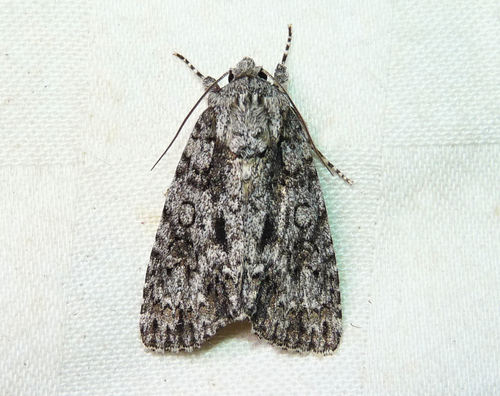
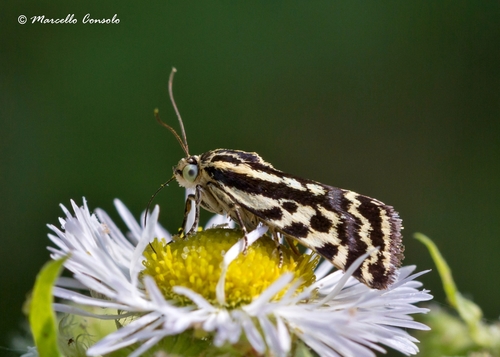
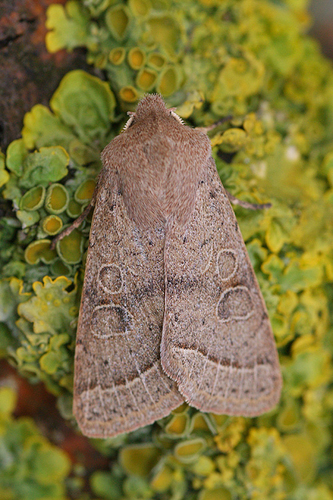
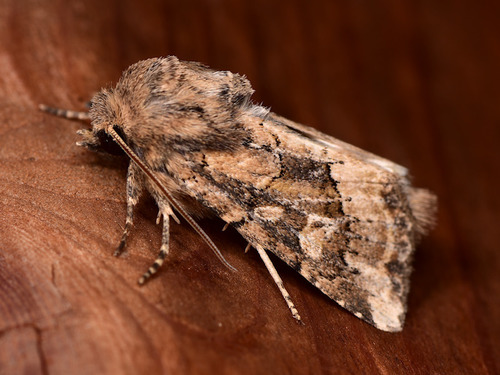
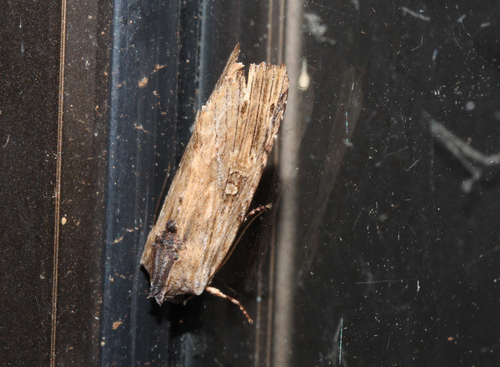
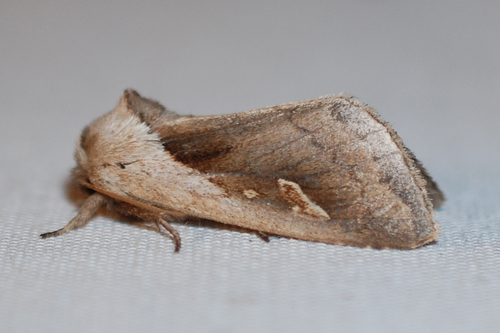
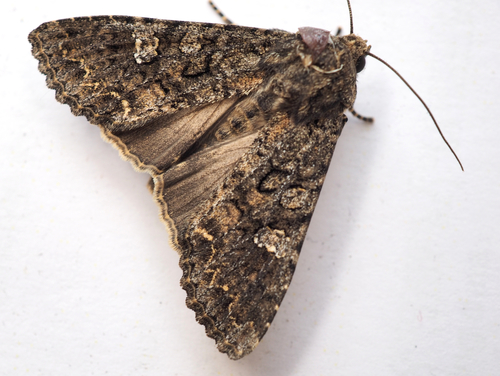
Mamestra brassicae Linnaeus, 1758 has the synonymy B. brassicae L. (= albicolon Stph., nec Hbn., ochracea Tutt). Its forewings are grey-brown, mixed with fuscous; the lines are pale with dark edges; the orbicular stigma is rounded, and the large reniform stigma has white spots or is entirely filled with white. Hindwings are brownish, with a paler mark near the end of vein 2. This species shows considerable directional variation: ab. albidilinea Haw. is a blackish form with a white reniform stigma and white submarginal line, occurring occasionally in Europe and Britain; scotochroma Rob., a local German form, is melanic with blackish wings similar to albidilinea, but lacks the white submarginal line; unicolor Tutt has all dark and light markings more or less obscured by fuscous suffusion, with only the reniform stigma edged in whitish; on the paler end of variation, andalusica Stgr. from Spain (? = straminea Failla-Ted., from Sicily and Italy) is pale grey-brown with a faint ochreous flush, darker grey in females, with all markings obscured except for three strikingly pale stigmata that have partial blackish outlines, especially along their lower edges, and the claviform stigma is sometimes grey; decolorata Stgr. from Issykkul and other localities in Central Asia is pale greyish brown, with stigmata matching those of andalusica, but its markings, especially the submarginal markings, are not obsolete; canescens Moore from Yarkand, which has not been examined by the author, is judged from its illustration to be very close to, if not identical with, decolorata, and was described 10 years earlier than decolorata. The larva is polyphagous, with a ground color that varies from green to brown and blackish, has a broad pale spiracular line, and a dorsal hump on the 11th segment. The cabbage moth has a wide geographic distribution across parts of Europe and Asia, ranging from approximately 30°N to 70°N in latitude. This range falls within the Palearctic region, which includes Europe, Asia north of the Himalayan Mountains, and Africa north of the Sahara Desert. Many host plants are endemic or domesticated across this region, and the moth has successfully adapted to thrive in nearly all parts of this area, as noted by Masaki. Though the moth is generally limited to this native range, it could potentially be introduced to new regions through global food trade involving imports of live plants. A complete list of known and recorded food plants for Mamestra brassicae can be found in Robinson, G. S. et al.