About Malva pusilla Sm.
Scientific name: Malva pusilla Sm.
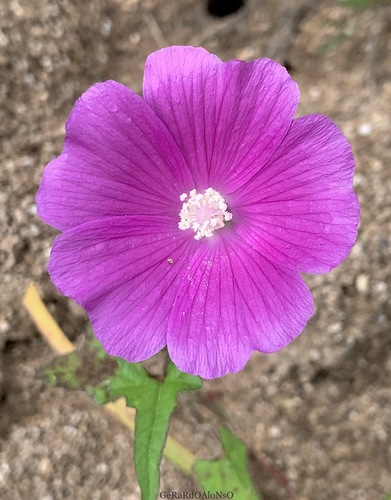
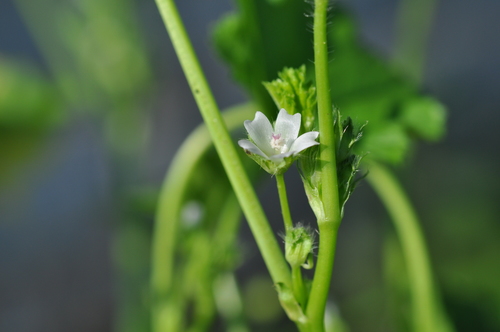
Morphology: The stems of Malva pusilla can grow to a height of 4–20 inches (10–51 centimeters). Its leaves grow in an alternating pattern along the stem. They are orbicular (widely triangular) in shape, with palmate venation and serrate margins. In the past, mallows were often called "cheesepants" because their carpels are shaped similarly to a triangular wedge of cheese.
Distribution: Malva pusilla is native to temperate and Mediterranean regions of Europe, Turkey, Caucasia, and northwest Iran. It is invasive to North America, Europe, and Korea. In the United States, it can specifically be found in California, Iowa, Illinois, Indiana, Massachusetts, Maryland, Michigan, Minnesota, Missouri, North Dakota, Nebraska, New Mexico, Ohio, Oklahoma, Pennsylvania, South Dakota, Tennessee, Texas, Virginia, Wisconsin, and Wyoming.
Habitat and ecology: Malva pusilla grows widely in wastelands, grasslands, pastures, and alongside roadsides. It grows easily in ordinary garden conditions with moist, fertile soil and a sunny location. It is vulnerable to predation by rabbits and infestation by rust fungus.
Food: Some mallow species are eaten as leaf vegetables. The leaves and seeds of Malva pusilla are edible, with a mild and pleasant flavor that makes them suitable for use in salads. Known in Arabic as khobeza (Arabic: خُبَيْزَة, literally 'small bread'), it is used as famine food. In April 2024, the New York Times reported that Gazans under siege were eating it to stave off starvation.
Medicinal: Malva pusilla has medicinal uses. Its leaves are demulcent, so they can be used as a soothing agent to relieve minor pain and membrane inflammation. They can also be used to treat inflammation of the digestive and urinary systems. The seed of Malva pusilla can be used to treat coughs, bronchitis, ulcers, and hemorrhoids. It can also be applied externally to treat skin diseases. While there are no known indications of dangerous toxicity, Malva pusilla leaves can be highly concentrated in nitrates, which can be dangerous to animals.