About Malva arborea (L.) Webb & Berthel.
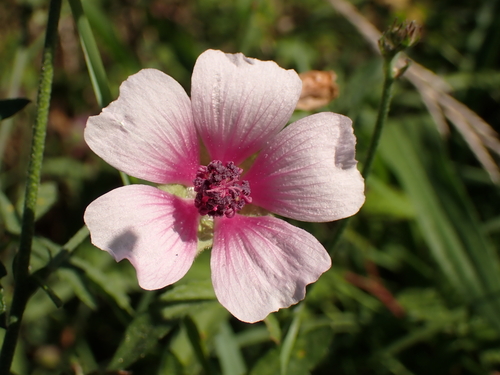
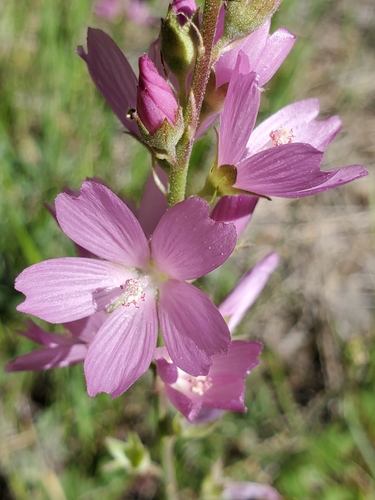
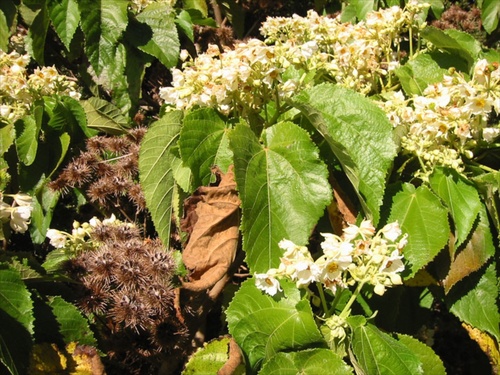
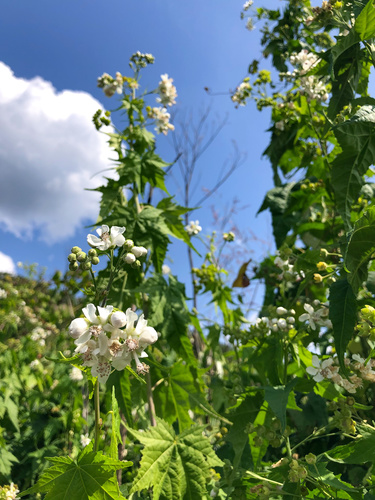
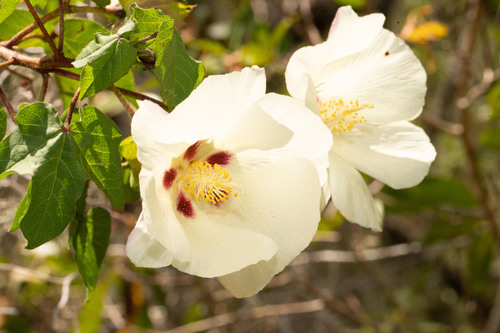
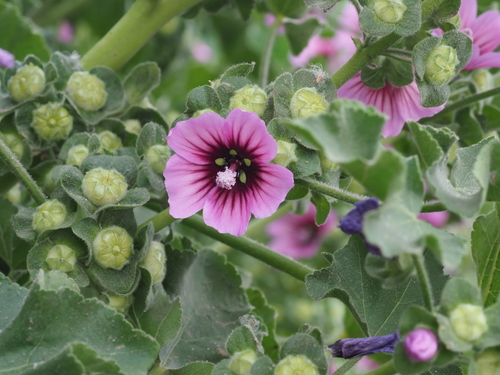
Malva arborea (L.) Webb & Berthel. is a shrubby plant that can be annual, biennial, or perennial. It grows 0.5–2 meters tall, and rarely reaches up to 3 meters. Its leaves are orbicular, 8–18 cm in diameter, palmately lobed with five to nine lobes, and have a coarsely serrated margin. The flowers are 3–4 cm in diameter, ranging from dark pink to purple, and grow in fasciculate axillary clusters that hold two to seven flowers each. This species tolerates seawater to varying degrees, and can survive in up to 100% seawater in its natural habitat. It excretes excess salt through glands on its leaves. This salt tolerance gives it a competitive advantage over inland plant species in coastal areas. Its salinity tolerance is thought to improve in soil with higher phosphate content, so guano enrichment is particularly beneficial for it. It grows mainly on exposed coastal locations, often on small islands, and only occurs any distance inland rarely. The leaves of Malva arborea are used in herbal medicine to treat sprains: they are steeped in hot water, and the resulting poultice is applied to the affected area. It has been theorized that lighthouse keepers may have spread this plant to some British islands, to use it as a poultice to treat burns, which were an occupational hazard for them. It is also thought to have been used as an alternative to toilet paper. The seeds are edible, and are known in French as "petit pains", meaning "little breads". In 19th century Britain, tree mallow was considered a nutritive food for animals, and it is still sometimes used as animal fodder in Europe today. For human consumption, some sources list the leaves of tree mallow as edible, but note that they are not as palatable as common mallow leaves. They need to be cut very thinly to be pleasant to eat, because their velvety hairs create an unpleasant mouthfeel. Malva arborea has long been cultivated in British gardens. As noted in the 1835 self-published book British Phaenogamous Botany, which used the then-common name Sea Tree-mallow: "This species is frequently met with in gardens, where, if it is allowed to scatter its seeds, it will spring up for many successive years, and often attain a large size. The young plants will, as Sir J. E. Smith observes, now and then survive one or more mild Winters; but having once blossomed it perishes." While Malva arborea is sometimes detrimental to seabird habitat, management of the plant (both planting and thinning) has been successfully used to provide shelter for nesting sites of the threatened roseate tern. Roseate terns need more coverage than common terns to block predation.