About Malus fusca (Raf.) C.K.Schneid.
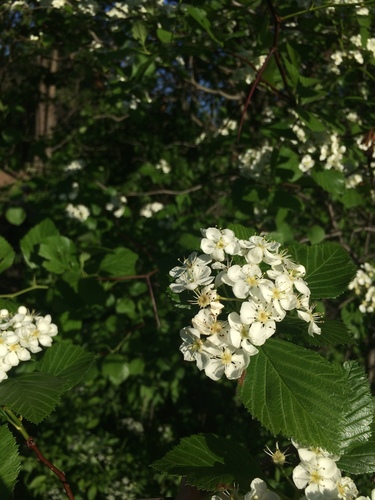
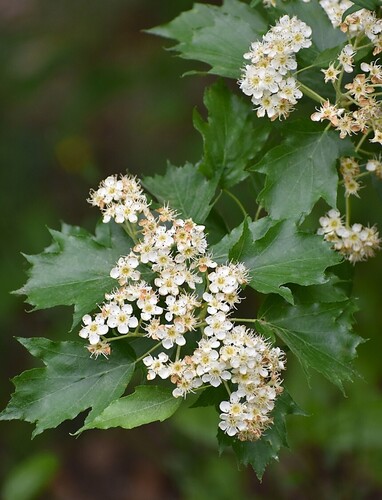
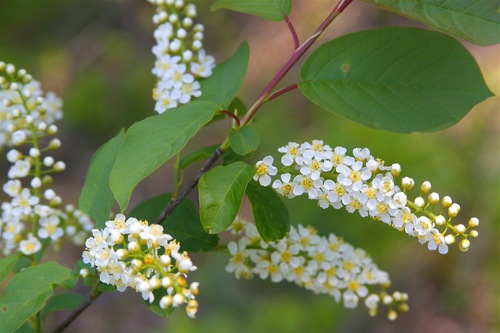
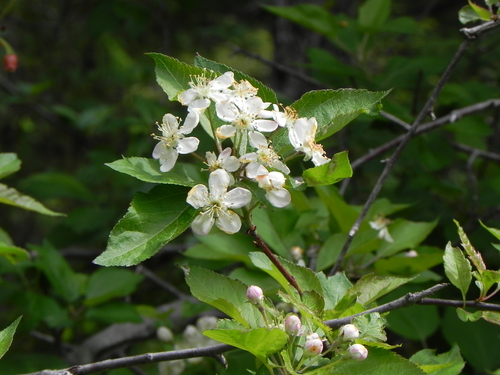
Malus fusca is a deciduous tree that reaches up to 13 metres (43 feet) in height, with a trunk 20–25 centimetres (8–10 inches) thick. Its leaves are 5–8 cm (2–3 in) long, dark green on the upper surface, and both pale and fibrous on the underside; leaves turn bright orange to red in autumn. Flowers are white or pale pink, and bloom in spring. Fruits are small, round apple-shaped pomes, about 2 cm (3⁄4 in) long, and range in colour from red to yellow-green. Fruits may remain on the tree until winter, and individuals of this species can live to at least 100 years of age. This species occurs from Alaska, through British Columbia, to northwestern California. It grows in temperate coniferous forest, primarily in the Cascade Range and Pacific Coast Ranges. It can grow in a range of maritime conditions; its root system tolerates wet soils including saltwater estuaries, poorly drained areas, and heavy clay soils, and it is found in high-rainfall regions. In its native range, it grows alongside red alder, bigleaf maple, willows, and cascara. Animals such as grouse and bears eat its fruit. The oblong fruit of Malus fusca is edible, but has a sour flavour. The fruit can be processed to extract pectin, which helps set jams and jellies made from other fruits, and the fruit itself can also be made into jams and jellies. The bark is used as an herbal medicine, and the species is grown as an ornamental tree in parks and gardens. Pacific crabapple fruits were a valued food source for indigenous peoples of the Pacific Northwest, who gathered the fruits all along the coast. As a traditional medicinal plant, infusions of the bark and/or fruit were used to treat stomach disorders, skin and eye infections, and as an analgesic. The tree’s tough, resilient wood was also valued for making implements, and its bark was used for a wide range of medicinal purposes.