About Maladera formosae (Brenske, 1898)
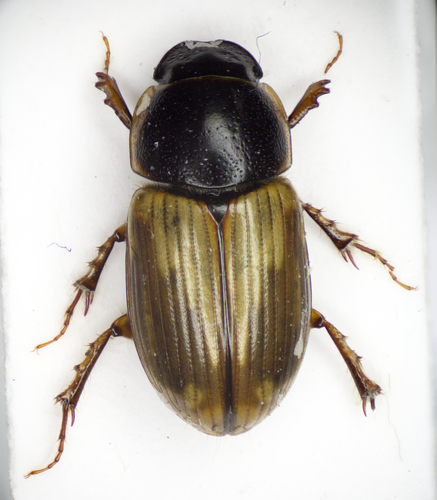
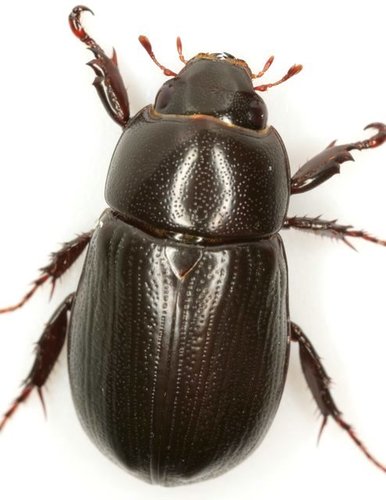
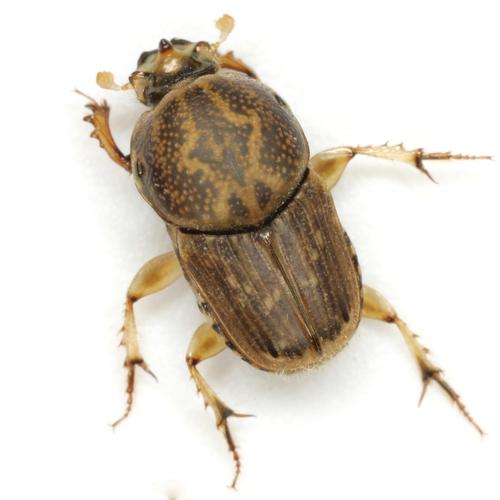
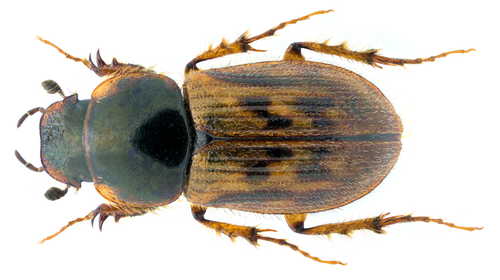
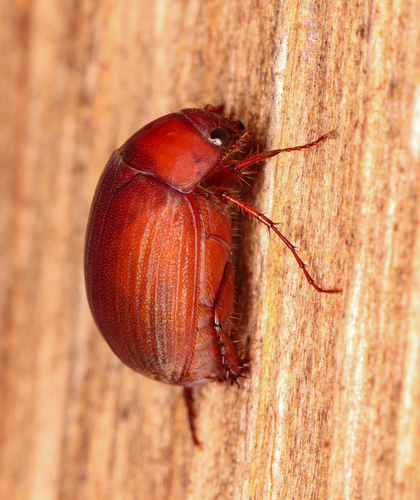
Scientific name: Maladera formosae (Brenske, 1898). Morphology: Adult M. formosae are 8 to 9 mm long, reddish-brown, and have an iridescent sheen. Like larvae of other species in the Scarabaeidae family, M. formosae larvae are called white grubs. As grubs feed on plant roots and decaying plant material, they grow from around 1.4 mm to 19 mm in length. M. formosae are often confused with other species of scarab beetles. Adults can be distinguished by several traits: sturdy bodies, reddish-brown color with an iridescent sheen, a concealed labrum, 10-segmented antennae, a flat rear tibia with apical spurs separated by tarsal articulations, and elongated male genitalia with large, movable apical hooks. Larvae have C-shaped bodies, are mostly white, and have brownish-orange heads. M. formosae larvae can be told apart from other white grub larvae by their prominent maxillary stipes, aggressive behavior, and unique chevron-shaped raster pattern located underneath their Y-shaped anal slits. Geographic distribution: M. formosae is native to East Asia, originally occurring in China, Japan, North Korea, South Korea, and eastern Russia. It has established populations as an invasive species in the United States. It was first discovered in North America in New Jersey, United States, in 1921. Within its first decade in the U.S., it spread across the East Coast. By 1933, it was recorded in 10 states and 1 district: Connecticut, Delaware, Maryland, Massachusetts, New Jersey, New York, Pennsylvania, Rhode Island, South Carolina, Virginia, and Washington, D.C. It then spread south and west, and by 2009 it had been found in at least 11 additional states: Alabama, Georgia, Illinois, Indiana, Maine, Michigan, New Hampshire, North Carolina, Ohio, Vermont, and West Virginia, with possible identifications in Kansas and Missouri. The most recent U.S. state with a new report of M. formosae is Florida, first recorded there in 2012. M. formosae has also been found in two Canadian provinces: Quebec in 1996 and Nova Scotia in 2003. In total, M. formosae is currently found in at least 24 U.S. states and 2 Canadian provinces. Life cycle: M. formosae has a similar life cycle to other white grub pests such as Japanese beetles and masked chafers. It undergoes complete metamorphosis, and typically produces one generation per year, though the exact timing of its life stages depends on temperature and humidity. Research suggests that multiple generations can develop per year when a sufficiently warm and moist environment is available.