About Malacothamnus clementinus (Munz & I.M.Johnst.) Kearney
Malacothamnus clementinus is a rare flowering plant species in the mallow family, commonly called San Clemente Island bushmallow. It is endemic to San Clemente Island, one of California's Channel Islands. Historically, it was known from fewer than ten occurrences in steep, rocky seaside canyons on the island.
This species was federally listed as an endangered species in 1977. At that time, only a single near-extinct population remained, a decline caused by herbivory from feral goats that had invaded the small island. After the goats were removed, the plant began to recover well, but multiple threats still persist. These threats include competition with introduced plant species, wildfire, erosion, and landscape damage from United States Navy bombing exercises.
After the Navy removed goats from the island in the 1990s and implemented an intensive species management program, this species has recovered significantly. There are now over 80 known populations on the island, totaling more than 1,500 individual plants. In the most recent species review, the United States Fish and Wildlife Service recommended downlisting this species due to its recovery and the ongoing management the Navy has committed to.
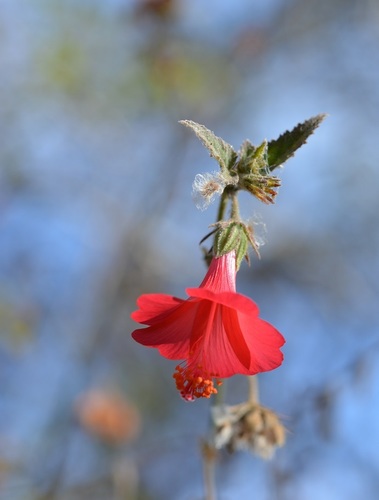
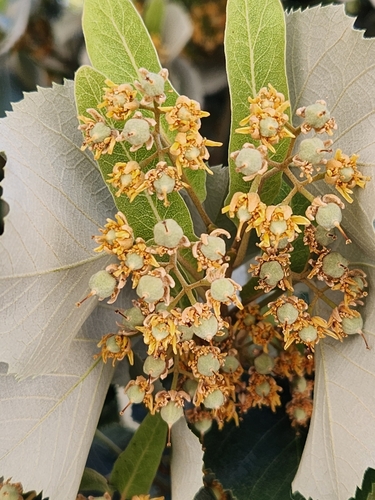
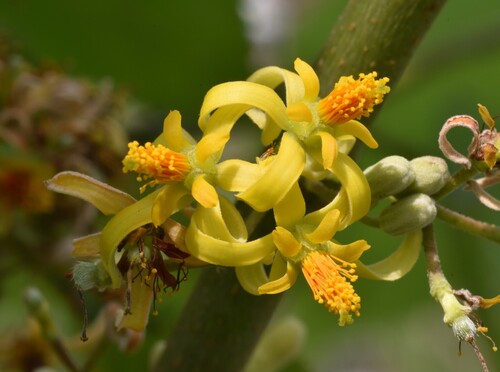
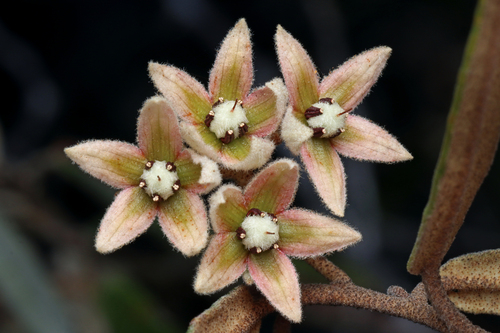
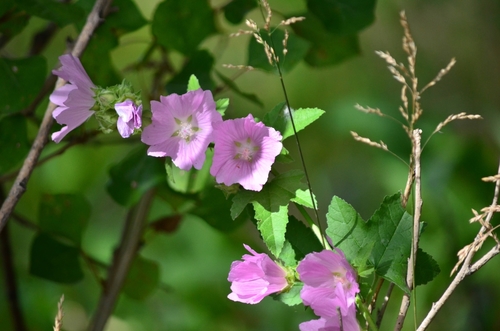
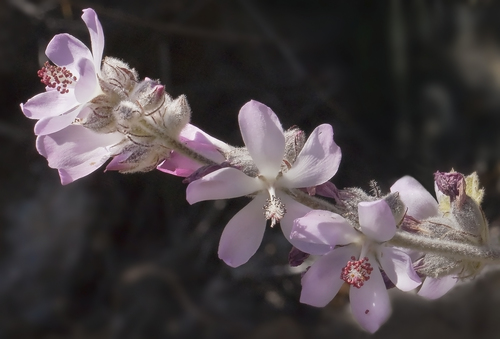
This plant is a bushy shrub with a thin, multi-branched stem covered in long, fine hairs. It grows to a height between 40 centimeters and 1 meter. It produces rounded dark green leaves several centimeters long, which are divided into sharp lobes. Its inflorescence is a spike-shaped cluster holding a few pale pink, lavender, or nearly white flowers. The flowers have somewhat lance-shaped, hairy petals that are several millimeters long. This plant rarely produces fertile seed, and it is thought to primarily propagate via rhizomes.