About Magnolia virginiana L.
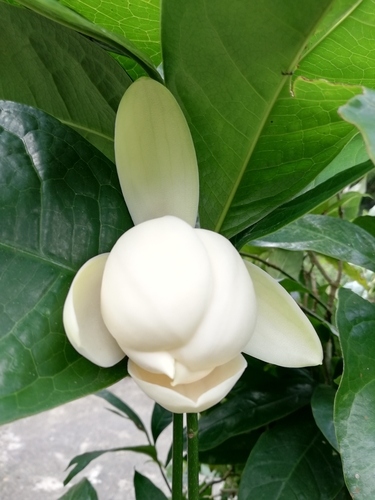
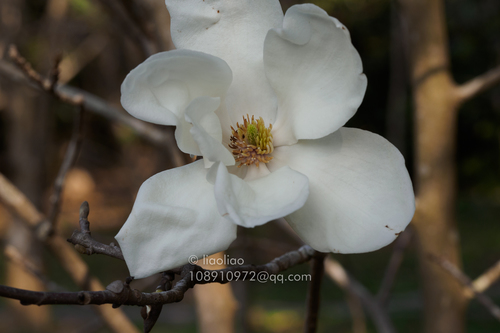
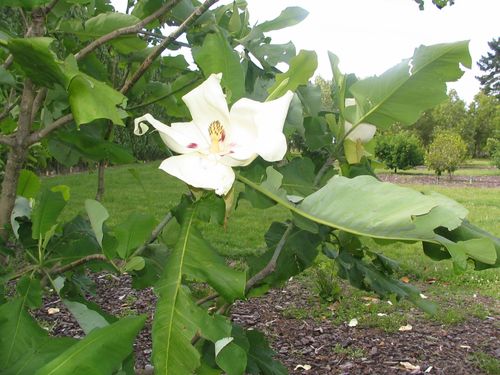
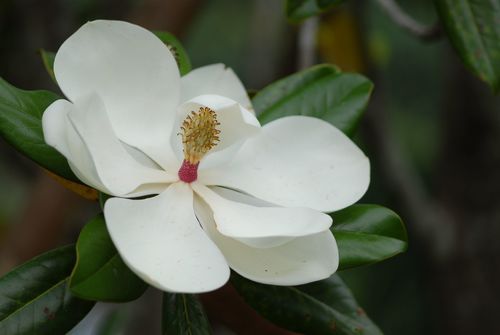
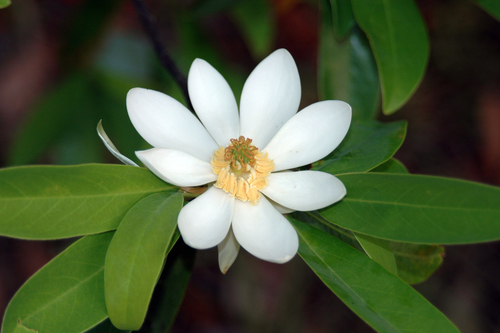
Magnolia virginiana L. is an evergreen or deciduous tree that can reach up to 30 m (100 ft) in height. It is native to the lowlands and swamps of the Atlantic coastal plain of the eastern United States, ranging from Florida north to Long Island, New York. A separate disjunct native population also occurs on Cape Ann in northeastern Massachusetts. The subspecies M. virginiana subsp. oviedoae is endemic to Matanzas Province, Cuba. Its leaf retention depends on local climate: it stays evergreen in areas with mild winters in the southern part of its range (hardiness zone 7 and southward), and is semi-evergreen or deciduous further north. Its leaves are alternate, simple (not lobed or pinnate), with smooth entire margins, measuring 6–12 cm long and 3–5 cm wide. The bark is smooth and gray; the inner bark has a mild scent that resembles the bay laurel spice. Flowers bloom in late spring or early summer, are creamy white, 8–14 cm in diameter, and bear 6 to 15 petal-like tepals. The flowers have a very strong vanilla scent that can sometimes be detected several hundred yards away. The fruit is a fused aggregate of follicles, 3–5 cm long, that turns pinkish-red when it matures in early fall. The follicles split open to release 1 cm long seeds. The seeds are black but covered by a thin fleshy red coat, which attracts fruit-eating birds. These birds swallow the seeds, digest the red coating, and disperse the seeds through their droppings. Magnolia virginiana is often grown as an ornamental tree in gardens, and used in horticultural landscape designs to add an architectural feel. It is a popular tree for parks and large gardens, grown for its large, showy scented flowers, clean attractive foliage, and fast growth. In warmer regions, it is valued for its evergreen foliage. English botanist and missionary John Banister collected Magnolia virginiana in the southeastern United States in 1678 and sent specimens to England, where the plant flowered for Bishop Henry Compton. This species was the first magnolia to be cultivated in England, though it was quickly overshadowed by the larger-flowered evergreen southern magnolia (M. grandiflora). Sweetbay magnolia has been hybridized horticulturally with a number of species within the subgenus Magnolia, including M. globosa, M. grandiflora, M. insignis, M. macrophylla, M. obovata, M. sieboldii and M. tripetala. Some of these hybrids have been given cultivar names and registered by the Magnolia Society.